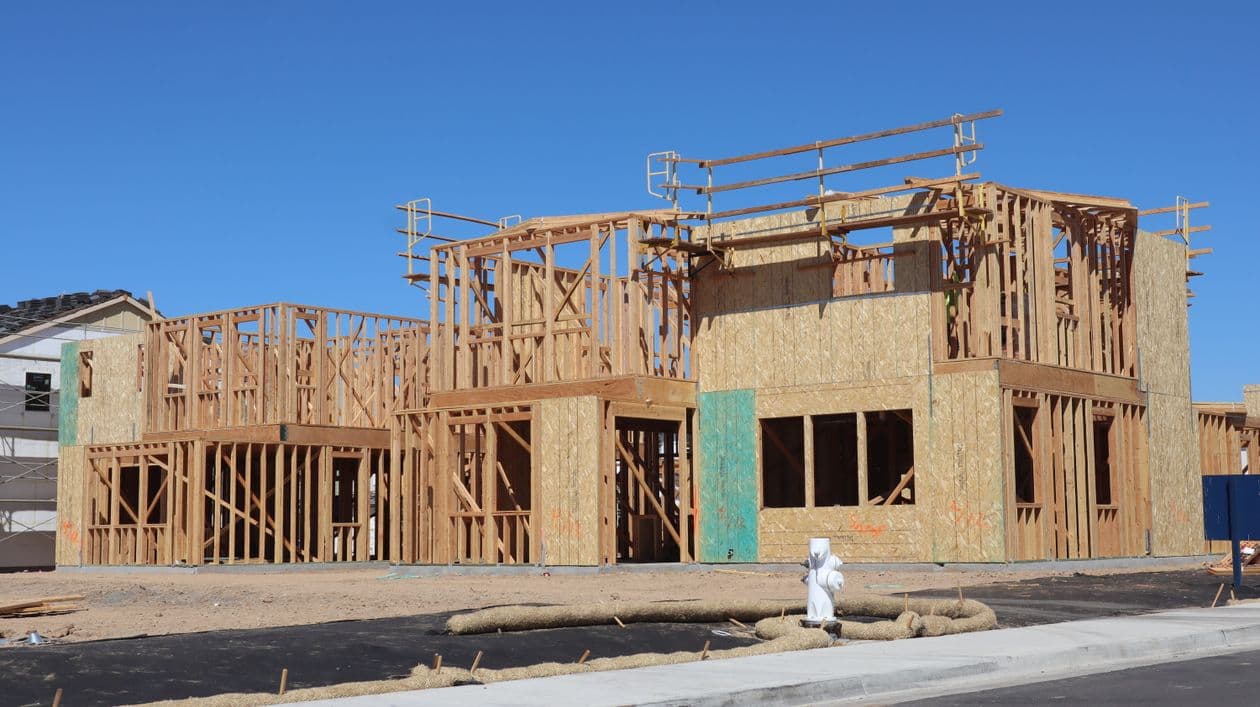
If you have framed a house in Wellfleet in February or tried to schedule a final inspection the week before Memorial Day, you already know Cape Cod isn't a normal build market. The sand, the salt, the historic districts, the second-home owners who fly in from Boston or New York with a punch list and a flight back at 4 p.m. — every one of those variables can take a clean P&L and turn it into a bad summer.
This isn't a homeowner article. This is the stuff you talk about at the lumberyard counter, written down.
Key Takeaways
- Spec for salt, not for sticker price. The wrong fastener, hinge, or flashing on a coastal job shows up as a callback in year three — on your dime.
- Underbidding the Cape premium is the #1 margin killer. Mobilization, ferry/bridge logistics, seasonal labor scarcity, and disposal costs are not "overhead" — they are line items.
- Permitting and historic district review is a schedule risk, not a paperwork chore. Build the calendar around the board, not the other way around.
- Your MA HIC and CSL are not interchangeable, and neither covers everything. Know what each authorizes and what your GL and builder's risk actually exclude.
- Scope creep from second-home clients is predictable. Document like they're going to sell the house next year — because they might.
- Cash flow on the Cape is seasonal even when your backlog isn't. Plan draws and payroll around the shoulder seasons, not the calendar year.
Mistake 1: Treating Coastal Spec Like Inland Spec
The single most expensive habit on the Cape is using the same fastener, hardware, and flashing schedule you'd use in Worcester. Salt-laden air finds galvanized screws, standard hinges, and uncoated steel connectors fast — sometimes inside a single season within a few miles of the shore.
What the pros who don't get callbacks do:
- Stainless (typically 304 minimum, 316 for direct exposure) for exterior fasteners, hangers, and trim screws in coastal zones. Specify it in writing, on the takeoff, and reject substitutions at delivery.
- Hot-dip galvanized is not stainless. It buys you time, not a lifetime. Know which one the structural connector schedule actually requires.
- Flash like the water is going to find it — because it will. Self-adhered membranes at every penetration, kickout flashings on every roof-to-wall, and pan flashings under every exterior door.
- Pressure-treated in ground contact only where it belongs, and never as a substitute for proper detailing.
The homeowner doesn't see any of this. The next contractor who opens the wall in 2032 does, and so does the online review.
Mistake 2: Underbidding the Cape Premium
There is a Cape Cod cost-of-doing-business premium, and pros who pretend otherwise get squeezed out by July. Bridge traffic eats crew hours. Material deliveries get scheduled around tourist season. Subs who'll show up reliably in August charge for the privilege. Disposal and transfer station logistics aren't free.
The bid mistakes that kill builders here:
- Quoting mainland labor rates for trades you'll actually have to pay Cape-resident rates for, or housing for traveling crews during peak season.
- Forgetting mobilization and demobilization as discrete line items on second-home builds where the site is 90 minutes from your shop.
- No allowance for seasonal access — beach driving permits, conservation commission monitoring, time-of-year restrictions near wetlands or protected habitat.
- No contingency for the trades calendar. If your framer is also running a deck crew in June, your schedule belongs to him, not you.
A good rule from builders who've been here 20+ years: if your bid looks competitive with a Worcester or Springfield builder's number, you bid it wrong.
Mistake 3: Underestimating Permitting and Historic Review
Every town on the Cape has its own permitting personality, and several have local historic district commissions with real teeth — Nantucket, parts of Provincetown, Sandwich, Yarmouth Port, and others. Add conservation commission jurisdiction for anything near wetlands, coastal banks, or vegetated buffer zones, and the schedule starts to belong to the boards, not to you.
Where builders get hurt:
- Promising the homeowner a start date before the HDC or ConCom hearing is on the calendar. Review cycles, continuances, and revised submittals are routine, not exceptional.
- Submitting incomplete packages to save a week, then losing a month when the application is bumped to the next meeting.
- Missing Title 5 septic implications on additions or bedroom counts. A bedroom count change can trigger a full septic upgrade — confirm with the board of health before you sign.
- Ignoring FEMA flood zone requirements on properties near the coast. Velocity zones, base flood elevation, and freeboard requirements vary, and the cost difference between a V-zone and an A-zone build is not trivial.
Build your project schedule backward from the board meeting calendar, not forward from the contract date.
Mistake 4: Confusing Your HIC, CSL, Insurance, and Warranty
Massachusetts requires a Home Improvement Contractor (HIC) registration for most residential remodeling work and a Construction Supervisor License (CSL) for structural work on most one-to-four-family homes. These are not interchangeable, and new construction versus remodeling has different requirements. Pros get tripped up by:
- Operating under a CSL but doing HIC work without the HIC registration, or vice versa.
- Assuming general liability covers builder's risk — it doesn't. A separate builder's risk policy through the active build is standard for a reason.
- Excluding mold, water intrusion, or coastal exposure in the policy without reading the fine print. On Cape jobs, those exclusions are exactly the claims you're most likely to face.
- Verbal warranty promises that aren't in the contract. The MA HIC contract template has specific warranty language requirements — use it.
This is also where the Guaranty Fund comes in. If a homeowner files against a registered HIC, you want to be the contractor with clean paperwork.
Mistake 5: Letting Second-Home Clients Run Scope Creep
The Cape's second-home owner is a specific client profile: smart, busy, often successful in another field, frequently absent during the build, and prone to making decisions by text message at 9 p.m. from Boston. Scope creep is the default state, not the exception.
The builders who keep their margin do three things:
- Every change order in writing, signed, before the work happens — no exceptions, even for the client you've worked with for ten years.
- A weekly written update with photos, decisions needed, and a decision deadline. Absent clients don't argue with documented timelines.
- A clear allowance schedule for finishes, with selection deadlines tied to the construction schedule. "We'll figure out tile later" is how August becomes October.
Mistake 6: Mismanaging Seasonal Cash Flow
Even with a full backlog, Cape builders run into cash flow trouble in the shoulder seasons. Material deposits hit in the spring, draws fall behind in the fall, and payroll doesn't care what month it is.
What helps:
- Front-loaded but defensible draw schedules tied to verifiable milestones, not calendar dates.
- Deposit limits aligned with MA law — Massachusetts caps initial deposits on HIC contracts, so know the current rule before you write a number on the contract.
- A working capital line sized for two payrolls plus material commitments, not just one.
- A January-to-March plan — interior trim, punch lists, kitchen and bath rebuilds, and pre-construction for spring starts.
Mistake 7: Treating Reviews and Referrals as an Afterthought
On the Cape, the second-home owner network is small and talks constantly. One unresolved punch list in Chatham becomes three lost bids in Osterville by the next summer. The pros who dominate this market treat the closeout walkthrough, the warranty call in month nine, and the unprompted thank-you note in year two as part of the job — because on a peninsula, they are.
The Through-Line
Every one of these mistakes has the same root: assuming Cape Cod construction is just regular construction with a longer drive. It isn't. The salt, the seasons, the boards, the clients, and the calendar all behave differently here. The contractors who build long careers on the Cape price for it, spec for it, schedule for it, and document for it.