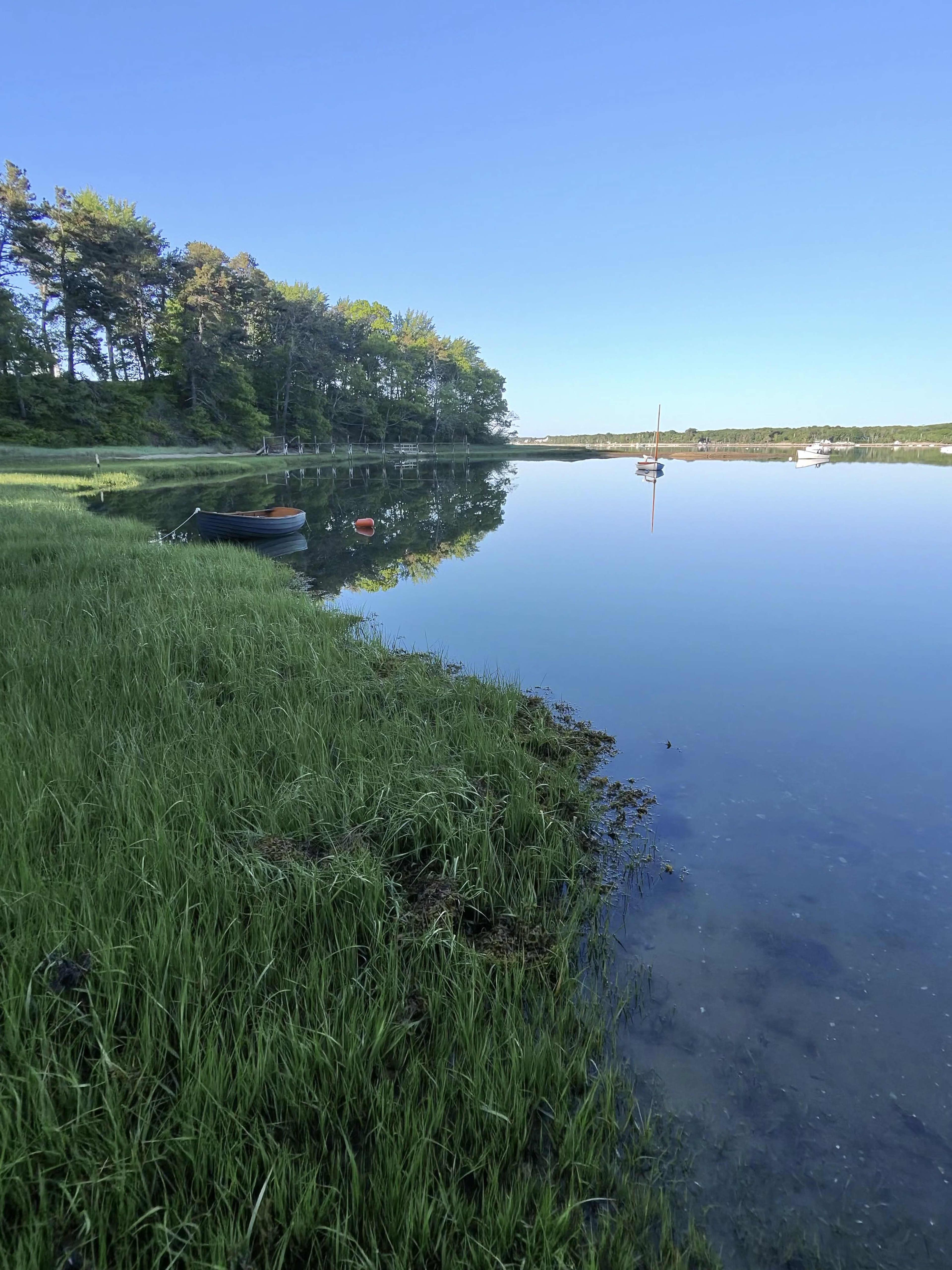
If you have lived through a January nor'easter in an Eastham cape or a second home in Wellfleet that sat closed all November, you already understand the Cape Cod window problem. Single-pane glass on the bay side of a house doesn't just cost you money on your heating bill — it makes the rooms genuinely uncomfortable, draws condensation down the woodwork, and over years, the salt air works on frames and seals in ways that owners from inland states don't anticipate.
Fall is the right time to address windows on the Cape. Contractors finish the summer renovation rush in September, lead times shorten, and your new windows will be installed and sealed before the first hard freeze. Here is what you need to know — from glass specifications to Mass Save rebates to Historic District Commission rules in Barnstable and Chatham.
The Cape Cod Window Problem
A significant portion of the Cape's housing stock was built between 1940 and 1985, when single-pane aluminum windows were standard and energy codes did not exist in their current form. Many homes in Sandwich, Brewster, and Orleans still have original single-pane units, and a surprising number of 1990s replacements used early-generation double-pane windows whose seals have now failed. Cloudy, fogged glass between the panes is the giveaway: that seal failure has compromised the insulating air gap, and the window is performing closer to single-pane than double.
Beyond thermal performance, Cape Cod windows face stressors that windows in, say, a Worcester suburb simply do not. Ocean-facing and bay-facing elevations in Wellfleet and Eastham see direct salt spray during coastal storms. UV intensity at the water's edge degrades vinyl frames faster than interior Massachusetts. And the thermal cycling — cold Atlantic nights against sun-warmed glass during the day — works the frame-to-glass seal harder than a more stable inland climate.
The result: window replacement on the Cape is not just an energy upgrade. It is a materials decision with long-term consequences.
Which Window Type Works Best on the Cape
Casement Windows: The Right Call for Ocean-Facing Elevations
Casement windows crank outward on a side hinge. When closed, the sash presses directly against the weatherstripping around the entire perimeter of the frame — there are no sliding tracks, no gaps for wind to exploit. In high-wind exposure zones, which include essentially any property within a half-mile of the ocean or bay in Eastham, Wellfleet, Chatham, or Falmouth's Surf Drive area, casements are the technically superior choice. The air seal when locked is measurably tighter than any sliding or double-hung unit.
Double-Hung Windows: The Cape Cod Classic
The traditional Cape aesthetic is double-hung — both the upper and lower sash slide vertically, allowing you to open the top for ventilation while keeping screens below. This is appropriate for sheltered elevations: the south or west side of a Brewster or Sandwich home protected by mature trees. Double-hung windows have slightly more air infiltration at the meeting rail than casements, but on a sheltered exposure this is not a material concern.
Awning and Picture Windows
Awning windows hinge at the top and swing outward from the bottom. They can remain open during light rain, which makes them useful for bathrooms and kitchens on any Cape property. Picture windows — fixed, no moving sash — offer the best possible air seal and are the right choice for view windows on sheltered elevations where ventilation is not the priority.
Slider Windows: Avoid for Exterior Applications
Sliders are the lowest-cost option and the lowest-performance option. The sliding track creates a continuous air infiltration path. Fine for a protected interior application, but not the recommended choice for Cape Cod exterior walls facing any exposure.
Frame Materials: Getting This Right Matters
Fiberglass: The Correct Choice for Coastal Cape Cod
Fiberglass window frames expand and contract at virtually the same rate as the glass itself. This matters because temperature swings cause the frame and the glass to move together, which protects the seal between the glass unit and the frame — the most common failure point on a Cape Cod window. Fiberglass does not corrode in salt air. It does not warp under UV exposure the way vinyl can over 15 to 20 years.
The relevant brands for Cape Cod homeowners are Pella Impervia, Marvin Integrity, and Andersen A-Series. These are the windows Cape Cod contractors with coastal experience tend to specify for ocean and bay-facing elevations. Expect to pay $600 to $1,200 per window installed, depending on size and opening configuration.
Vinyl (uPVC): Acceptable with Caveats
Vinyl is the most common replacement window material in the country, and it is not wrong for Cape Cod — with caveats. On sheltered exposures — north or east walls of an inland Barnstable or Orleans property protected from direct ocean exposure — vinyl performs well and costs less. On direct ocean-facing or bay-facing elevations in Wellfleet, Eastham, or Chatham, vinyl is a shorter-term solution. High UV intensity and salt air accelerate the surface degradation that causes chalking and color fade, and thermal cycling at the window-to-frame seal is more aggressive with vinyl than fiberglass. Standard vinyl replacement windows run $300 to $600 per window installed.
Wood-Clad: The Premium Aesthetic Option
Wood-clad windows — fiberglass or aluminum exterior, wood interior — offer the best of both worlds for homeowners who want the warmth and paintability of a wood interior without exposing raw wood to the Cape's weather. Andersen, Pella, and Marvin all produce strong wood-clad lines. The exterior cladding handles the salt air and UV; you paint and maintain only the interior face. This is often the right choice for historic or traditionally detailed homes in the Route 6A corridor in Barnstable or in Chatham where interior aesthetics matter.
Aluminum: Not Recommended
Aluminum frames conduct heat and cold readily — poor insulating value by design. Salt-air corrosion is a real problem despite factory coatings, particularly within a quarter-mile of the water. Aluminum windows were the standard on Cape Cod homes built through the 1970s; replacing them is part of the reason you are reading this guide.
Glass Specifications for Cape Cod Conditions
The minimum acceptable specification for any Cape Cod replacement window is a double-pane insulated glass unit (IGU) with a Low-E coating. Low-E (low emissivity) is a microscopic metallic coating on the glass surface that reflects radiant heat — keeping heat inside in winter and reflecting solar heat outside in summer. It is not optional for Cape Cod.
Argon gas fill between the panes adds a modest additional increment of insulating value and is standard on quality windows. The solar heat gain coefficient (SHGC) — how much solar heat the glass transmits — is worth thinking about directionally. On south-facing windows, a higher SHGC (0.35–0.45) captures passive solar heat in winter; on west-facing windows in Falmouth or Sandwich where summer afternoon sun is the comfort issue, a lower SHGC (0.25–0.35) reduces cooling load.
The best overall specification for Cape Cod: double-pane, Low-E, argon fill, in a fiberglass or wood-clad frame. This combination qualifies for ENERGY STAR certification in the Northern climate zone, which is what Mass Save and Cape Light Compact require for rebate eligibility.
Condensation: Understanding What Is Normal and What Is Not
Interior window condensation — water forming on the room-side surface of the glass — is not a window defect. It means the glass surface temperature has dropped below the dew point of your indoor air. This is common in Cape Cod homes in fall and spring: the outdoor temperature drops sharply overnight while indoor humidity remains elevated from the recent summer. A modern double-pane Low-E window will show less condensation than a single-pane window because the interior glass surface stays warmer, but in a humid coastal home it can still occur.
The fix is not a new window — it is ventilation and humidity control. A bathroom exhaust fan running after showers, a dehumidifier in the shoulder season, and ERV (energy recovery ventilator) integration in tighter homes all reduce indoor humidity and push the dew point below the glass temperature.
What is a window defect: condensation or cloudiness forming between the panes of a double-pane unit. That indicates the factory seal has failed, the argon has escaped, and the insulating gap is now open to humid air. A failed IGU should be replaced. In many cases, the IGU alone can be replaced without removing the frame — a meaningfully less expensive repair than full window replacement, and worth asking a qualified contractor about before committing to full replacement.
Mass Save Rebates: How Cape Light Compact Handles Window Replacement
Mass Save offers rebates for qualifying replacement windows through Cape Light Compact (serving the Cape and Islands). The current rebate structure is typically $75 to $125 per window for ENERGY STAR certified products in the Northern zone — confirm current amounts at capelightcompact.org before purchasing, as program caps and eligibility thresholds are updated annually.
Key practical points for Cape Cod homeowners:
Schedule a Mass Save home energy assessment first. The assessment is free, identifies your largest heat-loss opportunities, and generates a report that supports your rebate application. Call Cape Light Compact directly or book through the Mass Save portal to get on the fall schedule before November.
ENERGY STAR certification must be documented. Your contractor needs to provide the ENERGY STAR certification documentation for the specific window products installed. Get this in writing before you sign a contract — not all window lines from reputable brands are ENERGY STAR certified in every configuration.
Bundle with air sealing and insulation. Windows are one heat-loss vector; the intersection of the window frame and the rough opening is another. If your contractor air-seals the window opening during installation and you add attic insulation in the same project, the combined rebate can be substantially higher than windows alone.
Income-based enhanced rebates. Mass Save offers enhanced rebate levels for qualifying income levels. If your household income falls within program thresholds, you may be eligible for a higher rebate percentage or a HEAT Loan (0% financing for energy improvements) through a participating lender.
Historic District Considerations in Barnstable and Chatham
Properties in Barnstable Village, along the Route 6A Old King's Highway historic corridor, or within Chatham's historic district face an additional approval step before window replacement. The Barnstable HDC and Chatham HDC both have jurisdiction over exterior changes visible from a public way, and replacing windows is explicitly covered.
The most common issue: replacing six-over-six (or six-over-one, four-over-four) double-hung windows with a modern single-lite window. Most HDCs will not approve this. Simulated divided lights — a window with a single glass pane and applied interior and exterior grilles that simulate the divided lite appearance — are generally acceptable to HDC commissions on the Cape, as long as the grille pattern matches the original. True divided lights (individual panes separated by actual muntins) are the historically correct choice but substantially more expensive.
Call the relevant HDC before ordering. In Barnstable, that is the Barnstable Historical Commission; in Chatham, the Chatham Historical Commission. Both can tell you in a preliminary conversation whether your planned window replacement requires a Certificate of Appropriateness or falls under their administrative approval process.
Cost Ranges for Cape Cod Window Replacement
| Window Type | Installed Cost per Window |
|---|---|
| Vinyl double-pane Low-E (standard size) | $300 – $600 |
| Fiberglass (Pella Impervia, Marvin Integrity) | $600 – $1,200 |
| Wood-clad (Andersen, Pella, Marvin) | $700 – $1,400 |
| Full house replacement (15–20 windows) | $8,000 – $25,000 |
These ranges reflect Cape Cod contractor pricing in the current market. Oceanfront properties with difficult access, historic district compliance, or custom sizes will land at the upper end. A straightforward vinyl replacement in a sheltered Sandwich or Brewster colonial will be at the lower end.
Get three quotes from HIC-licensed contractors (Massachusetts Home Improvement Contractor license is required for this work). Ask each contractor specifically about their experience with coastal exposure and their recommended frame material for your elevation — a contractor who recommends vinyl for a Wellfleet ocean-facing elevation without qualification is not giving you coastal-specific advice.
More Cape Cod home guides
- Hiring a Remodeling Contractor in Harwich, MA Guide
- Hiring a Remodeling Contractor in Orleans, MA
- Hiring a Remodeling Contractor in Yarmouth, MA
- The Cape Cod Mudroom: How to Design a Beach Entry That Actually Works
- Kitchen Remodel Cost on Cape Cod: The 2026 Homeowner's Guide
- Chimney & Fireplace on Cape Cod: Maintenance, Repair & Heating Upgrades
- How AI Is Changing the Home Improvement Industry on Cape Cod: A Practical Guide for Homeowners and Contractors
Frequently Asked Questions
What is the best window brand for a Cape Cod home on the water? For ocean or bay-facing elevations, Marvin Integrity (fiberglass), Pella Impervia (fiberglass), and Andersen A-Series (fiberglass composite) are the contractors' choices for durability in salt-air environments. All three are available through Cape Cod window and door dealers and can be specified by local HIC contractors.
How do I apply for the Mass Save window rebate in Barnstable or Falmouth? Start by scheduling a free home energy assessment through Cape Light Compact at capelightcompact.org or by calling them directly. After the assessment and window installation, your contractor provides ENERGY STAR documentation and you submit a rebate application through the Mass Save portal. Rebates currently run $75–$125 per window; confirm the current program terms before purchasing.
My windows fog up between the panes. Do I need to replace the whole window? Fogging between the panes means the insulated glass unit (IGU) seal has failed. In many cases, a glazier can replace just the glass unit without removing the frame, which is significantly less expensive than full window replacement. Ask for a quote on IGU-only replacement first.
Do I need a permit to replace windows in Brewster or Orleans? Replacement windows in existing openings (same size, same location) typically require a building permit in Massachusetts. Your contractor should pull this permit — if they tell you a permit is not needed for window replacement, ask them to confirm in writing with the building department. Work done without a required permit can create complications when you sell.
Can I keep my six-over-six windows and still get a rebate in Chatham's historic district? Yes, with the right product. Six-over-six simulated divided light windows with Low-E glass are available from Andersen, Pella, and Marvin and can be ENERGY STAR certified. Have your HDC application and your rebate documentation ready simultaneously — the HDC Certificate of Appropriateness and the ENERGY STAR certification are separate processes, but they are not mutually exclusive.
Is fall the right time to replace windows on the Cape? Fall is the best window for window replacement on the Cape. Summer renovation demand drops, contractor availability opens up, and you get a full winter season of performance from your investment immediately. Installation before Thanksgiving is the practical target — caulking and weatherstripping adhesion is better in mild temperatures than in the cold of December and January.
Get the best of Cape Cod — free.
Guides, hidden spots, and seasonal tips from people who actually live here.