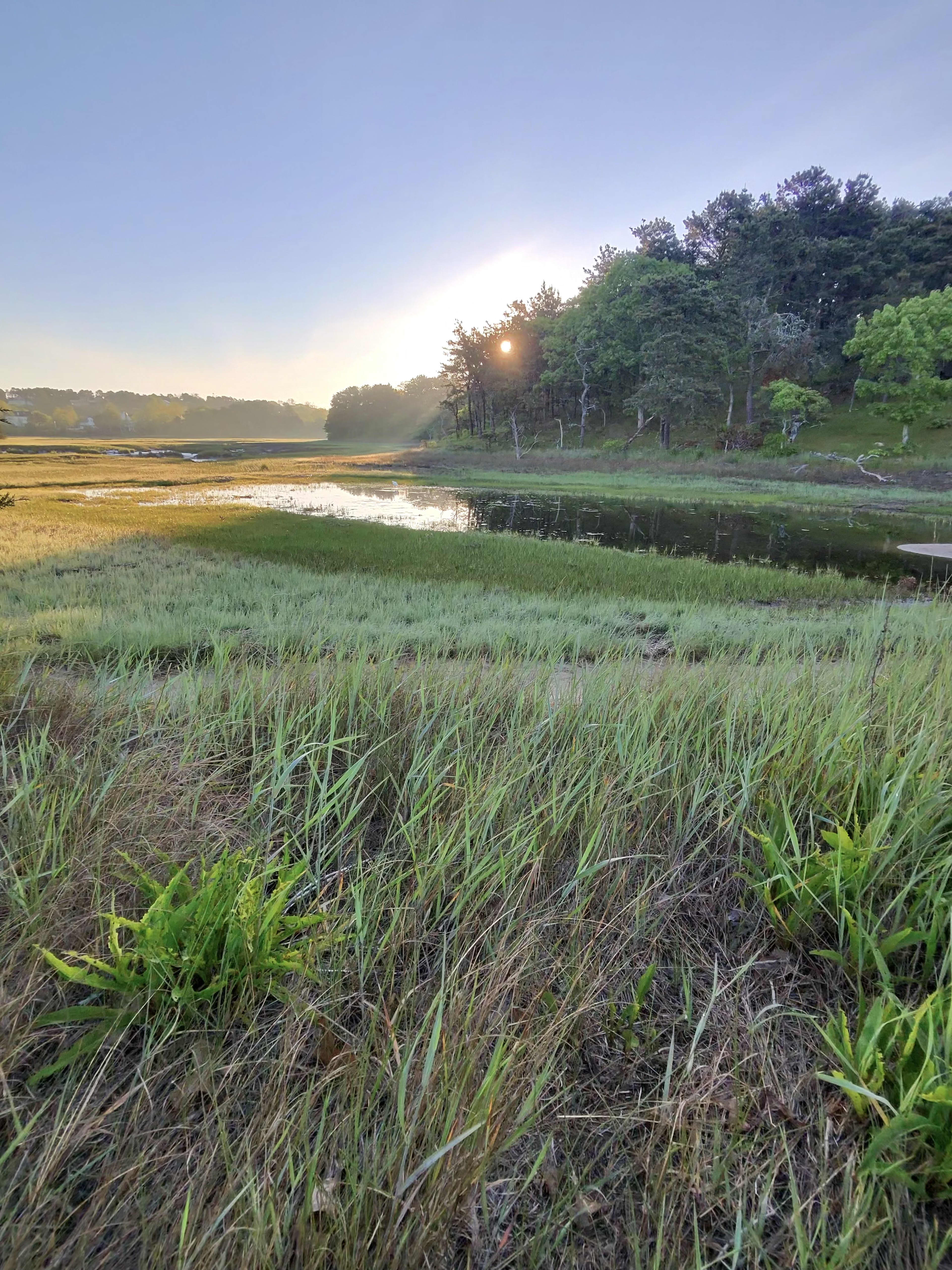
More shorebird species pass through Monomoy National Wildlife Refuge in a single August week than most inland birders see in a full year. Cape Cod sits at the intersection of two major Atlantic Flyway corridors — the outer coast and the inner bays — which means that within a ten-mile stretch in Chatham or Wellfleet, you can be watching roseate terns nesting over a colonial waterbird colony in the morning and counting peregrine falcons off a barrier beach by afternoon. This guide tells you exactly where to go, when to go, and what to look for.
The Four Core Birding Towns — and Why Each One Matters
Chatham: The Shorebird Capital
Chatham's geography creates something rare: a tidal system where massive sandbars and shallow flats concentrate tens of thousands of shorebirds during migration. The centerpiece is Monomoy National Wildlife Refuge, a two-island barrier beach system off the south end of town managed by the U.S. Fish and Wildlife Service. South Monomoy holds one of the largest colonial waterbird nesting sites in New England — common terns, roseate terns (a federally endangered species), laughing gulls, American oystercatchers, and black skimmers all nest here in numbers that are genuinely staggering.
Access to Monomoy requires a boat. Several licensed outfitters operate seasonal tours out of Stage Harbor and Outermost Harbor — check ahead for current schedules and fees, as trips are weather-dependent and frequently sell out in summer. If you're not taking a guided tour, Morris Island at the refuge's visitor contact station gives you a free, walkable vantage: the short trail out to the Morris Island overlook puts you within spotting-scope range of tern colonies and oystercatcher pairs, and the tidal flats just off the causeway hold dowitchers, yellowlegs, and red knots during peak migration.
Nauset Beach and the South Beach inlet are worth a stop too. The new inlet that breached in 2007 has created a constantly shifting flat that rearranges each season — check recent eBird reports before visiting to find out where the high-value patches are sitting.
Wellfleet: The Hawk Watch and the Salt Marsh Loop
Wellfleet Bay Wildlife Sanctuary (Mass Audubon) is the most managed and most productive single birding property on the Outer Cape. The sanctuary sits on the west side of Route 6 in South Wellfleet, with a parking lot and a staffed visitor center. Non-members pay a modest day-use fee; check ahead for current rates. The trail network — roughly 5 miles total — crosses coastal scrub, freshwater marsh, tidal flat, and salt marsh edge. The Goose Pond Trail is the workhorse loop; the Try Island Trail at low tide puts you on a tidal spit where you can work through mixed shorebird flocks methodically.
The sanctuary runs a formal hawk watch every fall, typically staffed daily from late August through October. Wellfleet Bay sits at the elbow of the Cape, where sharp-shinned hawks, Cooper's hawks, American kestrels, merlins, and peregrine falcons funnel along the bay-side ridge before crossing the water. Northern harriers quarter the marsh most mornings from September through November. On a north or northwest wind after a cold front, a single morning at the hawk watch can produce several hundred raptors.
Lieutenant Island (off Chequessett Neck Road) is less visited and underrated. At low tide, the tidal flats surrounding the island concentrate shorebirds and wading birds — great blue herons, snowy egrets, and willets work the edges alongside peeps and yellowlegs. The causeway road itself floods at high tide; time your visit against the tide chart.
Great Island in the Wellfleet unit of Cape Cod National Seashore is a long hike (up to 8 miles round trip) but pays off for owls, woodcock, and fall sparrows in the scrub.
Eastham: Fort Hill and Nauset Marsh
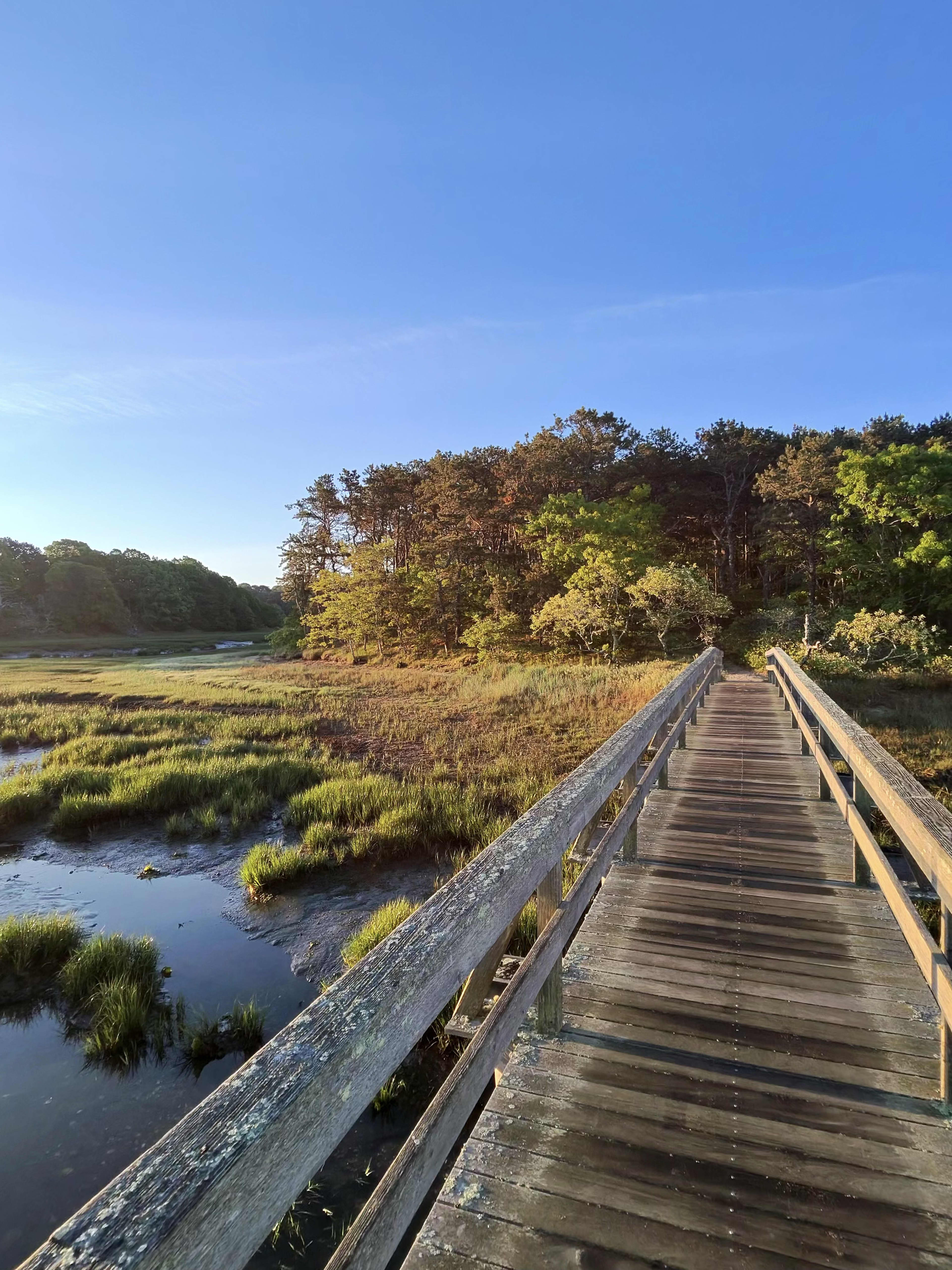
Fort Hill is one of the most reliably productive spots on the Outer Cape for a wide range of conditions. The parking area is off Governor Prence Road just east of Route 6 in Eastham, and parking is free. Two trails diverge from the lot: the Fort Hill overlook gives you a sweeping view of Nauset Marsh where you can scan for egrets, herons, and migrating waterfowl from above, and the Red Maple Swamp trail drops down into a dense, humid woodland that fills with warblers during May and September migration. In May, this swamp holds American redstarts, common yellowthroats, yellow warblers, and occasionally more uncommon warblers pushed inshore by weather. Northern waterthrushes are nearly guaranteed at the swamp edges in migration.
Coast Guard Beach and the Nauset Marsh estuary — accessible via the bike path or from the Fort Hill road — offer excellent sea duck watching in winter. The channel between the barrier beach and the marsh is where you'll find buffleheads, mergansers, and common eiders rafting in the colder months.
Eastham's open kettle ponds, particularly around Pilgrim Lake and the campground areas, are worth a quick scan in migration for loons transitioning to breeding plumage in April and May.
Provincetown: Beech Forest, Race Point, and the Tip
Provincetown is where things get unpredictable in the best way. Because it's the absolute northernmost tip of the Cape — a land hook extending 35 miles into the Atlantic — it catches migrants that have been pushed off course over open water and need to make landfall immediately. After a clear September night with northwest winds, Beech Forest in the Province Lands can hold an almost absurd concentration of wood warblers, thrushes, and vireos that have dropped into the first available trees. The parking lot off Race Point Road is free; the loop trail around the two freshwater ponds takes about 45 minutes.
The ponds themselves hold ring-necked ducks and hooded mergansers in fall and winter, and the adjacent shrubby edges are where yellow-rumped warblers and palm warblers concentrate during October.
Race Point Beach is the place to be for seabirds and raptors in fall. A spotting scope pointed offshore on a northwest wind day in September or October will find northern gannets plunge-diving, jaegers harassing terns, and occasional shearwaters. Piping plovers nest along the high beach here (and at Herring Cove) — be aware that closures are posted in nesting areas from late April through mid-August and are strictly enforced.
Hatches Harbor, reached by following the Province Lands bike path toward the harbor side, is a tidal flat and marsh complex that's exceptional for shorebirds during August and September. It's a longer walk to reach but draws significantly less foot traffic than the main beaches.
What You'll See by Season
Spring: Late April Through May
The Outer Cape activates in waves. Mid-April brings tree swallows, barn swallows, and the first returning shorebirds — dunlin still in basic plumage, black-bellied plovers beginning to show. By late April, common terns return to Chatham. May is peak warbler migration: 30-plus species are possible across all four towns in a single good morning, with Beech Forest (Provincetown) and Red Maple Swamp (Eastham) as the top spots. American oystercatchers and willets are displaying on Monomoy by early May.
Summer: June Through Early August
Breeding activity peaks. Piping plovers are incubating clutches on outer beaches — watch for posted closure zones. The Monomoy tern colonies are at maximum density in late June and early July. Common, roseate, and least terns can all be seen from the Morris Island overlook. This is the best period for boat tours to Monomoy if you want to see nesting activity from the refuge beach without disturbing birds. Shorebird migration actually begins by mid-July: red knots and semipalmated sandpipers moving south are among the earliest species back through.
Fall: July Through November — Peak Season
This is the reason serious birders plan trips to Cape Cod. Shorebird diversity peaks in August — at Monomoy and the Wellfleet Bay tidal flats, a methodical scan through mixed flocks can produce 20 or more species in a single session. Red knots (a federally threatened species) stop at Monomoy in significant numbers in late July and August, fueling on invertebrates before continuing south. Look for them in groups, medium-sized, rusty-orange in fresh plumage.
The Wellfleet Bay hawk watch peaks in September and October. Sparrow diversity in the scrub edges is highest in October: Savannah, song, swamp, white-throated, and white-crowned sparrows mix with occasional Nelson's and saltmarsh sparrows in the marsh edges. Late October and November bring scoters, long-tailed ducks, and common eiders offshore in large numbers.
Winter: December Through March
Often overlooked, winter on the Outer Cape delivers species you simply cannot see anywhere else in New England. Purple sandpipers work the rocky jetties at Provincetown harbor and Chatham fish pier — look for them on wave-washed rock alongside turnstones. Sea ducks crowd the bay: surf scoters, white-winged scoters, black scoters, common eiders, long-tailed ducks, and red-breasted mergansers are all present in good numbers. Horned grebes and common loons winter in the harbor channels.
In irruption years — roughly every three to five years — snowy owls appear on the outer beaches, most reliably at Race Point and along the Provincelands. Check eBird in December for current sightings. Short-eared owls hunt Nauset Marsh at dusk from October through March; arrive 30 minutes before sunset and watch the marsh at Fort Hill.
Best Time to Go
The single best week to plan a dedicated birding trip is mid-August to early September: shorebird diversity is at its highest, the tern colonies are still active, hawk migration is beginning, and the weather is comfortable. If shorebirds aren't your priority, the second and third weeks of May deliver the highest warbler diversity. For sea ducks and winter specialties, December and January are reliable — crowds are nonexistent and many locations that are pay-to-park in summer are free.
Avoid Cape Cod for birding on weekends in July and early August unless you're going to Monomoy by boat or birding before 7am. Popular parking areas at Fort Hill, Beech Forest, and Wellfleet Bay fill early and trail traffic disturbs birds at the most productive hours.
Practical Notes for Planning Your Trip
Optics: A 8x42 or 10x42 binocular handles most situations. A spotting scope (60–80x) pays for itself at Monomoy, the Wellfleet hawk watch, and any offshore sea duck session. If you don't own a scope, some guided tours provide optics.
eBird: The Cape Cod eBird hotspot data is excellent. Before visiting any of these locations, check recent sightings at the specific hotspot — Wellfleet Bay Wildlife Sanctuary, Fort Hill/Nauset Marsh, and Monomoy NWR all have dedicated eBird hotspots with active reporter communities.
Tides matter more than you think: At Lieutenant Island (Wellfleet), Hatches Harbor (Provincetown), and the tidal flats at Wellfleet Bay, the best birding is in the two hours before and after low tide. A tide chart for the specific bay side (Wellfleet/Provincetown tides run roughly an hour behind Chatham tides) is worth bookmarking.
Parking and fees: Cape Cod National Seashore parking areas (Race Point, Herring Cove, Coast Guard Beach) charge daily fees from late May through September. An annual National Parks pass covers all of them. Wellfleet Bay Wildlife Sanctuary charges a day-use fee for non-Mass Audubon members. Most other locations in this guide — Fort Hill, Beech Forest, Morris Island, Lieutenant Island — are free.
Beach closures: Piping plover and least tern nesting areas are closed and marked from late April through mid-August. Closures at Race Point and Herring Cove can limit access to portions of the beach. This is non-negotiable; violations carry significant fines and disrupt nesting birds.
Guided tours: Mass Audubon Wellfleet Bay runs periodic birding field trips and hawk watches open to the public — check their events calendar. Several Chatham-based boat operators run Monomoy NWR tours in season; book as early as possible for July and August dates.
Beaches & trails in this guide
Plan Your Cape Cod Birding Trip with Local Help
The birding hotspots in this guide sit within a broader ecosystem of nature-focused experiences on the Outer Cape. Browse the Cape Cod Certified directory for wildlife tour operators, kayak outfitters (paddling Nauset Marsh at dawn is an excellent way to access herons and marsh birds), and lodging in Wellfleet, Eastham, and Chatham that puts you minutes from the top sites. For related guides, see our Wellfleet guide, Provincetown guide, and Cape Cod wildlife experiences curated from verified local operators.
Plan it with Cape Cod Certified
Get the best of Cape Cod — free.
Guides, hidden spots, and seasonal tips from people who actually live here.
Frequently asked questions
How do you get to Monomoy National Wildlife Refuge?
Monomoy is a barrier island accessible only by boat. Licensed tour operators run seasonal trips out of Chatham — check ahead for current schedules and fees, as trips are weather-dependent and sell out quickly in summer. The Morris Island visitor contact station is reachable on foot and puts you within spotting-scope range of the tern colonies.
When is the best time to visit Cape Cod for birding?
Mid-August through early September is the peak window, combining peak shorebird diversity, active tern colonies, and the start of hawk migration with comfortable weather. If warblers are your priority, the second and third weeks of May are best. Winter brings sea ducks and occasional snowy owls with far fewer crowds.
What birds can I see at the Wellfleet Bay hawk watch?
The hawk watch runs through fall, typically staffed daily from late August through October. Sharp-shinned hawks, Cooper's hawks, American kestrels, merlins, and peregrine falcons funnel along the bay-side ridge on north or northwest winds after cold fronts. Northern harriers are also regular over the marsh into November.
Are Cape Cod beaches closed for piping plovers?
Yes — piping plover and least tern nesting areas are closed and marked through the spring and summer nesting season at beaches including Race Point and Herring Cove. The closures are strictly enforced and violations carry significant fines. Check posted signs on arrival, as affected sections can shift each season.
Do I need a spotting scope for birding on Cape Cod?
A standard binocular handles most situations, but a spotting scope pays off at Monomoy, the Wellfleet hawk watch, and offshore sea duck sessions where birds are distant. Some guided tours provide optics if you don't own one. Check eBird hotspot reports before each visit to know where to focus.