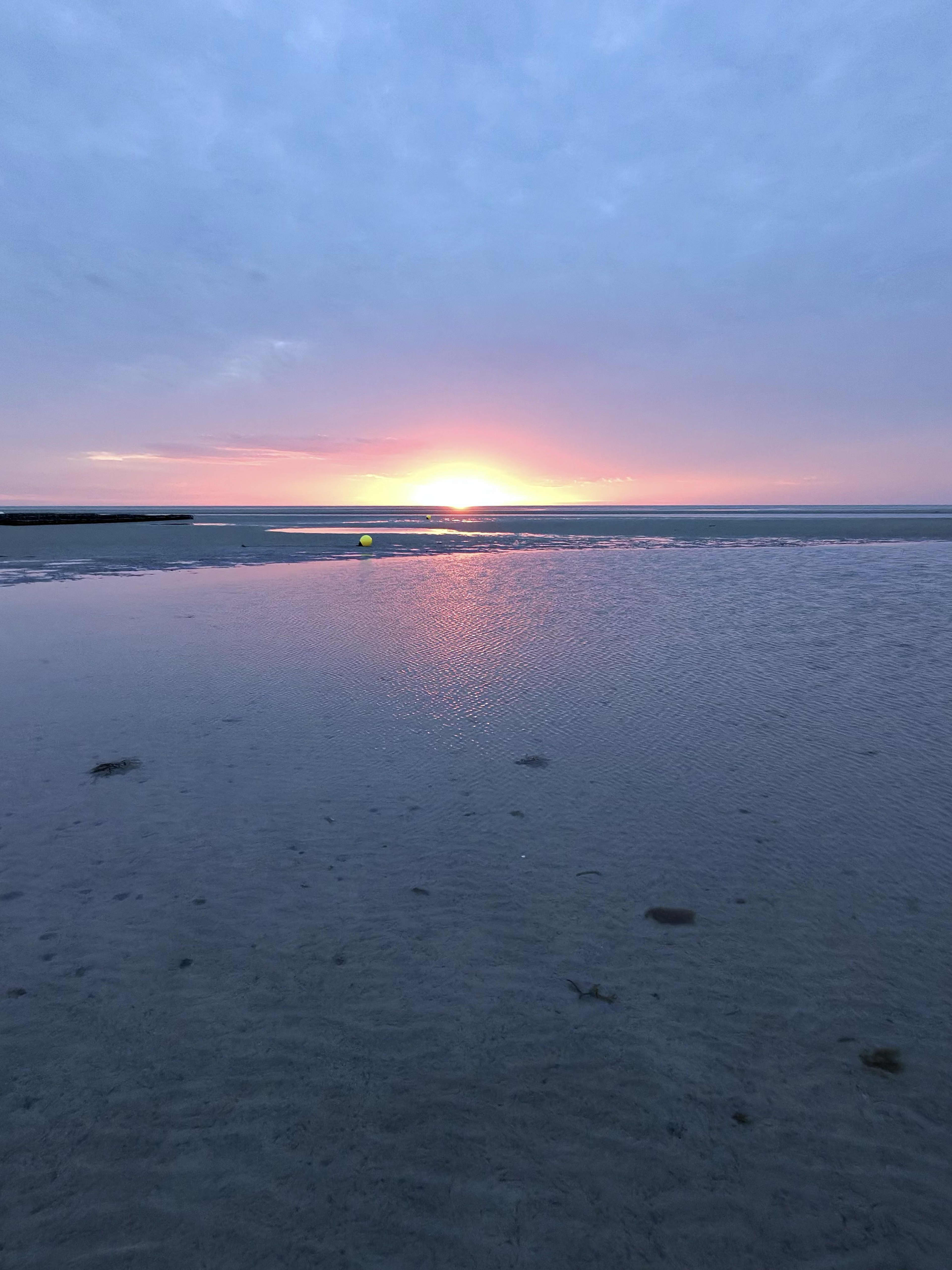
On warm summer nights in July, August, and September, parts of Cape Cod Bay and the Outer Cape harbor glowing water. It looks like something from a nature documentary — kayak paddles trailing trails of blue-green light, waves breaking in neon, the water glowing around your hands when you dip them in. This is Cape Cod bioluminescence, caused by single-celled marine organisms called dinoflagellates (most commonly Noctiluca scintillans) that produce light when physically disturbed. Most visitors never know it exists. This guide tells you where to find it, when to go, and how to make the most of it when conditions align.
The Science Behind Cape Cod Bioluminescence
Dinoflagellates are phytoplankton — microscopic photosynthetic organisms that form the base of the marine food web. Certain species (particularly Noctiluca scintillans, sometimes called "sea sparkle") produce luciferin, a compound that reacts with oxygen when the cell is physically stressed or disturbed, emitting a burst of blue-green light. In high concentrations — a dinoflagellate bloom — millions of cells light up simultaneously, turning disturbed water visibly luminous.
The same phenomenon has been documented worldwide: the famous "Sea of Stars" at Vaadhoo Island in the Maldives, the bioluminescent bays of Puerto Rico, the glowing surf of Southern California. On Cape Cod, it is neither publicized nor commercially packaged on any significant scale. That is exactly what makes finding it feel like a genuine discovery rather than a ticketed attraction.
The light from each individual cell lasts a fraction of a second — a flash triggered by mechanical stress. With enough organisms concentrated in warm, calm water, the cumulative effect is sustained and unmistakable. The chemistry is similar to firefly light: a convergent evolutionary trick that different organisms developed independently, many times over, across the tree of life.
Where to See Cape Cod Bioluminescence
Dinoflagellate blooms concentrate in calm, warm, shallow, nutrient-rich water — conditions found in the Cape's protected Bay-side harbors and estuarine systems rather than on the exposed Atlantic surf beaches.
Wellfleet Harbor and the tidal flats are the most consistently reported location for bioluminescence on Cape Cod. The protected harbor warms significantly through the summer, and the broad shallow flats create conditions where Noctiluca populations build over the season. Kayakers in Wellfleet Harbor in August have described paddle strokes that leave sustained trails of blue fire and a bow wake that glows with each movement. The town landing near Mayo Beach and the area around Wellfleet Center provide harbor access; confirm current public kayak launch points before you go. Wellfleet's working harbor — oyster boats at anchor, the quiet of a weeknight — makes this one of the more atmospheric locations on the Cape for a night paddle regardless of whether the bioluminescence delivers.
Barnstable Harbor and the Sandy Neck side of the Bay have received bioluminescence reports from local kayakers, though less frequently documented than the Outer Cape. The long barrier beach at Sandy Neck creates protected shallow water on its harbor-facing side that warms considerably in late summer — structurally similar to Wellfleet Harbor and worth trying if you are based in the Upper Cape.
Nauset Marsh (Eastham and Orleans) is a compelling but less-documented candidate. The estuarine system — a mosaic of tidal creeks, sheltered coves, and salt marsh — is warm, calm, and nutrient-rich throughout August. Whether bioluminescence has been reliably documented here is uncertain; the marsh's complex layout also requires local knowledge to navigate at night.
Provincetown Harbor, sheltered inside the curl of the Cape's tip, is calm and warm in summer. Kayakers launching from the East End and working the inner harbor after dark may encounter it during bloom conditions.
Open Atlantic beaches — Race Point, Coast Guard Beach, Nauset Beach — are less reliable targets. Breaking surf can glow during a strong bloom, but wave action and wind tend to disrupt dinoflagellate concentrations and make nighttime shore observation more difficult.
When Cape Cod Bioluminescence Peaks
Season: July through September. August and early September are the peak months, when Bay water temperatures crest their summer maximum — often above 70°F in the shallows — and dinoflagellate populations have had the full summer to build. Sightings are possible from late July; by mid-October, cooling water signals the reliable end of the season.
Moon phase: this is the single most controllable planning variable. Go on or near a new moon. On a full moon night, ambient light overwhelms the faint blue-green glow. On a moonless night, the same bloom can be brilliant and unmistakable. Build your trip around the lunar calendar as much as logistics allow — the difference between a half moon and a new moon night is the difference between seeing almost nothing and seeing clearly.
Weather: calm wind (ideally under 10 knots), no recent heavy rain, stable warm conditions. Chop disrupts concentrations and makes night paddling harder. Recent heavy rain drops surface salinity quickly and can break up a developing bloom. The ideal is a warm, still evening after a stretch of settled, sunny summer weather.
Time of night: full dark, which in July and August on Cape Cod means after 9pm. Peak viewing is 10pm to midnight. Allow your eyes 20 to 30 minutes to dark-adapt after leaving artificial light — this is not optional. Resisting the urge to check your phone during the paddle pays off.
How to Experience Glowing Water on Cape Cod
Kayaking is the most reliable and most spectacular method. Paddle strokes trail light; the bow pushes glowing water aside; the hull leaves a wake that lingers for a moment before fading. In peak bloom conditions, a kayak in motion through bioluminescent water is legitimately extraordinary — the kind of experience that is difficult to describe to someone who has not seen it.
Some Outer Cape outfitters schedule guided bioluminescent night paddles during August when conditions look favorable. These are not fixed on a calendar the way whale watches are; operators often announce them when conditions align. Contact Jack's Boat Rentals in Wellfleet for current night paddle offerings, and check with Orleans outfitters for access to the Nauset Marsh system; confirm which operators currently offer bioluminescent night paddles and whether advance booking is required.
Swimming produces a different, more intimate effect. In documented bioluminescent water, the glow surrounds your body in motion — arm strokes trail light, kicks produce flashes. This is the most immersive experience possible, and also the one requiring the most care: swimming at night in an unfamiliar harbor demands a partner, a known calm-water location, and the ability to be seen from shore.
Shoreline watching asks the least of you. Stand at the water's edge in a calm harbor during bloom conditions, watch waves at the shoreline, and disturb the shallows with your foot or hand. In a genuine bloom the disturbance response is immediate. Less dramatic than being on the water, but accessible to anyone who can reach the harbor's edge at night.
Practical Advice Before You Go
Manage expectations honestly. There is no real-time reporting system or app specific to Cape Cod bioluminescence, though informal local networks such as community Facebook groups sometimes share sightings. You are placing an educated bet based on season, moon phase, and recent conditions. When the bet pays off, the experience is unlike anything else on the Cape. When it does not — faint glow, wrong conditions, early season — you still spent a summer night on the water in Wellfleet Harbor, which is not nothing.
Safety for night kayaking. Do not paddle alone at night in unfamiliar water. Wellfleet Harbor has channel markers, local boat traffic, and tidal current to contend with; Barnstable Harbor is an active working harbor. Go with someone who knows the water, or book a guided trip. Massachusetts law requires that all kayakers have a Coast Guard-approved personal flotation device aboard and that younger children wear one at all times; confirm the current Massachusetts PFD regulations, which vary by age and vessel type. Carry a white light visible to power boats — required on the water after dark. A headlamp with a red-light mode preserves your dark adaptation while giving you enough visibility to manage the boat.
Tell someone your plan. A float plan — where you are launching, where you intend to paddle, and when you expect to be back — shared with someone ashore is not overcautious. It is the minimum responsible standard for any night paddle in unfamiliar water.
The right frame of mind. Go prepared for an extraordinary night on the water whether or not the bioluminescence peaks. The harbor at midnight, the silence, the Cape's summer sky overhead — these are worth the trip on their own terms. The glow, when it comes, is a bonus that cannot be fully engineered. That unpredictability is precisely what makes Cape Cod bioluminescence feel like a genuine secret and not a scheduled event.
Know Before You Go
- What causes it: dinoflagellate phytoplankton (primarily Noctiluca scintillans) producing blue-green light when disturbed
- Best locations: Wellfleet Harbor, Barnstable Harbor, Provincetown Harbor inner area — calm Bay-side waters, not exposed Atlantic beaches
- Peak season: August and early September
- Best conditions: new moon night, calm wind, warm water, full dark after 9–10pm
- Best method: night kayaking; also swimming or quiet shoreline observation
- Guaranteed?: No — conditions are natural and variable; new moon + late summer timing gives you the best odds
- Guided options: some Wellfleet and Orleans outfitters offer bioluminescent night paddles in season (confirm current operators)
Beaches & trails in this guide
Explore more of Cape Cod's wild side — from Brewster's tidal flats at low tide to whale watches off Provincetown — at capecodcertified.com/directory.
From Reading to Doing — Start Here
Get the best of Cape Cod — free.
Guides, hidden spots, and seasonal tips from people who actually live here.
Frequently asked questions
When is the best time of year to see bioluminescence on Cape Cod?
Late summer is the peak season, when bay water is warmest and the glowing plankton have built up. Plan around a new moon, since moonlight washes out the faint glow, go out well after dark and give your eyes time to adjust.
Where should I go to see glowing water on Cape Cod?
Wellfleet Harbor is the most consistently reported location, where protected warm shallows let dinoflagellate populations build through summer. Barnstable Harbor and Provincetown Harbor are also worth trying. Stick to calm Bay-side harbors rather than the exposed Atlantic surf beaches, where wave action tends to disrupt concentrations.
What causes the water to glow blue-green at night?
The glow comes from microscopic single-celled organisms called dinoflagellates — primarily a species known as Noctiluca scintillans, or sea sparkle — that emit a burst of blue-green light when physically disturbed. In a bloom, millions of cells flash simultaneously, so a paddle stroke, a breaking wave, or a hand dragged through the water triggers a visible glow.
Can I see Cape Cod bioluminescence without a kayak?
Yes — the simplest method is shoreline watching: stand at a calm harbor's edge and disturb the shallows with your hand or foot, and in a genuine bloom the response is immediate. Swimming gives a more immersive effect but requires a partner and a known calm location. Guided night kayak trips run from some Wellfleet and Orleans outfitters in season; confirm current availability.
Is there an app or website to check if bioluminescence is happening tonight?
There is no real-time app or reporting system dedicated to Cape Cod bioluminescence. Your best strategy is to plan around late August, a new moon, calm wind, and a stretch of warm settled summer weather — those conditions together give you the best odds. Community Facebook groups sometimes share recent local sightings.