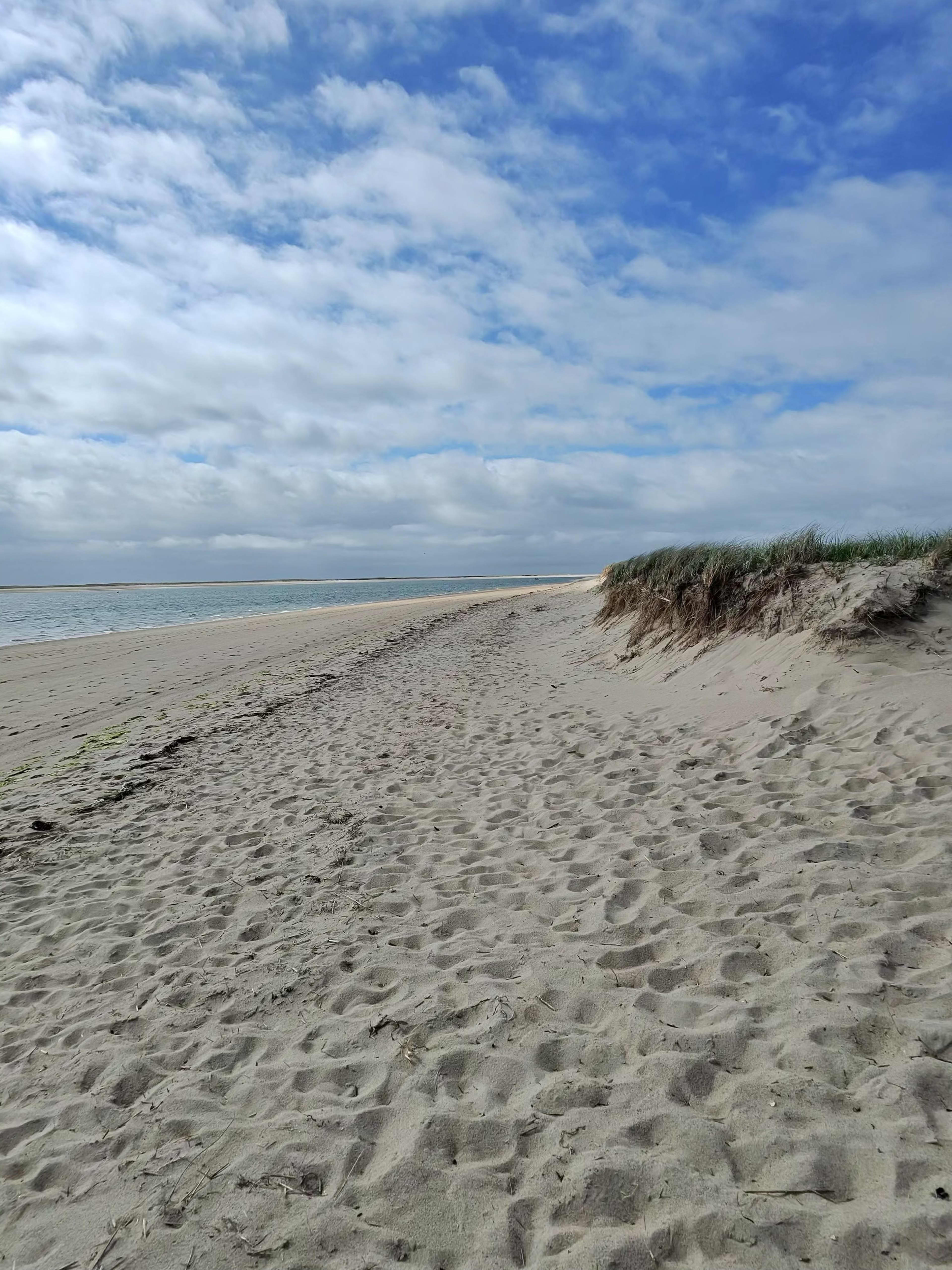
If you've spent the whole summer watching "no dogs" signs from the parking lot, mid-September is your signal. Most Cape Cod towns lift their warm-weather beach restrictions around this time, and what opens up is extraordinary: miles of National Seashore frontage, tidal flats that stretch to the horizon, ocean-side trails, and a coastline that's almost entirely yours. Fall on the Outer Cape is arguably the best dog experience in New England, and almost nobody outside the region knows it.
This guide covers how the seasonal rule change works, where to go once it does, what to watch for on outer beaches, and how to find lodging that actually means it when they say "pets welcome."
How the Seasonal Rules Flip — And Why You Need to Verify
The short version: most Cape towns shift to more permissive dog rules sometime in the mid-September window, but the exact trigger — a calendar date, a posted sign, a call to the harbormaster — varies town by town and sometimes beach by beach. Some towns require dogs on leash year-round. Others lift leash requirements in the off-season on certain beaches only. National Seashore beaches run on their own schedule that doesn't always follow local ordinances.
This is not the place to nail down specific dates — rules change season to season, and citing last year's details would send you on a wasted drive. Before you load up the car, check the dog beach rules by town guide, then confirm with the town's harbormaster or parks department directly. A two-minute call saves a frustrating turnaround.
What you can plan around with confidence: the shoulder season consistently opens more access than summer across virtually every town on the Cape. That pattern holds year after year, even when specific dates shift.
The Best Fall Dog Beaches
Outer Cape — National Seashore Beaches
The outer beaches managed by Cape Cod National Seashore are the crown jewel of fall dog access. During summer, dogs are prohibited on most of these beaches during peak hours. In the off-season, those restrictions ease — dogs are generally welcome on the ocean beaches and in the Province Lands. Confirm current rules at the park visitor center or CCNS website before you go, because specific beach designations can shift.
What opens up is hard to overstate: Marconi Beach, Coast Guard Beach, Nauset Light Beach — empty. Wide sand, cold surf, zero crowds. A dog can cover a quarter mile in a straight line without coming near another person. The September light on the Outer Cape is flat and golden and unlike anything in summer.
For a breakdown of access points and conditions by beach, the dog-friendly beaches guide is your starting point.
Bayside Beaches
Bay-side beaches in towns like Brewster, Dennis, Sandwich, and Barnstable tend to become friendlier to dogs as soon as the summer season ends. The tidal flats here are extraordinary in fall — low tide exposes enormous stretches of sand, and a dog on a long lead can splash through ankle-deep water for a full morning. After Labor Day, you often have a flat the size of a small airport to yourself.
Mid-Cape Town Beaches
Mid-Cape towns follow their own ordinances, which generally ease after the summer season. Chatham in particular has several access points where off-season rules make dog walking far more practical. The rules-by-town guide is the authority for specifics — don't rely on what was posted last year.
Trails: Where Fall Actually Shines
Beaches get the attention, but fall trails may be the better dog experience on the Cape. The light filtering through oak and pitch pine at this time of year is something else entirely, and the footing — sandy, pine-needle-covered, mostly flat — is forgiving on older dogs.
Cape Cod Rail Trail
The Rail Trail runs roughly 25 miles from Dennis to Wellfleet, paved and dog-friendly year-round. In fall, it's quieter than any other season, the trailside cranberry bogs hit peak color, and connector spurs into the CCNS interior open up serious mileage. It's as close to a dog highway as the Cape has.
Nickerson State Park (Brewster)
Nickerson's trail network loops around kettle ponds and through cathedral-ceiling pines — gorgeous in fall, and open to leashed dogs throughout the park. The ponds allow dogs at the water's edge, which most dogs find difficult to pass up.
Province Lands (Provincetown)
The Province Lands trail system at the tip of the Cape is the most dramatic terrain on the peninsula: dune parabolas, stunted forest, Atlantic views in every direction. The bike path loops are dog-friendly, and in October you often share them with almost no one.
The dog-friendly trails guide has a detailed breakdown of surface type, length, and leash requirements across the Cape.
Seal Safety: This Is Not Optional Reading
If you're on any outer beach from Chatham north through Provincetown in fall, you will encounter seals. Gray seal populations on the Outer Cape have grown significantly over the past two decades, and by September and into October, haul-outs — groups of seals resting on the beach — can be large.
Keep your dog well back from any hauled-out seal. The risks go in both directions:
- To the seal: Harassment of marine mammals is a federal offense under the Marine Mammal Protection Act. A dog charging a resting seal constitutes harassment, whether the dog is friendly or not. Rangers do issue citations.
- To your dog: A gray seal is a large, powerful animal with a strong bite. A seal that feels cornered or threatened will defend itself. Dogs have been injured in encounters on Cape beaches.
The standard guidance from wildlife managers: if your presence causes the seal to move, you're already too close. For dogs, that threshold comes even sooner. Leash your dog on any beach where seals are present, regardless of off-season rules, and give hauled-out groups a wide berth — more than feels necessary.
If you encounter a seal that appears injured or is alone and stationary (not part of a resting group), the Atlantic White Shark Conservancy and IFAW both maintain marine mammal response hotlines. Don't approach. Call.
Tick Season Does Not End in September
0 of 5 checked
Many dog owners associate ticks with spring and summer. On Cape Cod, fall is active tick territory — sometimes more than midsummer, because deer movement increases and vegetation thickens with seasonal turnover. Deer ticks (black-legged ticks, which can transmit Lyme disease) and American dog ticks are both present through late fall.
Tick prevention checklist for your dog
Check yourself and any family members with the same care. Ticks that ride in on your dog often transfer to people in the car or at home.
Dog-Friendly Fall Lodging: What "Pet Friendly" Actually Means
Summer lodging on Cape Cod operates on compressed-demand logic: limited availability, and many properties that technically allow pets but make it difficult in practice — restrictive weight limits, no outdoor spaces, fees that feel punitive. By mid-September, the market shifts. Properties that were locked through August have availability. Rates come down. And more owners are genuinely willing to accommodate dogs.
When evaluating a property for a dog trip, the questions that actually matter:
- Is there a fenced yard, or at minimum a contained outdoor area?
- Is the dog allowed on furniture and in the bedroom, or are there specific restrictions?
- Are there hardwood or tile floors versus wall-to-wall carpet?
- What's the nearest beach or trail access from the property?
- Is there a hose or outdoor shower for rinsing sand off the dog after a beach day?
The dog-friendly lodging guide lists vetted properties with specific pet policy details, so you're not parsing fine print on a booking platform at midnight.
Fall Patios
Many Cape restaurants extend patio service into October, particularly on the Lower and Outer Cape where shoulder-season dining culture is strong. Provincetown, Wellfleet, and Chatham all have spots where a well-behaved dog on a leash is welcome at an outdoor table. In Provincetown especially, dog friendliness is practically a civic value — you'll see dogs on restaurant patios, at galleries, and on the main commercial street with their owners on any fall weekend.
Call ahead to confirm patio availability and pet policy before you go. Not every listing stays current.
Putting a Fall Dog Trip Together
A few final notes:
- Fall weather on the Cape is genuinely beautiful but variable. Bring layers. Morning fog can give way to sunny, 65-degree afternoons, and a warm day in late September can flip overnight.
- National Seashore beach parking is free once the season closes — confirm the current transition date with CCNS directly rather than assuming last year's dates.
- Call the harbormaster's office in any town you're visiting to confirm current dog rules before you go. Five minutes of planning prevents a wasted trip.
- For a broader picture of fall travel — restaurants open, events, what the Cape actually looks like after summer ends — the Cape Cod in September guide covers the shoulder season in full.
The fall is the local's season. The beaches are long, the parking is free, the lodging prices are reasonable, and for the first time all summer, your dog gets to use the Cape the way it should be used — nose-down in the salt air, sand between their toes, the whole Atlantic in front of them.
Beaches & trails in this guide
Get the best of Cape Cod — free.
Guides, hidden spots, and seasonal tips from people who actually live here.
Frequently asked questions
When can I bring my dog to Cape Cod beaches?
Most Cape towns lift warm-weather dog restrictions sometime around mid-September, but the specific trigger varies by town and even by individual beach — it could be a calendar date, a posted notice, or a town harbormaster decision. Check the dog beach rules by town guide and then call the town directly before you go. Showing up without confirming is how you end up turning around in a full parking lot.
Is it safe to let my dog near seals on the beach?
No. Keep your dog on leash and well back from any hauled-out seals on the outer beaches. Approaching a resting seal is harassment under federal law, regardless of your dog's intentions, and gray seals are large enough to seriously injure a dog that gets too close. If your presence causes the seal to move, you were already too close.
Are ticks still active on Cape Cod in September and October?
Yes. Fall is active tick season on the Cape — deer movement increases and vegetation thickens, which can make fall as risky as summer for tick exposure. Apply veterinarian-recommended tick prevention before your trip, do full body checks on your dog after every trail walk or beach visit, and carry a proper removal tool. Check yourself and your family members too.
What should I look for in dog-friendly Cape Cod lodging in the fall?
Beyond the pet policy itself, ask specifically about fenced outdoor space, floor types, furniture rules, and proximity to trails or beach access. Off-season rates and availability are significantly better than summer, and many properties that were full or restrictive in August become genuinely dog-welcoming by mid-September. The dog-friendly lodging guide lists vetted properties with specific policy details.