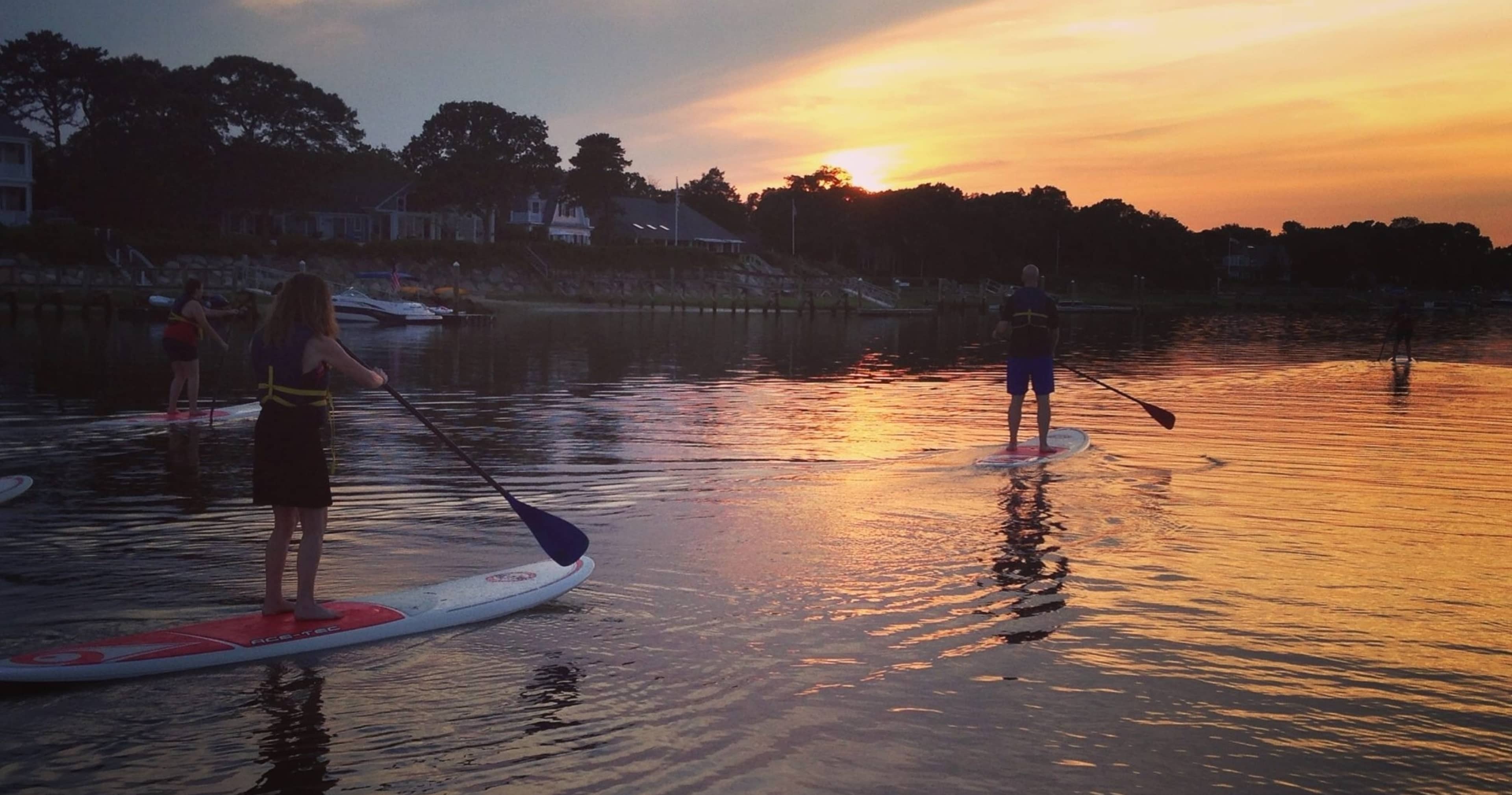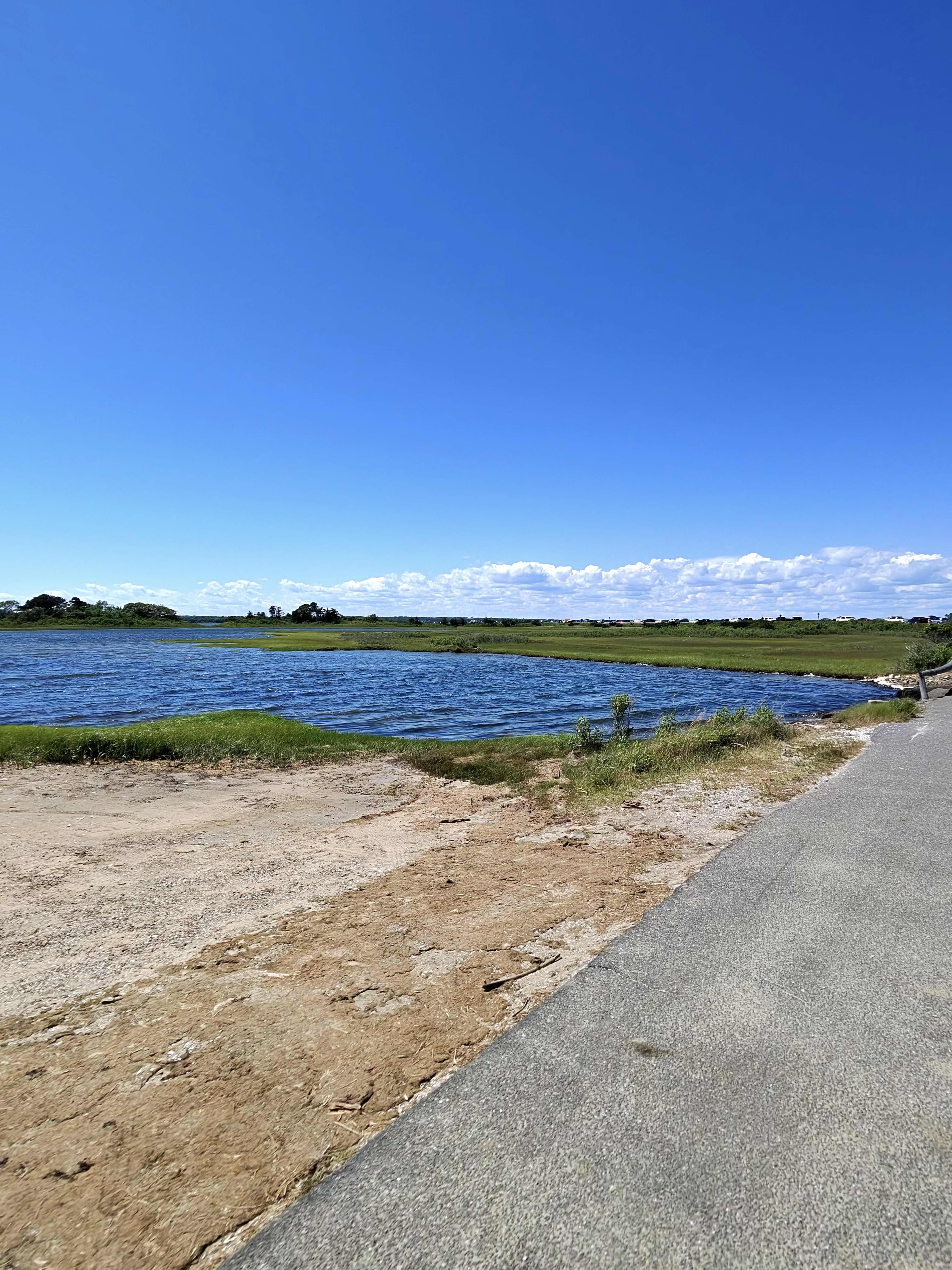
Cape Cod has more than 360 freshwater kettle ponds — the direct legacy of glaciers that deposited massive ice blocks across this sandy peninsula roughly 10,000 years ago. As those buried ice chunks melted, they left bowl-shaped depressions in the glacial soil. Today those depressions fill not from the ocean but from groundwater and rainfall, which means no tides, no salt, no waves, no sharks — and, by late July, water temperatures that make the Atlantic feel arctic by comparison.
That last point matters more than most visitors realize. Cape Cod's ocean water rarely warms above 65°F until late August on the Atlantic side, and even the calmer Bay side struggles to break 70°F before mid-summer. The ponds reach 74 to 80°F by late July and hold that warmth through August. On days when Great White Shark alerts shut down Nauset Beach or Cahoon Hollow, on days when the surf is too rough for small children, or on days when every ocean parking lot is full before 9am, the ponds are the local answer.
Here is where to go, what to expect, and how to navigate the sticker situation that trips up most visitors.
Nickerson State Park Ponds, Brewster: The Benchmark for Freshwater Ponds Cape Cod Swimming
Flax Pond and Cliff Pond, both inside Nickerson State Park off Route 6A in Brewster, are the most reliably accessible freshwater swimming destinations on the Cape — and the best starting point for visitors unfamiliar with pond swimming here.
Flax Pond is the smaller of the two and has a dedicated swimming beach with lifeguards on duty during the summer season (coverage is typically not seven days a week — confirm days and hours before relying on it). The water is clear, the bottom is sand, and the pond is ringed by pitch pine and oak forest that gives it an entirely different atmosphere from the ocean beaches. If you have young children who are overwhelmed by ocean surf, this is where you start.
Cliff Pond is larger and less formally managed. There is a boat launch that accommodates kayaks and canoes, which makes it better suited for a paddling circuit than a dedicated beach day — though swimming is permitted throughout. Early morning, Cliff Pond in the low mist of a summer day is one of the quieter beautiful moments the Cape offers.
The critical access point: entry to Nickerson State Park requires either a Massachusetts State Park annual pass or a day-use fee for non-resident vehicles. Because Nickerson is a state park rather than a town facility, visitors can pay their way in without needing a town resident sticker. That makes it the single most practical freshwater destination for Cape visitors. Parking fills quickly on summer weekends — arrive by 8:30am or plan for a longer walk from overflow areas.
Scargo Lake, Dennis: Views and Depth
Scargo Lake in Dennis is one of the deeper natural kettle ponds in the region — notably deep for this part of the world, which keeps the water clear and the bass fishing productive through the season.
The signature feature is Scargo Tower — a stone observation tower at the lake's edge that offers one of the better panoramic views on the mid-Cape. On clear days you can see the Provincetown Monument to the north and the arc of Cape Cod Bay to the west. The climb is short and easy, and the tower is free to enter.
For swimming, there is a town beach on the lake; Dennis has historically required resident stickers at some access points, so confirm non-resident parking before you go. Scargo Lake is off Scargo Hill Road in Dennis, and the drive through the wooded back roads of Dennis to reach it is itself a pleasant detour from Route 6A's summer traffic.
Mashpee-Wakeby Pond: The Largest Freshwater Body on the Cape
Mashpee-Wakeby Pond is the largest freshwater lake on Cape Cod by surface area. It sits in Mashpee on the Upper Cape, accessed from the South Sandwich Road public landing, and is a different experience from the quieter Outer Cape ponds — open water, popular with motorboats and anglers targeting largemouth bass, pickerel, and panfish.
For swimmers, the Johns Pond area in Mashpee offers some public beach access; confirm current public access and whether non-residents may park without a sticker. Day-trippers should confirm access before making the drive — this pond is more commonly used by residents and second-home owners with private waterfront than by walk-up visitors. That said, if you are staying in Mashpee, Falmouth, or anywhere on the Upper Cape, this is your closest large freshwater option. On a flat-calm summer morning, the scale of the lake — wide open, no ocean smell — provides a genuine change of pace.
Long Pond, Harwich and Brewster: The Accessible Mid-Cape Option
Long Pond straddles the Harwich-Brewster town line and has multiple public access points, making it the most practical freshwater destination for visitors staying in the Mid-Cape corridor. The Harwich side has the most accessible town beach for swimming; confirm sticker requirements for non-residents and parking rules at each access point.
The pond is large enough to feel genuinely open while still sheltered enough that light wind does not produce real chop. The eastern end sees lighter boat traffic, making it well suited for paddleboarding. Long Pond has a healthy largemouth bass population, and the fishing draws local anglers year-round — but designated swim areas are separated from fishing zones, so there is no conflict.
Great Pond, Eastham: Quiet and Close to the National Seashore
Great Pond in Eastham sits close to the Cape Cod National Seashore corridor and offers a substantially quieter alternative to the Seashore's Atlantic beaches on the days when those parking lots close before noon. It is smaller than Gull Pond and Scargo Lake, which means crowds are self-limiting — the beach area is modest, and it tends to attract locals and campers from nearby campgrounds rather than large weekend groups.
As with most town ponds, confirm whether Eastham requires a town sticker at the landing, and check the road approach, before you go.
Practical Notes Before You Go
The sticker reality. This is the most important practical issue for visiting swimmers. Many Cape Cod towns restrict parking at their pond beach access points to residents and seasonal permit holders during July and August. The restriction is real and enforced on summer weekends. Your best options as a non-resident: use Nickerson State Park (state day fee, no town sticker needed), arrive before 8:30am on weekdays, walk or bicycle in from a nearby parking spot, or visit after Labor Day when enforcement eases considerably.
No sharks, full stop. Cape Cod's kettle ponds are entirely hydrologically disconnected from the ocean. There are no Great White Sharks, no striped bass, no ocean species of any kind. On days when the SharkSmart app shows alerts at Nauset Beach or Cahoon Hollow Beach, the ponds are not a compromise — for families with young children, they are often the better choice.
Water temperature. Ponds warm to 74 to 80°F by late July and hold that warmth through August. The Atlantic Ocean on the Outer Cape rarely reaches 65°F before late August. For young children or anyone who finds the ocean too cold to swim comfortably, the ponds win on temperature every time.
Calm water. Kettle ponds produce no surf and minimal chop except in strong sustained wind. Zero shore break. Ideal for children learning to swim, older adults, and anyone who finds the Atlantic's wave action stressful rather than fun.
Fish and swimmers coexist. Most ponds have healthy populations of largemouth bass, white perch, pickerel, and bluegill. None of these fish pose any concern to swimmers. Town beach areas designate separate zones for swimmers and anglers, and the fish themselves move away from human activity.
Beaches & trails in this guide
Looking for more local spots that the parking-lot crowds have not discovered? Browse the Cape Cod Certified directory at capecodcertified.com/directory for vetted recommendations across every town — from Bourne to Provincetown.
Pack Smart for This One
Cape Cod Certified picks — essentials worth packing for this trip:
- MalsiPree Portable Dog Water Bottle — $15: One-handed, leak-proof bottle with a built-in bowl that recycles unused water back into the bottle. Under six ounces and ready for every boardwalk, trail, and dune walk.
- Sun Bum Mineral SPF 30 Sunscreen Lip Balm — $4: Zinc-based broad-spectrum lip protection with vitamin E; reef-safe.
Turn This Into a Plan
Get the best of Cape Cod — free.
Guides, hidden spots, and seasonal tips from people who actually live here.
Frequently asked questions
Are there sharks in Cape Cod's freshwater ponds?
No — Cape Cod's kettle ponds are entirely hydrologically disconnected from the ocean, so there are no Great White Sharks or any ocean species whatsoever. On days when shark alerts close Atlantic beaches like Nauset or Cahoon Hollow, the ponds are a genuine alternative, not a compromise.
How warm do Cape Cod ponds get compared to the ocean?
By late July the ponds are substantially warmer than the Atlantic, which stays cool on the Outer Cape well into late summer. The ponds hold their peak warmth through August, making them the better choice for young children or anyone who finds the ocean too cold to swim comfortably.
Can I visit Cape Cod ponds without a resident beach sticker?
Nickerson State Park in Brewster is the most practical option for non-residents because it operates on a state day-use system rather than a town sticker. At most other town ponds, parking is restricted to residents and seasonal permit holders on summer weekends — arriving early on weekdays, walking, or biking in are the main workarounds.
Which Cape Cod freshwater pond is best for families with young kids?
Flax Pond inside Nickerson State Park in Brewster is the recommended starting point — it has a dedicated swimming beach with seasonal lifeguards, a sandy bottom, and calm water with no surf or shore break. Confirm lifeguard coverage days and hours before you go, as it is not always seven days a week.
Are there fish in Cape Cod ponds and is it safe to swim?
The ponds support species including largemouth bass, white perch, pickerel, and bluegill, none of which pose any concern to swimmers. Town beach areas designate separate zones for swimmers and anglers, and the fish naturally move away from human activity.