Great white sharks on Cape Cod are not a rumor, a media exaggeration, or a rare curiosity. They are a genuine, predictable, and now well-studied seasonal presence along the Outer Cape's Atlantic shore — and if you are visiting between July and October, you should understand why they are here, where they concentrate, and how to enjoy the water responsibly.
This guide is honest, not alarmist. The ocean is still swimmable. Millions of people wade, swim, and bodyboard along Cape Cod beaches every summer without incident. But the rules have changed, beach culture has shifted, and the informed visitor is a safer visitor.
Why Great White Sharks Are Here
The short answer: gray seals.
A gray seal haul-out colony has established itself on the outer beaches south of Chatham — particularly along Monomoy Island and the barrier bars extending south from South Beach. In 2000, the population was estimated at roughly 5,000 animals. Today, biologists put that number above 50,000. This is one of the fastest-growing pinniped populations on the U.S. East Coast, and it is a direct consequence of the Marine Mammal Protection Act of 1972, which ended the commercial hunting that had driven seals to near-local extinction.
Gray seals are the primary prey item for white sharks in the Northwest Atlantic. A single adult gray seal can weigh 700 pounds and represents a dense, calorie-rich food source. Where seals are, sharks follow. It is that straightforward.
White sharks began returning to Cape Cod waters in meaningful numbers around 2009 and 2010. By 2012, the Atlantic White Shark Conservancy was formally established in Chatham — the epicenter of seal activity — to study and track the population. What researchers have documented since is a predictable seasonal migration: sharks follow the seals north from warmer Mid-Atlantic waters each summer, concentrate along the Outer Cape's Atlantic coast from roughly July through October, and move south again as water temperatures drop in the fall.
When Sharks Are Most Active
Peak season: August and September.
Water temperatures along the Atlantic-facing Outer Cape beaches reach their warmest from late July through early September, and this is when tagging data from the Atlantic White Shark Conservancy shows the highest density of white shark detections. July marks the ramp-up; October is the tail end, with activity tapering as water cools below the low 60s.
Sharks are most likely to be in the nearshore zone — within a few hundred yards of the beach — during early morning and late afternoon hours. Dawn and dusk are feeding windows for predators generally, and they correlate with the times when seals are most active near shore.
Which Beaches Have the Highest Shark Activity
The pattern is consistent: Atlantic-facing beaches on the Outer Cape carry the highest risk, because these are the beaches closest to the primary seal colonies. Bay-side beaches — the calm, west-facing shores where you watch the sunset over Cape Cod Bay — have recorded virtually no white shark activity, because seals do not haul out in significant numbers on that side.
The beaches with the most documented activity include:
- Nauset Beach (Orleans/Chatham line) — A long barrier beach with direct Atlantic exposure. One of the most heavily monitored beaches on the Cape.
- Coast Guard Beach (Eastham) — Part of Cape Cod National Seashore. Excellent swimming beach with active drone surveillance.
- Marconi Beach (Wellfleet) — Named for the historic wireless station; long stretch of Atlantic beach within the National Seashore.
- Cahoon Hollow Beach (Wellfleet) — A popular, town-managed beach known for the Beachcomber restaurant on the bluff above. Atlantic-facing.
- Race Point Beach (Provincetown) — Located at the very tip of the Cape, where the Atlantic and Cape Cod Bay waters converge. Seal populations are present offshore.
If you want to minimize any chance of encountering a shark, swim at bay-side or sound-side beaches. Old Silver Beach in Falmouth, Skaket Beach in Orleans (bay side), or Corporation Beach in Dennis all face west toward Cape Cod Bay and lack the seal-rich conditions that attract white sharks.
How to Stay Safe
Local authorities, the Atlantic White Shark Conservancy, and the National Seashore have developed a layered response system since 2012. Here is what every visitor needs to know:
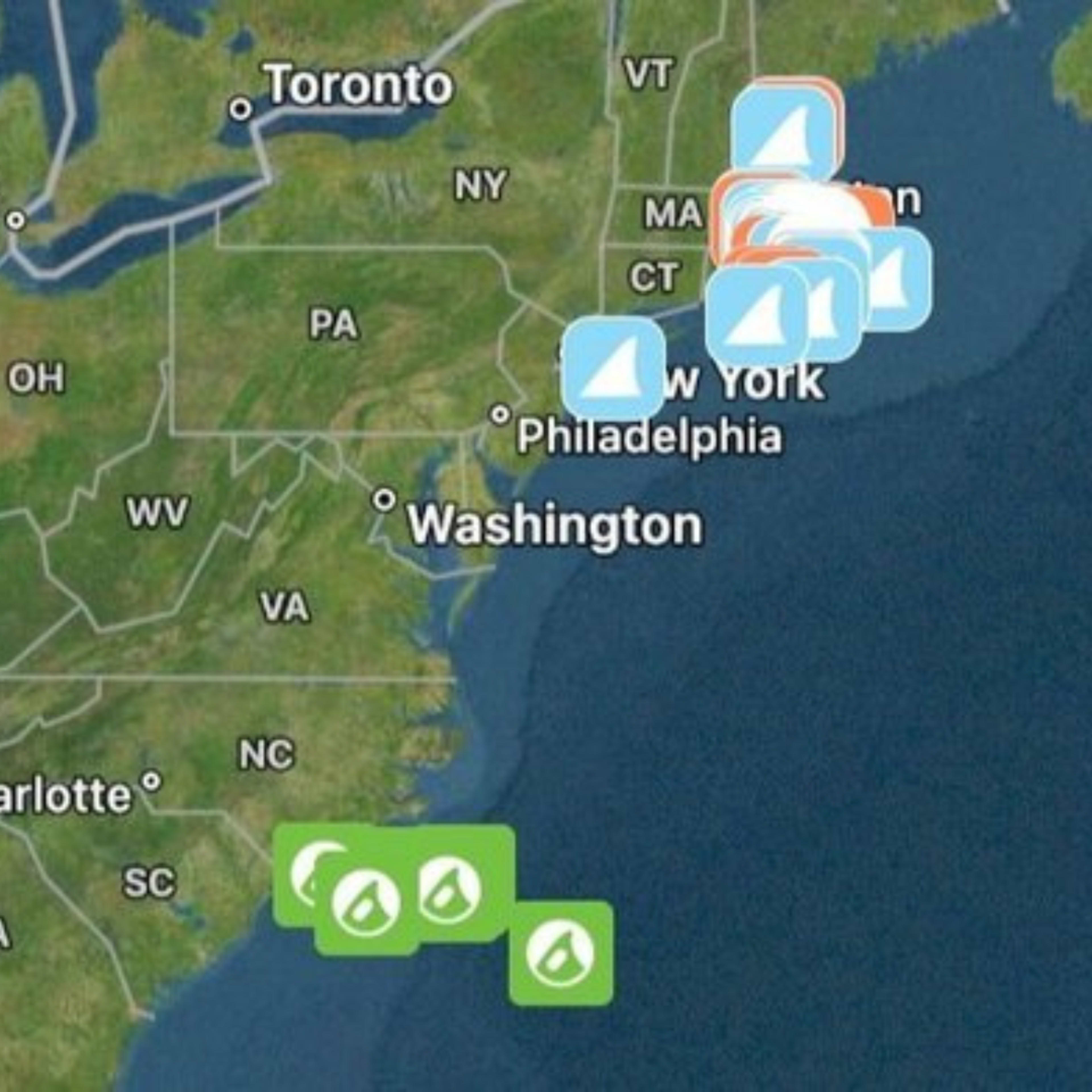
Download the SHARKTIVITY app (free, iOS and Android) before you arrive. This is the Atlantic White Shark Conservancy's official public tool. It shows real-time and recent shark sightings, tagged shark detections via underwater acoustic receivers, and beach closure notifications. Check it every morning before you head to the beach.
Heed flags and drone warnings. Many Outer Cape beaches now fly a black-and-white shark warning flag when a shark has been spotted within the past 24 hours. A solid red flag means the beach is closed to swimming. Drone operators — part of town-funded shark spotter programs — will broadcast alerts over bullhorns when a shark is spotted in the nearshore zone. When the drone speaks, exit the water calmly but promptly.
Do not swim near seals. If you see seals on the beach or in the water near you, exit the water. Seals attract white sharks. This is the single most actionable piece of advice. If the seals are thick, the sharks may not be far behind.
Avoid dawn and dusk in the water. These are peak shark feeding hours and the times when visibility for both shark and swimmer is reduced.
Do not wear shiny jewelry in the water. Reflective metal can mimic the flash of fish scales in certain light conditions.
Stay in groups and avoid the sandbars. Sharks cruise the outer sandbars, which parallel many Outer Cape beaches. Avoid swimming beyond the first sandbar. Sandbars concentrate baitfish, which concentrate seals, which attract sharks.
The Atlantic White Shark Conservancy
Headquartered in Chatham, the Atlantic White Shark Conservancy (AWSC) is the primary research and public education organization focused on white sharks in the Northwest Atlantic. Their Chatham Shark Center — a free visitor education center on Main Street in Chatham — is genuinely worth a stop, especially if you have children. The center explains the biology of white sharks, shows real-time tracking data, and gives context that converts fear into understanding.
AWSC researchers have tagged more than 200 individual white sharks in the Atlantic, allowing long-term tracking of movement patterns, population size estimates, and habitat use. Their acoustic receiver network along the Outer Cape coast feeds data directly into the SHARKTIVITY app.
If you want to understand this ecosystem rather than just avoid it, a visit to the Shark Center is the best hour you can spend in Chatham.
Has Anyone Been Attacked?
Yes — and the honest answer requires naming the facts without sensationalizing them.
On September 15, 2018, Arthur Medici, a 26-year-old man, was fatally attacked while boogie boarding at Newcomb Hollow Beach in Wellfleet. It was the first shark fatality on Cape Cod in approximately 80 years. The attack occurred in water approximately chest-deep, near a sandbar where seals had been observed.
Weeks earlier, on August 15, 2018, William Lytton, a 61-year-old neurologist, was bitten by a white shark while swimming at Long Nook Beach in Truro. He survived, thanks in part to immediate bystander response and proximity to emergency services.
These two incidents, occurring just weeks apart in the summer of 2018, accelerated significant changes in how beach towns on the Outer Cape manage public safety — including the expansion of drone surveillance programs, updated flag systems, improved first-aid protocols at beach parking lots, and broader public education campaigns.
How Beach Culture Has Changed
Anyone who visited Outer Cape beaches before 2012 and returns today will notice a different atmosphere. The changes are real and permanent.
Drone programs now operate at several beaches during peak season. White-painted quadcopters circle above the surf line, with operators watching live video feeds from the beach. When a shark is spotted, the beach is cleared within minutes.
Black-and-white shark warning flags fly routinely at Nauset, Coast Guard, Marconi, Cahoon Hollow, and other beaches. A flag flying does not mean a shark is in the water right now — it means one was detected recently enough to warrant elevated caution.
No-swimming zones extend to roughly 300 feet from shore on many beaches — enough to keep swimmers out of the primary sandbar zone where shark activity is most frequently observed.
Local towns have invested heavily in beach patrol staffing, radio communication between lifeguards and drone operators, and AED/tourniquet kits at beach access points. The 2018 fatality made clear that standard lifeguard training was not sufficient for a shark-attack response, and protocols have been updated accordingly.
The Outer Cape beaches remain beautiful, wild, and worth visiting. The shifts in culture are a rational response to a real ecological change, not panic. Locals have largely adapted — they swim, surf, and wade — but with awareness and within the flag system.
Beaches & trails in this guide
- Cahoon Hollow Beach, Wellfleet →
- Marconi Beach, Wellfleet →
- Skaket Beach, Orleans →
- Craigville Beach, Centerville →
- Old Silver Beach, Falmouth →
- Coast Guard Beach, Eastham →
- Corporation Beach, Dennis →
- Race Point Beach, Provincetown →
- Newcomb Hollow Beach, Wellfleet →
- Nauset Beach, Orleans →
- Sandy Neck Beach, West Barnstable →
What to Bring / What You'll Need
Cape Cod Certified picks — essentials worth packing for this trip:
- Sueños del Sol Linen Napkins (Set of 4): Hand-embroidered linen napkins with a bold sun-and-moon motif in coastal blue and yellow. They bring an effortless, elevated warmth to summer dinner parties and lazy Cape mornings alike.
- McCrea's Cape Cod Sea Salt Caramels (5.5 oz) — $28: Boston-made, individually wrapped caramels finished with flaky Cape Cod sea salt for that sweet-salty coastal bite. The grab-and-gift treat people rebuy every visit and every holiday.
- Amanecer Wave Yellow Tablecloth: A sunshine-yellow cotton tablecloth with a softly embroidered wave along the border, inspired by sunrise over the water. It turns any deck or dining table into a warm, gathered place to linger.
Where to Take This Next
Get the best of Cape Cod — free.
Guides, hidden spots, and seasonal tips from people who actually live here.
Frequently asked questions
What months are great white sharks most active on Cape Cod?
White sharks concentrate along the Outer Cape's Atlantic coast from roughly July through October, with peak activity in August and September when water temperatures are warmest and shark detections are highest. Activity tapers off as water cools in the fall.
Which Cape Cod beaches are safest from sharks?
Bay-side and sound-side beaches — such as Old Silver Beach in Falmouth, Skaket Beach on the bay side of Orleans, and Corporation Beach in Dennis — have recorded virtually no white shark activity. Seals don't haul out on that side in significant numbers, so sharks have little reason to be close to shore.
How do I know if a shark has been spotted at a Cape Cod beach?
Download the Sharktivity app before you arrive: it shows real-time sightings and beach alerts. At the beach, follow the posted shark advisory flags and any lifeguard instructions.
Why are there so many great white sharks on Cape Cod now?
Great whites are drawn to Cape Cod by the large gray seal population, which has grown dramatically since the Marine Mammal Protection Act of 1972 ended seal hunting. Gray seals are the white sharks' main prey, and sharks returned in meaningful numbers once the seals did.
Has anyone been killed by a shark on Cape Cod?
Yes — on September 15, 2018, Arthur Medici was fatally attacked while boogie boarding at Newcomb Hollow Beach in Wellfleet, the first shark fatality on Cape Cod in approximately 80 years. Weeks earlier, on August 15, 2018, William Lytton was bitten while swimming at Long Nook Beach in Truro and survived.