A Cape Cod one week itinerary works best when you stop trying to sleep in a different town every night. The Cape is 70 miles long, summer traffic is real, and the places worth lingering — the tidal flats at low tide, the back streets of Provincetown, the oyster bars in Wellfleet — reward slowness. This itinerary is built the way the Cape actually works: start at the bridges, work your way out to the tip, and end near Falmouth on your way home. You'll sleep in two bases, see the essential Cape, and still have time to sit still.
How to Use This Itinerary: The Two-Base Strategy
Book two lodging bases, not seven.
Nights 1–4: Mid-Cape (Brewster, Chatham, Dennis, or Harwich Port). Central to everything in the first half of the week, and the best jumping-off point for day trips to Chatham, Orleans, and the National Seashore.
Nights 5–7: Outer Cape (Provincetown or Truro). Worth the drive out. Provincetown is unlike anywhere else in New England and deserves more than a day trip. It also makes Day 6's whale watch dramatically easier when you're already there.
Mid-Cape lodging ranges from Ocean Edge Resort in Brewster (pools, bay views, conference-resort scale) to smaller inns in Chatham and Harwich Port. For Outer Cape nights, Provincetown has dozens of independently owned guesthouses — Crowne Pointe Historic Inn & Spa, Carpe Diem Guesthouse & Spa, and the Masthead Resort (waterfront cottages) among the standouts. Book Provincetown at least 6–8 weeks ahead in summer, longer if your trip overlaps with Carnival Week or Bear Week.
Day 1 — Arrival + Upper Cape: Sandwich
Cross the bridge and stop in Sandwich before driving any further. It is the oldest town on the Cape, and it looks it — the village center has the kind of settled quiet that most of the Mid-Cape lost decades ago.
Walk the Sandwich Boardwalk, a 1,350-foot wooden walkway over marsh and tidal creek that ends at Cape Cod Bay. The views back over the marsh in late afternoon light are as good as anything you'll find at the better-known beaches, and the crowds are a fraction.
For the afternoon, choose based on who's traveling with you. Families: Heritage Museums & Gardens (working carousel, classic cars, art, 100 acres of trails). History travelers: the Sandwich Glass Museum — small but genuinely excellent, because Sandwich was the center of American glassblowing in the 1800s and the collection earns its admission.
From Sandwich, drive east on Route 6A toward Brewster. This is the old King's Highway: antique shops, weathered clapboard churches, kettle ponds between the pitch pines. It is the visual handshake of the real Cape. Arrive at your Mid-Cape base and settle in.
Day 2 — Mid-Cape Bay Side: Brewster Tidal Flats + Rock Harbor
Check the tide chart the night before. Cape Cod Bay has significant tidal variation — up to nine feet in some locations — and the Brewster tidal flats only reveal themselves at low tide. Arrive on the flats about an hour before low water. At the bottom of the tide, you can walk a mile out into the bay with the water barely covering your ankles: hermit crabs, quahogs, sandbars appearing from nothing. This is non-negotiable for anyone spending a genuine week on the Cape.
Afternoon: Nickerson State Park in Brewster — 1,900 acres of pitch pine and scrub oak with eight kettle ponds. Flax Pond and Cliff Pond have designated swim areas. The water is clear, the parking is manageable (unlike the National Seashore lots), and on a hot mid-week afternoon it is the best freshwater swimming on the Cape.
Evening: drive to Rock Harbor in Orleans for sunset. Get there by 7pm in summer. Bring something cold. Watch the lobster boats and pleasure craft coming in against the western sky. Rock Harbor is one of those moments that explains why people keep coming back to the Cape Bay side year after year.
Day 3 — Chatham + Nauset Beach
Morning: Chatham Lighthouse Beach. Walk out on the bar and watch the gray seals hauled out on the sandbars to the southeast. The contrast between the lighthouse on the bluff and the seal colony below is a distinctly Cape Cod scene. Note: this is documented Great White Shark territory from roughly July through November near seal colonies. Follow all posted flags; the Atlantic White Shark Conservancy information boards on the beach are there for good reason.
Afternoon: Nauset Beach in Orleans — 10 miles of Atlantic-facing barrier beach, excellent surf break, and the classic high-summer-on-the-Cape experience. Arrive before mid-morning if you want to park without circling; the main lot fills fast on hot days. The beach concession serves lobster rolls.
Late afternoon: the Chatham Fish Pier comes alive when the day boats return, typically in the early-to-mid afternoon. The unloading is visible from a public pier, and it is one of the more honest working-waterfront scenes left on the Cape.
Dinner: Chatham has serious restaurants. Book ahead, especially anything near the water.
Day 4 — Cape Cod National Seashore + Wellfleet
This is the day the Cape earns its federal designation.
Start at the Salt Pond Visitor Center in Eastham (National Seashore headquarters) — free, well-staffed, and worth 20 minutes for the orientation film and the estuary loop trail down to the Salt Pond. Then drive north a few minutes to Coast Guard Beach: one of the most frequently cited beaches in the country, massive, wild, and Atlantic-facing. Arrive before 9am or plan to take the shuttle from the Little Creek lot — by mid-morning in July and August, the sticker lots are full and the shuttle is the only option.
Continue north to Marconi Beach in Wellfleet for the clay cliffs and the horizontal Atlantic view. The overlook above the bluff is worth the stop even if you skip the beach stairs entirely.
Afternoon: Wellfleet oysters. The town hosts the Wellfleet OysterFest in October, but in summer you can get them raw at local raw bars or buy directly from a farm stand if you have cooler space. This is one of the best things you can eat in New England, and these are the real ones.
Optional evening: the Wellfleet Drive-In runs double features most summer nights and is one of the last operating drive-ins in New England.
Day 5 — Move to the Outer Cape: Provincetown
Pack up. Drive to the tip.
Provincetown is 70 miles from the bridges and feels like a different country. It is the most LGBTQ+-welcoming town in New England, one of the oldest continuously operating artist colonies in America, and the literal end of the road — the Pilgrims made landfall here in 1620, before Plymouth.
Check in. Walk Commercial Street end to end — the street is about a mile, but between the galleries, drag bars, fish wharves, restaurants, and people-watching, it takes much longer. Climb the Pilgrim Monument for a panoramic view of the entire Cape from above. Reserve dinner at one of the better restaurants in town; the good ones book quickly on summer evenings, and walking in without a reservation at 7pm in August is an optimistic strategy.
Day 6 — Province Lands Bike Trail + Whale Watch
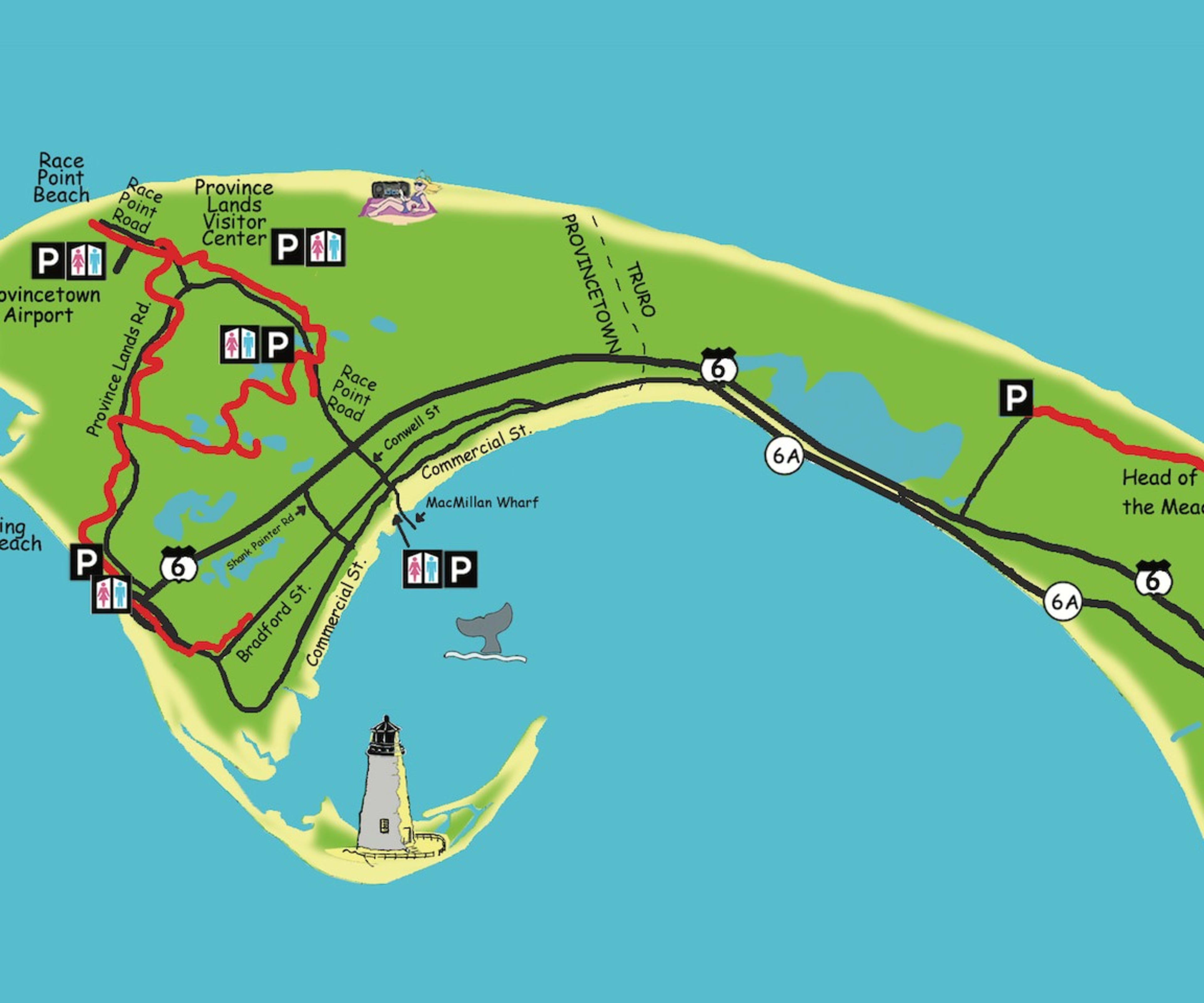
Morning: the Province Lands Bike Trail — a 5-mile loop through dunes that look more like the Sahara than New England. The trail rides through pitch pine scrub, tops out over open dune ridges, and comes out near Race Point Beach on the Atlantic side. This is the most dramatically different landscape on the entire Cape, and it's accessible to anyone comfortable on a bike. Rentals are available in Provincetown.
Afternoon: Dolphin Fleet Whale Watch out of MacMillan Wharf. The fleet runs to Stellwagen Bank, roughly 8 miles offshore, where humpback, finback, and minke whales feed throughout the summer. Trips run 3–4 hours. Book a day ahead — they fill. This is one of the best wildlife experiences in New England, not a tourist gimmick.
Evening: Provincetown at night in summer. The Crown & Anchor complex (cabaret, dance bar, drag shows) is the anchor of the nightlife. Everything is walkable from wherever you're staying in P'town.
Day 7 — Falmouth + Departure
The drive back doesn't have to be a loss.
Stop in Falmouth on your way out. Old Silver Beach sits on Buzzards Bay — the water is warmer on this side than the Atlantic, calmer, and the views of the Elizabeth Islands are different from anything else you've seen this week. It's a fine send-off swim. Then walk Woods Hole village: ferry terminal for Martha's Vineyard, the Woods Hole Oceanographic Institution, a handful of good restaurants and coffee shops tucked between the labs.
Lunch in Falmouth before the bridge. Then home.
At a Glance
| Best time for this itinerary | Late June through Labor Day |
| Driving time, Sandwich to P'town | 1.5 hours off-season; plan 2.5 hours or more in summer |
| National Seashore parking | $25 per vehicle, per day, or $60 annual seashore pass (nps.gov/caco); lots fill by 9am in July–August |
| Restaurant reservations | Book 3–5 days ahead for Chatham; 5–7 days ahead for Provincetown in peak season |
| Shark awareness | Atlantic beaches, July–November near seal colonies — follow posted flags; exit water if seals are present |
| Tide charts | NOAA Tides & Currents app (free); essential for planning Brewster tidal flat timing |
| Province Lands bike rentals | Available in Provincetown; confirm locations seasonally |
Beaches & trails in this guide
- Marconi Beach, Wellfleet →
- Coast Guard Beach, Eastham →
- Rock Harbor (Bay Beach & Pier), Orleans →
- Race Point Beach, Provincetown →
- Lighthouse Beach, Chatham →
- Nauset Beach, Orleans →
Ready to plan your week? Browse verified Cape Cod lodging, restaurants, and local experiences at capecodcertified.com/directory — curated by people who live here, updated for this season.
Plan it with Cape Cod Certified
Get the best of Cape Cod — free.
Guides, hidden spots, and seasonal tips from people who actually live here.
Frequently asked questions
How far in advance should I book Provincetown lodging?
Book well in advance for any summer trip — the town is dominated by independently owned guesthouses with limited availability. Plan even earlier if your dates overlap with Carnival Week or Bear Week, when demand is especially high.
What time should I go to the Brewster tidal flats?
Aim to arrive about an hour before low tide, when the bay bottom fully exposes and you can walk far out with barely any water underfoot. Check a tide chart the night before — the NOAA Tides & Currents app is recommended for planning your timing.
Are there sharks at Cape Cod beaches?
Great White Sharks are documented near Atlantic-facing beaches from roughly July through November, especially near seal colonies. Follow posted beach flags and exit the water if seals are present; the Atlantic White Shark Conservancy posts information boards at beaches like Chatham Lighthouse Beach.
Can I park at Coast Guard Beach in summer?
The parking lots at Coast Guard Beach fill quickly on summer mornings, and once they're full, the shuttle from the Little Creek lot becomes the way in. Arriving before mid-morning gives you the best chance of parking directly.
Is the Provincetown whale watch worth doing?
Trips run from MacMillan Wharf out to Stellwagen Bank, where humpback, finback, and minke whales feed throughout the summer. The guide describes it as a genuine wildlife experience, not a tourist gimmick. Book at least a day ahead, as trips fill.