Walk the length of Commercial Street in Provincetown on a June morning — past the smell of frying linguiça drifting from a bakery, past hand-lettered festival banners strung between Victorian storefronts — and you are moving through one of the most culturally layered places in New England. The rainbow flags and art gallery signs are real and celebrated, but underneath them runs an older story: Provincetown was built by Portuguese fishermen from the Azores, and their descendants still shape everything from what appears on local menus to the annual rhythms of the harbor.
This is not a museum piece. Provincetown's Portuguese heritage is alive — in the food, in family names on storefronts, in an elderly man at the post office who still shifts into Portuguese mid-sentence, and in the hundreds of people who pack the waterfront every late June for the Blessing of the Fleet.
How the Portuguese Came to the Tip of Cape Cod
The story begins far out in the Atlantic, roughly 900 miles west of Lisbon. The Azores — a Portuguese archipelago of nine volcanic islands including Faial, Pico, and São Miguel — produced some of the most skilled mariners and fishermen in the world. By the early 19th century, American whaling vessels were stopping in Azorean ports to take on supplies and, increasingly, crew. Men from Faial and the other islands signed on, discovered the productive fishing grounds off Cape Cod, and began settling in Provincetown.
The migration accelerated in the 1840s and 1850s. Where Yankee whalers and cod fishermen had previously dominated the fleet, Azorean immigrants arrived with deep knowledge of open-water fishing, a willingness to take on the most demanding work, and tight-knit family networks that allowed them to pool resources and buy their own vessels. By the 1880s, Portuguese-born residents and their American-born children represented a substantial portion of Provincetown's population. By the early 1900s, they were the majority.
Provincetown was not alone — Portuguese immigrants also settled in New Bedford, Gloucester, and Fall River — but the concentration at the tip of Cape Cod was particularly dense. The town's geography helped: the natural harbor on the bay side (west-facing, sheltered from Atlantic weather) gave working fishing vessels a safe anchorage, and the town's relative isolation made it easier for a community to maintain its own language and customs.
The Language That Lingered
Portuguese was not a private household language in Provincetown — it was the language of the streets, the docks, the market, and the Catholic church. Families spoke it at home; fishermen coordinated on the water in it; announcements at Holy Ghost Festival were made in it.
The language persisted remarkably far into the 20th century. Older Provincetown residents born in the 1930s and 1940s were often raised in bilingual or predominantly Portuguese-speaking households. Even today, visitors who pay attention will occasionally hear it — a fragment of a phone conversation, a greeting between two elderly neighbors — a reminder that what looks like a tourist town carries a living linguistic inheritance.
The Fishing Fleet and MacMillan Pier
MacMillan Pier, jutting into Provincetown Harbor on the bay side of town, takes its name from Arctic explorer Donald MacMillan, a Provincetown native who mounted expeditions to Greenland and the Arctic in the early 20th century. But the fleet that has worked out of that pier for generations was built almost entirely on Portuguese labor, Portuguese seamanship, and Portuguese capital.
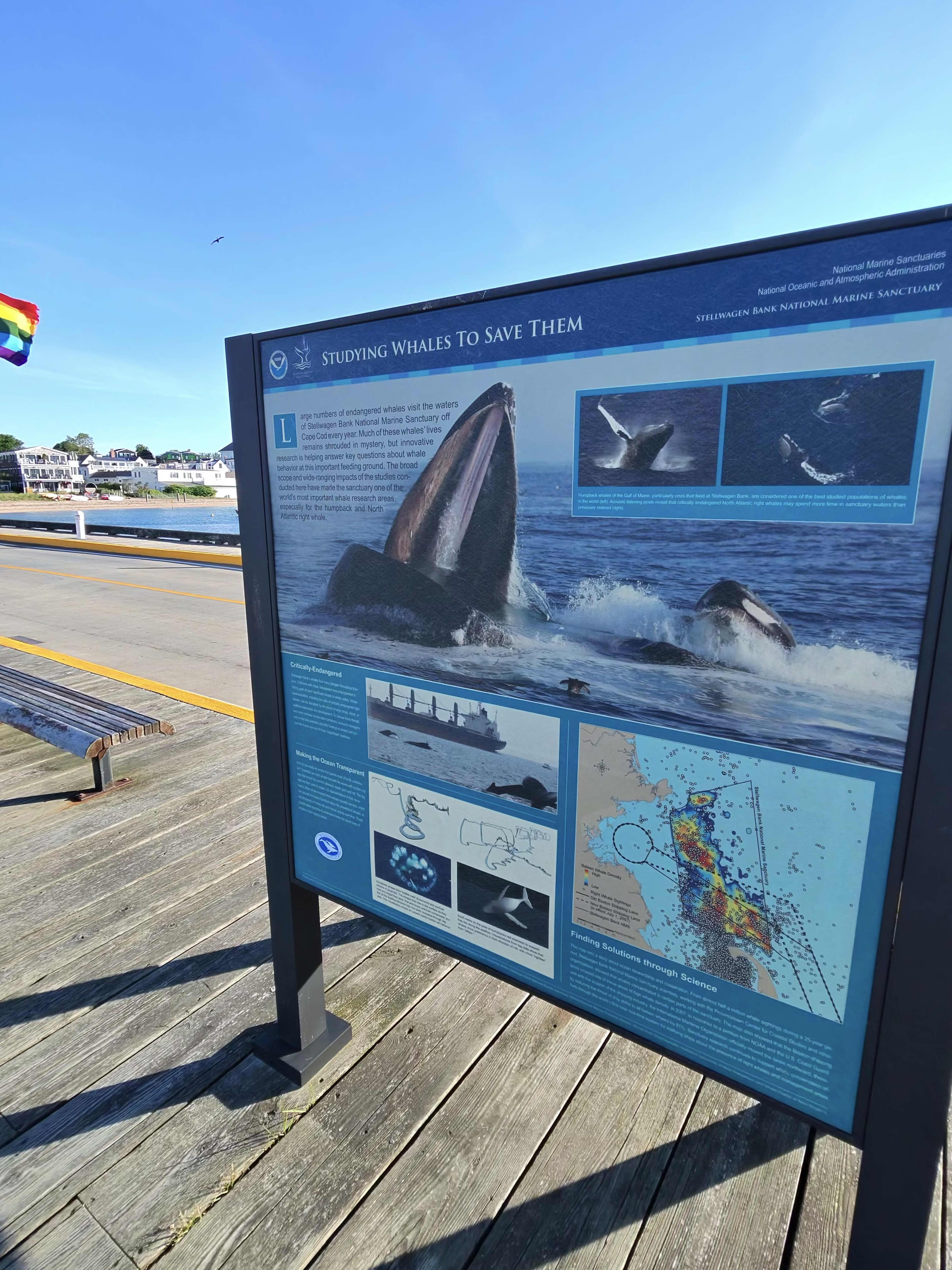
At its peak in the early 1900s, the Provincetown fishing fleet was one of the most productive on the East Coast, hauling cod, mackerel, and other groundfish from the rich waters of Georges Bank and Stellwagen Bank. The vessels were crewed and in many cases owned by Portuguese-American families — names like Souza, Cabral, Avila, Costa, and Perry that appear on plaques, in cemetery records, and on businesses around town to this day.
The commercial fishing industry off Provincetown has contracted significantly since the mid-20th century, the result of federal catch limits, stock depletion, and rising costs. But the fleet still operates. Walking out on MacMillan Pier in the early morning — before the whale-watch boats and the ferry to Boston take over the docks — you can still see working draggers and the men who run them.
The Blessing of the Fleet
Of all the living expressions of Provincetown's Portuguese Catholic heritage, none is more moving or more visually striking than the Blessing of the Fleet. Held each year in late June — typically on a Sunday near the end of the Provincetown Portuguese Festival — the ceremony draws the entire working fleet into the harbor, boats decorated with flags and flowers, while a priest aboard a vessel moves among them to offer a blessing for the season ahead.
The tradition comes directly from Catholic fishing communities in Portugal and the Azores, where Blessings of the Fleet have taken place for centuries. In Provincetown, the ceremony is conducted at the harbor's edge near MacMillan Pier, with onlookers crowding the pier and the surrounding waterfront. It is not a tourist performance — the fishermen who participate are working professionals asking for protection on genuinely dangerous water. That sincerity is exactly what makes it worth attending.
If you are in Provincetown in late June, plan your visit around this event. It costs nothing to attend, it lasts about an hour, and it is one of the few moments when Provincetown's layered identities — fishing town, art colony, LGBTQ+ community, Portuguese heritage — are all visible at once.
The Holy Ghost Festival and the Portuguese Festival
The Feast of the Holy Spirit (Festa do Espírito Santo) is a Portuguese Catholic tradition with roots in 14th-century Portugal, tied to the Franciscan order and a legend of Queen Isabel of Portugal. In Azorean communities throughout New England, it became one of the central celebrations of the year — a religious observance combined with communal feasting, music, and the crowning of a queen.
Provincetown's version of the festival takes place in summer and centers on the Portuguese Catholic parish. A queen is crowned, there is a procession, and the community gathers for a shared meal — traditionally including sopas, a bread-and-meat stew that is the ritual food of the Holy Ghost Festival across all Azorean communities.
The broader Provincetown Portuguese Festival, held over several days in late June, expands on these traditions with music, dance performances, food vendors, and educational programming about the history of the community. It is one of the most distinctive cultural events on Cape Cod and an excellent reason to time a Provincetown visit for late June rather than the peak July and August weeks.
The Food: What to Eat and Where to Find It
Portuguese culinary traditions have shaped what Provincetown restaurants serve, and several dishes are worth seeking out specifically.
Caldo Verde
The most iconic dish in Portuguese cooking — a dark, silky soup made from kale (collard greens in the Azorean variant), potatoes, olive oil, and linguiça sausage — appears on menus across Provincetown. It is peasant food in the best sense: deeply flavored, filling, and warming even in summer. Several Commercial Street restaurants and the town's Portuguese bakeries serve it regularly.
Linguiça
This cured pork sausage, seasoned with paprika and garlic and smoked, is the backbone of countless Portuguese dishes. In Provincetown it turns up in kale soup, in egg dishes, on sandwiches, and as a standalone item at the Portuguese Festival food stalls. If you see it on a menu, order it.
Portuguese Sweet Bread (Pão Doce)
Dense, slightly sweet, enriched with eggs — pão doce is the bread that appears at every celebration in Azorean communities. Provincetown's Portuguese bakeries produce it in loaves and rolls throughout the summer. It is also the basis for Easter bread (folar) and appears during the Holy Ghost Festival as part of the ceremonial meal. Pick up a loaf and eat it the day you buy it.
Where to Explore the History
Provincetown Museum — Located on the grounds of the Pilgrim Monument on High Pole Hill, the museum holds exhibits on Provincetown's fishing and maritime history, including artifacts from the Portuguese-American community. The monument itself, completed in 1910, celebrates the Pilgrims' first landing in Provincetown (before they moved on to Plymouth), but the museum contextualizes the full sweep of the town's history.
Provincetown Public Library — The library maintains archival collections including photographs, oral histories, and documents related to the Portuguese community. The building itself — a former church — is worth a visit on its own terms, but the archives are the draw for anyone interested in tracing family names or understanding the community's evolution.
MacMillan Pier — Walk the full length of the pier on a weekday morning. Read the plaques, look at the working vessels, and understand that this infrastructure was built and maintained largely by Portuguese-American labor across multiple generations.
The Crown & Anchor Area and Lower Commercial Street — The western end of Commercial Street, near the harbor, is where the oldest Portuguese-American family businesses and institutions were concentrated. Walk slowly and look at the building plaques and family names.
Day Trips to Truro and Wellfleet
The Portuguese influence on the Outer Cape extended beyond Provincetown. Truro's small fishing community had Portuguese-American families, and Wellfleet — known today for its oysters — had Portuguese fishermen working its waters. Neither town has the concentration of visible heritage that Provincetown does, but both are worth including in an Outer Cape visit for their natural beauty: Truro's high dunes visible from Route 6, Wellfleet's tidal flats stretching toward the bay at low tide.
What Locals Pack
Cape Cod Certified picks — essentials worth packing for this trip:
- Cape Cod Wide Coastal Photography Book — $29: Wide-angle views of Cape harbors, lighthouses, and sunsets in a handsome hardcover. A timeless keepsake for anyone who left a piece of their heart on the Cape.
- Melissa & Doug Water Wow! Reusable Pads 3-Pack — $19: Mess-free, water-reveal activity pads that dry and reset endlessly, with a refillable chunky pen tucked inside the cover. The rainy-Cape-day and restaurant-wait hero, no screens required.
- Pre-Filled Coastal Welcome Bag Favors (10) — $60: Ten ready-made favor bags with hydration packets, gum, and party essentials to drop into hotel welcome bags. Takes the guesswork out of greeting out-of-town wedding guests in style.
Who We Trust in Provincetown
Cape Cod Certified recommends these verified local spots:
- Lobster Pot — 4.8★ (10006 Google reviews)
- 361 Coffee & Espresso Bar — 4.6★ (268 Google reviews)
- John's Foot Long — 4.3★ (175 Google reviews)
- The Yoga Joint — 5★ (127 Google reviews)
Plan it with Cape Cod Certified
Get the best of Cape Cod — free.
Guides, hidden spots, and seasonal tips from people who actually live here.
Frequently asked questions
What is the Blessing of the Fleet in Provincetown?
The Blessing of the Fleet is an annual ceremony held in late June, rooted in Catholic fishing communities in Portugal and the Azores, where a priest moves among the decorated fishing vessels to offer a blessing for the season. It takes place near MacMillan Pier on Provincetown Harbor, with the working fleet participating and onlookers crowding the surrounding waterfront.
Where did Provincetown's Portuguese community originally come from?
Provincetown's Portuguese community traces its roots mainly to the Azores, a Portuguese archipelago that includes Faial, Pico and São Miguel. Azorean mariners began arriving on American whaling ships in the 1800s, and Portuguese families went on to become a large part of the town's fishing community and population.
What is the Holy Ghost Festival in Provincetown?
The Holy Ghost Festival (Festa do Espírito Santo) is a Portuguese Catholic tradition with medieval roots that Azorean immigrants brought to New England. Celebrations typically include a procession, the crowning of a queen and a shared meal of sopas, a traditional bread-and-meat soup.
What is caldo verde?
Caldo verde is a classic Portuguese soup made from kale, potatoes, olive oil, and linguiça sausage. In Provincetown, it appears regularly on menus at Commercial Street restaurants and Portuguese bakeries throughout the summer.
Where can I learn about Provincetown's Portuguese-American history?
The Provincetown Museum on the grounds of the Pilgrim Monument holds exhibits on fishing and maritime history that include the Portuguese-American community. The Provincetown Public Library, housed in a former church, maintains archival collections of photographs, oral histories, and documents tracing the community's evolution.