Cape Cod whale watching puts you on the open ocean above one of the most productive marine feeding grounds on the entire Atlantic coast. The trip from MacMillan Pier in Provincetown to Stellwagen Bank takes roughly an hour each way — and what you find at the Bank is not a tourist amenity but a living, functioning ecosystem where humpback whales, finback whales, and dozens of seabird species converge every summer to feed on immense concentrations of small fish. Plan for a 3.5-to-4-hour round trip, take motion sickness medication before you board, and book weeks in advance in July and August.
The Biology of Stellwagen Bank: Why Whales Come Here
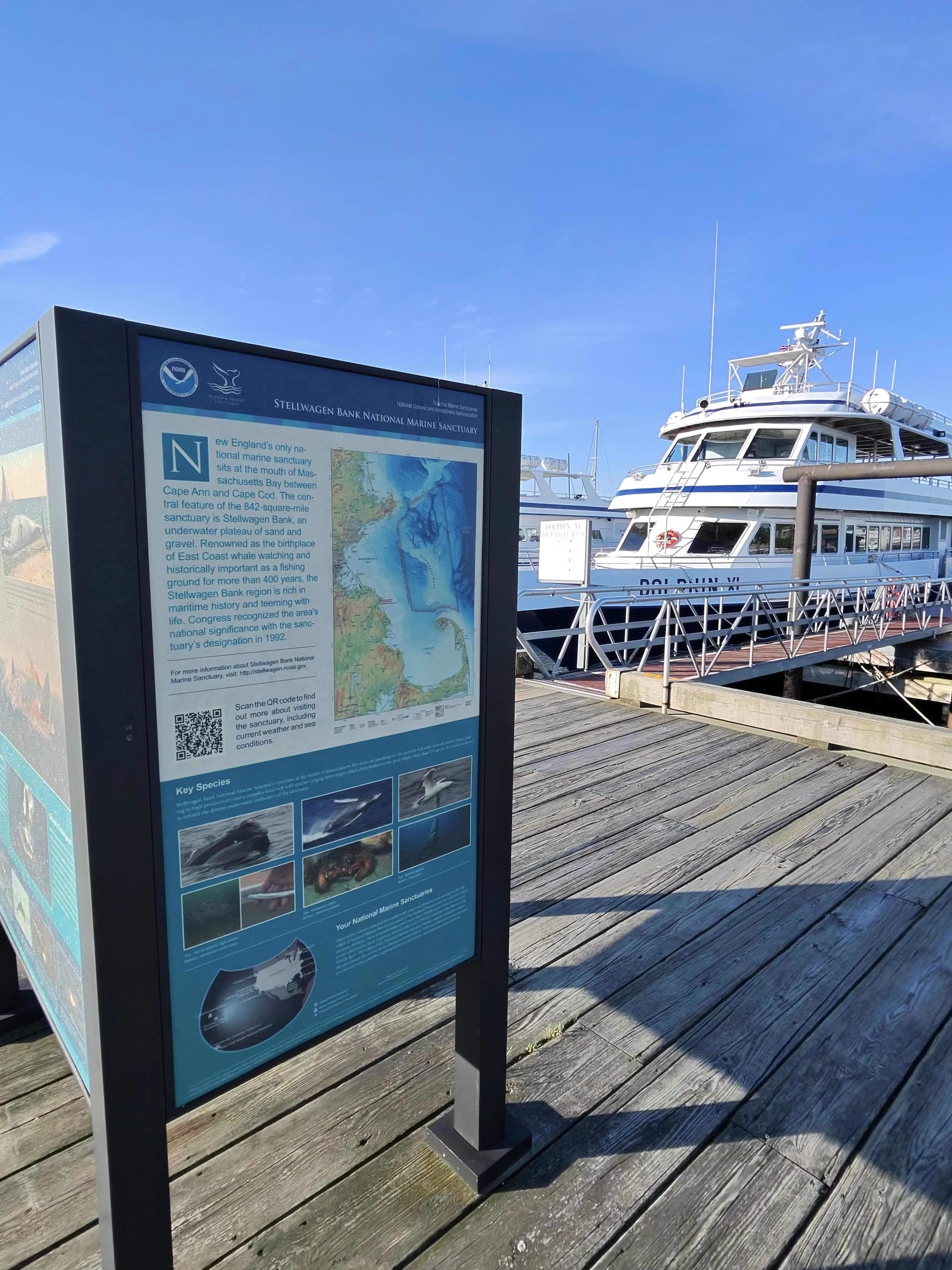
Stellwagen Bank is a glacial outwash deposit — a shallow plateau on the seafloor left behind by the retreat of the Laurentide Ice Sheet roughly 18,000 years ago. The Bank sits approximately 18 miles offshore from Provincetown, between Cape Cod and Cape Ann, covering roughly 842 square miles of protected ocean within the Stellwagen Bank National Marine Sanctuary.
The reason whales concentrate here is oceanographic. Cold, nutrient-rich water upwells at the Bank's eastern edge, carrying deep-water nutrients into the sunlit zone where phytoplankton and zooplankton thrive. This sets off a food chain that culminates in enormous schools of sand lance — a small, eel-like fish that is the primary prey item for humpback whales, finback whales, and several seabird species including greater shearwaters and northern gannets. A single feeding adult humpback can consume up to 3,000 pounds of fish per day. When conditions are right, the Bank functions like a conveyor belt of nutrition, and the whales have been returning here every summer for centuries.
Whalers from Provincetown and New Bedford were working these grounds by the early 19th century, hunting the same species that whale watch passengers observe today. The Sanctuary — established in 1992 — prohibits bottom trawling, seabed disturbance, and vessel traffic in certain shipping lanes, protecting the physical structure of the Bank that makes this feeding ground possible.
The Dolphin Fleet: How to Book and What to Expect
Dolphin Fleet Whale Watch, based at MacMillan Pier in Provincetown, is the dominant Cape Cod whale watching operator running trips to Stellwagen Bank. The company has run trips for decades, and their boats carry naturalists from the Center for Coastal Studies — a Provincetown-based marine research organization that has been studying the Stellwagen humpback population since the 1970s. These researchers have compiled decades of photo-identification data on individual whales, matched by the distinctive black-and-white pigmentation patterns on the underside of each animal's flukes. When the boat arrives at the Bank, the naturalists aboard can often tell you the name of the specific whale you're watching, how old it is, who its mother was, and where it was last sighted.
This distinction matters: Dolphin Fleet trips are genuinely educational in a way that most wildlife tours are not.
Booking logistics: Trips run multiple times daily during peak season, approximately May through mid-October. The total trip takes roughly 3.5 to 4 hours, with approximately 2 to 2.5 hours spent in the whale watching area at the Bank. Book online in advance — July and August trips sell out regularly, and same-day tickets can be difficult to secure. Some last-minute openings occur due to cancellations; check the website the morning of your intended trip if you missed the advance booking window.
Morning vs. afternoon trips: Morning trips often have calmer sea conditions before afternoon winds build. Afternoon trips are sometimes cited anecdotally as having higher whale activity, though the relationship between time of day and feeding behavior is not definitively established in the research literature. If motion sickness is a concern, the morning window is the safer choice for sea state.
Motion Sickness: The Honest Assessment
Stellwagen Bank is open ocean. Swells of 3 to 4 feet are routine; swells of 5 to 6 feet are not rare. If you are susceptible to motion sickness — even mildly — take this seriously before you buy a ticket.
What works
- Scopolamine patches (brand name Transderm Scop): prescription only, applied behind the ear the night before departure. Generally considered the most effective option for extended open-ocean exposure. Consult your doctor well before your trip date. [General information only — verify choices with your physician.]
- Meclizine (brand name Bonine): available over the counter; widely regarded as more effective than standard dimenhydrinate (original Dramamine) for sea sickness. Take at least one hour before boarding — not on the gangway.
- Ginger: genuine evidence supports ginger as a mild anti-nausea agent. Ginger chews or capsules taken before departure are a reasonable supplement to medication.
- Position on the boat: Stay on deck in fresh air. Sit or stand amidships — the center of the vessel at the lowest deck level — which moves less than the bow or stern. Avoid the below-deck cabin in choppy conditions; the visual mismatch between what your eyes see and what your body feels accelerates nausea.
- Eat lightly: a large fatty meal before boarding increases nausea risk; an entirely empty stomach is also problematic. A moderate, low-fat snack a couple of hours before departure is the right balance.
Dolphin Fleet has a weather cancellation and refund policy for trips that are cut short or canceled due to unsafe conditions.
What You'll Actually See
Humpback whales (Megaptera novaeangliae) are the primary attraction. They are acrobatic, large — up to 50 feet and 40 tons — and behaviorally complex in ways that reward watching. Common behaviors include:
- Fluking: raising the tail above the surface before a deep dive; the classic whale watch image, and also how researchers identify individuals from the unique pigmentation pattern on the underside of each fluke
- Breaching: launching most of the body clear of the water; the reasons are debated (parasite removal, communication, play, unknown), but the spectacle is not
- Spy-hopping: rising vertically with the head above the surface, apparently looking around
- Bubble-net feeding: a coordinated group of humpbacks blows a cylinder of bubbles underwater, herding sand lance toward the surface, then lunges through the column together with their mouths open. The water erupts. It does not happen on every trip, but when it does, it is one of the most spectacular wildlife events accessible to the general public anywhere in North America — nothing comparable exists in the accessible wildlife-watching world
Finback whales are the second-largest animals on Earth, reaching 70 to 80 feet. They are fast swimmers and show less surface behavior than humpbacks, but their sheer scale when they surface close to the boat is unforgettable.
Minke whales are smaller, faster, and shier. They are often spotted surfacing briefly before disappearing, and they make for satisfying incidental sightings.
Dolphins and seabirds: Atlantic white-sided dolphins and common dolphins frequently accompany whale watch boats, sometimes in groups of hundreds. Greater shearwaters, Wilson's storm-petrels, and northern gannets are seabird species worth watching for during the transit.
Most operators offer a no-whale-sighting refund or return-trip guarantee. In practice, trips virtually always find at least one species.
Right Whales: The Critical Context
North Atlantic right whales (Eubalaena glacialis) are among the most endangered large animals on Earth. The current population is estimated at fewer than 370 individuals. They received their name from Yankee whalers, who considered them the "right" whale to hunt: slow-moving, buoyant when killed, and enormously profitable. That history came close to eliminating the species entirely. Today, entanglement in fishing gear and vessel strikes continue to kill animals at a rate the population cannot absorb.
Right whales are documented in Cape Cod Bay in late winter and early spring — approximately January through April — feeding on dense concentrations of copepods in the cold Bay waters. By summer whale watch season, most animals have moved north. Sightings during Dolphin Fleet trips to Stellwagen are possible but uncommon.
When naturalists do spot a right whale during a trip, strict federal approach distance regulations apply — currently 500 yards for all vessels. The naturalists aboard will manage the situation; the passenger experience is to watch from a respectful distance and understand what they are looking at.
Knowing this context — that right whales were hunted here, that they still use these waters, and that the same oceanographic conditions that draw humpbacks to Stellwagen also draw right whales to Cape Cod Bay — makes the whale watch a richer and more honest experience than simply looking for the biggest splash.
Quick Facts
| Primary operator | Dolphin Fleet Whale Watch, MacMillan Pier, Provincetown |
| Trip length | Approximately 3.5–4 hours total |
| Season | May through mid-October; peak July–September |
| Book ahead | Essential in July and August |
| Motion sickness | Take medication the night before or at least 1 hour before boarding |
| What to bring | Layers (the Bank is windy and cold even in August), sunscreen, sunglasses, binoculars |
| Sighting guarantee |
For more of Cape Cod's wild side — tidal flat clamming, bioluminescent night paddles, birding in the National Seashore — browse the Cape Cod Certified directory.
Where to Take This Next
Get the best of Cape Cod — free.
Guides, hidden spots, and seasonal tips from people who actually live here.
Frequently asked questions
How do I avoid getting seasick on a whale watch?
Take motion sickness medication before you board — not on the gangway. Over-the-counter meclizine is considered more effective for sea sickness than standard dimenhydrinate; ginger chews are a reasonable supplement. For open-ocean exposure, ask your doctor in advance about prescription options like scopolamine patches.
When is whale watching season on Cape Cod?
Dolphin Fleet runs trips from approximately May through mid-October, with summer as the peak season. Trips in July and August book out well in advance, so reserve your spot early — same-day tickets can be difficult to secure during those months.
What whales will I see at Stellwagen Bank?
Humpbacks are the main attraction — large, acrobatic, and often identified by name by onboard naturalists who have tracked individual animals for decades. Finbacks, minkes, Atlantic white-sided dolphins, and seabirds are also regularly spotted, and some trips include bubble-net feeding, a rare coordinated hunting spectacle.
Is a morning or afternoon whale watch better?
Morning trips tend to have calmer sea conditions because afternoon winds often pick up as the day progresses. If motion sickness is a concern, the morning departure is the safer choice; afternoon trips are sometimes described anecdotally as having more whale activity, though that isn't definitively established.
Are North Atlantic right whales still found near Cape Cod?
Right whales are among the most endangered large animals on Earth and still use Cape Cod Bay in late winter and early spring. By summer whale watch season most have moved north, making sightings uncommon but possible. Federal regulations strictly limit how close any vessel may approach if one is spotted.