Cape Cod punches well above its weight as a wildlife destination. The peninsula's position — jutting 70 miles into the Atlantic, flanked by the cold, nutrient-rich waters of Cape Cod Bay to the north and the open ocean to the south — creates conditions that concentrate marine mammals, migratory birds, and ancient invertebrates in numbers that rival anywhere on the East Coast. Gray seals haul out by the thousands at Chatham. Humpback whales breach above Stellwagen Bank, visible from Provincetown's MacMillan Pier. Horseshoe crabs have been spawning on these same Bay-side beaches for 450 million years. If you time your visit right and know where to look, a single trip to the Cape can yield a lifetime's worth of wildlife encounters.
Gray Seals: The Year-Round Anchor (Best at Chatham)
The gray seal colony centered around Chatham is the defining Cape Cod wildlife experience, and the one most likely to stop first-time visitors in their tracks. Thousands of seals haul out year-round on the bars and beaches surrounding Chatham Lighthouse, South Beach, and the Monomoy National Wildlife Refuge shoals that stretch south toward Nantucket Sound.
Winter delivers the most dramatic viewing. Pupping season runs December through February, when white-coated pups appear alongside their mothers on the sandbars. On a clear January morning at the Chatham Lighthouse overlook — free, year-round, no tickets required — you may be looking at two or three thousand seals on the bars below. The smell arrives before the sight does.
Summer has fewer seals on the exposed bars (they follow the fish), but they are still present year-round. The Chatham Lighthouse overlook on Shore Road is the easiest vantage point. Seal boat tours operating out of Chatham Fish Pier and Stage Harbor get you meaningfully closer. The seals are the reason Great White Sharks return to the Outer Cape each summer — the colony's growth over the past two decades, following federal protection under the Marine Mammal Protection Act, is the direct cause of the Cape's documented shark activity.
Great White Sharks: The Cape's Most Famous Resident You'll (Probably) Never See
Cape Cod now has the most documented Great White Shark activity on the entire East Coast, concentrated around the Chatham seal colony and the Outer Cape's Atlantic-facing beaches from Eastham north through Provincetown. The shark season runs roughly July through November, with August and October historically producing the most confirmed sightings.
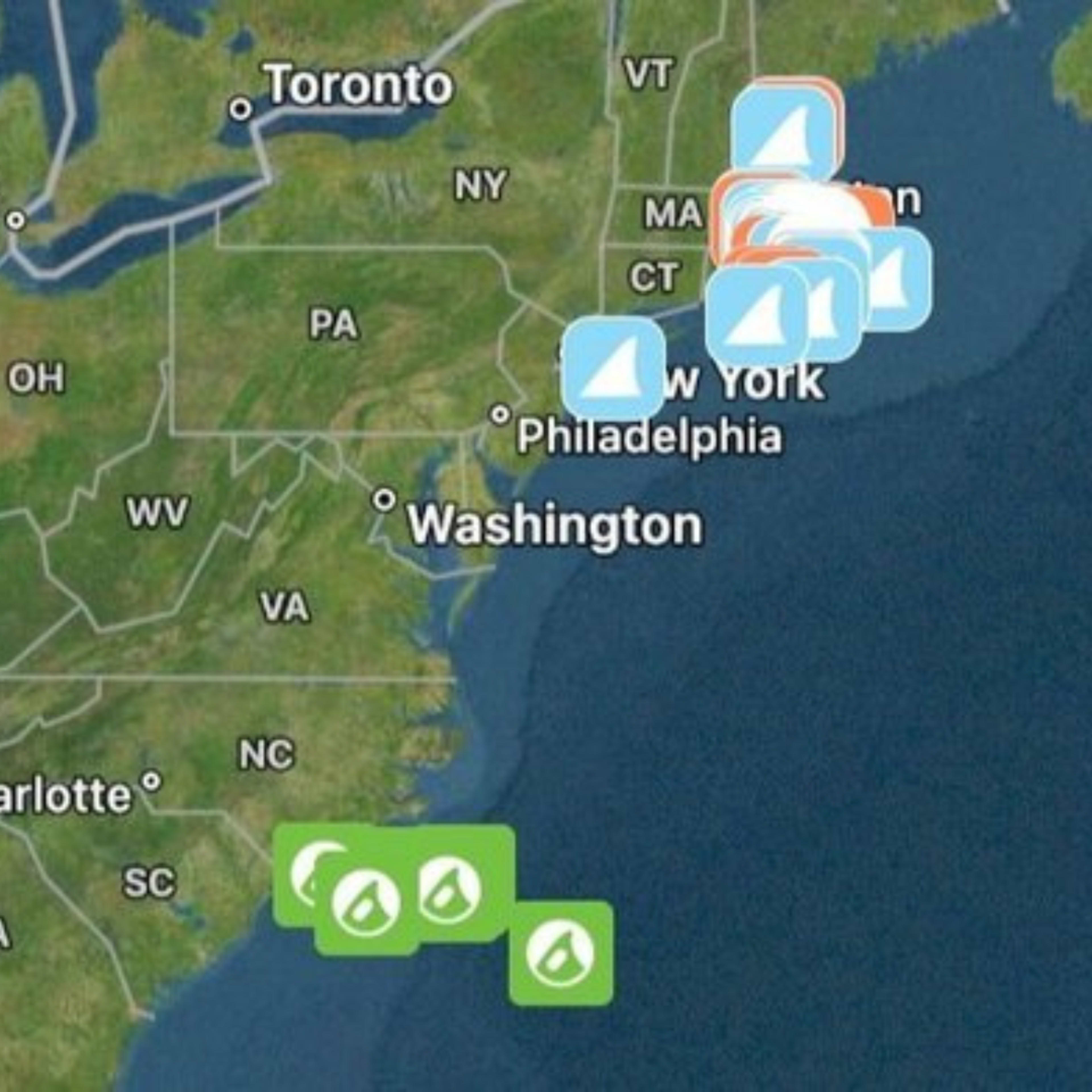
Most visitors will never see a shark directly. The experience of shark awareness on the Cape is less about observation and more about protocol, culture, and a genuine undercurrent of respect for the ocean. The Sharktivity app (free, iOS and Android), from the Atlantic White Shark Conservancy, displays recent confirmed sightings tagged by location and date. The National Park Service and town safety officials monitor Atlantic beaches during the season; when a shark is sighted near bathers, the beach is cleared of swimmers for a period before the water reopens.
The practical takeaway for swimmers: stay out of the water at the ocean-facing Atlantic beaches when seals are visibly present nearby. The seals are not in the ocean because it is safe — they are fast, agile, and accept a level of risk that human swimmers should not. The bay-side beaches (Provincetown's Herring Cove, Wellfleet's Long Pond, the warm-water kettle ponds throughout the Mid Cape) carry dramatically lower risk and are comfortable swimming options throughout the season.
Humpback and Finback Whales: Stellwagen Bank
Stellwagen Bank National Marine Sanctuary sits at the mouth of Massachusetts Bay, directly north of Provincetown — a submerged plateau where cold Atlantic water rises over shallow sand, creating extraordinary concentrations of sand lance, herring, and the small fish that sustain one of the densest whale-feeding grounds on the western Atlantic.
The Dolphin Fleet Whale Watch, operating from Provincetown's MacMillan Pier, has been running trips to Stellwagen since 1975 — the first whale watch on the East Coast. Their naturalists maintain years of individual whale identification data — researchers recognize specific humpbacks by the unique black-and-white markings on their flukes, and some individuals have been tracked for decades. A single Stellwagen trip routinely surfaces multiple humpbacks, with breach displays and bubble-net feeding common in summer.
Humpbacks are the star species: acrobatic, vocal, and large enough (up to 50 feet, 40 tons) to register as genuinely awe-inspiring from a small boat. Finback whales are larger and faster and typically surface in a more businesslike fashion. Minke whales are smaller and shyer. The reliable season runs May through October; July through September is the peak window for multiple species in a single trip. Right whales — critically endangered, with only a few hundred individuals remaining — occasionally appear in Cape Cod Bay in late winter and early spring, a monitored and significant event when it occurs.
Horseshoe Crabs: The Ancient Spawning Event
On full and new moon high tides in late May and early June, horseshoe crabs emerge from Cape Cod Bay to spawn on protected beaches. The behavior is unchanged from 450 million years ago, predating the dinosaurs by two hundred million years. Horseshoe crabs are not crabs at all — they are chelicerates, closer in evolutionary terms to spiders and scorpions. Their blue, copper-based blood has been used in pharmaceutical safety testing for decades.
The spawning is spectacular not just for the crabs themselves — on a peak night, a beach like Barnstable Harbor or Wellfleet's Lieutenant Island Road flats can be carpeted with them — but for what the spawning draws. Red knots, ruddy turnstones, sanderlings, and dozens of other shorebird species time their northbound migration to coincide with this protein event, stopping to gorge on horseshoe crab eggs before continuing to Arctic breeding grounds. The trophic cascade is stunning to watch.
Best viewing: Barnstable Harbor, Wellfleet Harbor beaches, and Cape Cod Bay-side protected flats on high-tide moon nights in the last ten days of May and first week of June. Check the moon calendar and arrive at high tide. The Wellfleet Bay Wildlife Sanctuary (Mass Audubon) runs organized horseshoe crab spawning programs with naturalist guides in season — check their current program schedule.
Piping Plovers: The Beach Nesters
The piping plover is federally threatened, pale as dry sand, and nests directly on the surface of Cape Cod beaches from April through August. The Cape is one of the most important nesting sites for this species in its entire range. When you see orange fencing and NPS signage closing a section of beach, piping plovers are the most likely reason.
The birds are masterfully camouflaged — adults are nearly invisible against dry sand, and chicks are downy, mobile, and easily mistaken for a small pebble in motion. Watching a plover parent perform a broken-wing distraction display to lead you away from a nest is a piece of genuine wildlife theater. Nauset Beach in Orleans, Sandy Neck in Barnstable, and Race Point in Provincetown all have active colonies. Plover presence closes OSV (over-sand vehicle) corridors within National Seashore beaches; check NPS current conditions before planning an OSV trip.
Ospreys, Gannets, and the Bird Calendar
Ospreys return to the Cape in March, nesting on platforms throughout the Mid and Lower Cape through August. By May they are conspicuous and common — a large hawk hovering over a salt marsh pond, then plunge-diving feet-first for a fish, is almost always an osprey. Nesting platforms are visible from Route 6A in Barnstable and throughout Brewster and Orleans.
Northern Gannets are large, white, black-winged ocean birds that plunge-dive from 100 feet in the air with binocular vision. They appear offshore in spring and fall migration. Race Point Beach in Provincetown and Nauset Beach in Eastham are both productive vantage points in October and November. The spring warbler migration peaks in mid-May; the Wellfleet Bay Wildlife Sanctuary hosts birders chasing dozens of species in a single morning. The fall hawkwatch at sites along the Bay side draws serious counters in September and October.
Seasonal Wildlife Calendar
| Month | What to Watch |
|---|---|
| January–February | Peak gray seal pupping at Chatham; right whale monitoring in Cape Cod Bay |
| March | Ospreys return; horseshoe crabs begin inshore movement |
| April–May | Piping plovers nesting; horseshoe crab spawning (late May); spring warbler migration; whale watch season opens |
| June | Horseshoe crab spawning peaks (early June); plover chicks hatching; whale watch in full season |
| July–August | Shark season begins; seals at Chatham; whale watch peak; piping plover fledging |
| September–October | Shark sightings highest; gannet migration offshore; fall hawkwatch; whale watch continues |
| November | Shark season winds down; gannets offshore; waterfowl arrive |
| December | Gray seal pupping begins at Chatham; winter birding (ducks, loons, scoters) |
The Short Version
- Best single-day wildlife stop: Chatham Lighthouse overlook (free, year-round, no reservation needed)
- Whale watch operator: Dolphin Fleet, MacMillan Pier, Provincetown (running since 1975)
- Shark app: Sharktivity by the Atlantic White Shark Conservancy (free download)
- Horseshoe crab spawning peak: Full and new moon high tides, late May–early June
- Wellfleet Bay Wildlife Sanctuary: Mass Audubon; naturalist-led programs year-round
- NPS beach drone monitoring: Active daily at Atlantic beaches, July–November
Beaches & trails in this guide
- Race Point Beach, Provincetown →
- Nauset Beach, Orleans →
- Long Pond, Wellfleet →
- Lieutenant Island Road (Scenic Drive — Stop & View), Wellfleet →
Cape Cod's wildlife is not a backdrop — it is the main event. Whether you're standing at the Chatham Lighthouse overlook watching seals haul out by the hundreds, aboard a Provincetown whale watch with humpbacks surfacing 30 feet off the bow, or crouched on a Wellfleet beach at midnight watching horseshoe crabs do exactly what they've done since before the dinosaurs, this peninsula delivers encounters that are genuinely difficult to find anywhere else on the East Coast.
Find wildlife-friendly guides, nature tours, and local businesses at [capecodcertified.com/directory](https://capecodcertified.com/directory).
Gear That Earns Its Spot
Cape Cod Certified picks — essentials worth packing for this trip:
- MalsiPree Portable Dog Water Bottle — $15: One-handed, leak-proof bottle with a built-in bowl that recycles unused water back into the bottle. Under six ounces and ready for every boardwalk, trail, and dune walk.
- Sun Bum Mineral SPF 30 Sunscreen Lip Balm — $4: Zinc-based broad-spectrum lip protection with vitamin E; reef-safe.
Turn This Into a Plan
Get the best of Cape Cod — free.
Guides, hidden spots, and seasonal tips from people who actually live here.
Frequently asked questions
When is the best time to see seals at Chatham?
Winter is peak season — pupping runs December through February, when white-coated pups appear on the sandbars alongside their mothers. The Chatham Lighthouse overlook on Shore Road is the easiest year-round vantage point. Seal boat tours from Chatham Fish Pier and Stage Harbor get you meaningfully closer.
Are there really great white sharks at Cape Cod beaches?
Yes. Great white sharks are well documented off Cape Cod, especially around Chatham and the Outer Cape's Atlantic beaches from Eastham to Provincetown, mostly in the warmer months. The Atlantic White Shark Conservancy's Sharktivity app shows confirmed sightings by location and date.
Where can I see horseshoe crabs spawning on Cape Cod?
Horseshoe crabs spawn on Cape beaches in late spring, especially around high tides near the full and new moons; Barnstable Harbor and Wellfleet Harbor are good places to look. Wellfleet Bay Wildlife Sanctuary runs naturalist-led programs in season, so check its schedule.
What's the whale watching season in Provincetown?
The reliable whale watch season runs May through October, with July through September the peak window for seeing multiple species — humpbacks, finbacks, and minkes — in a single trip. The Dolphin Fleet operates from MacMillan Pier and runs trips to Stellwagen Bank, where whales concentrate to feed.
Why is part of the beach fenced off at Cape Cod?
Piping plovers are almost certainly the reason — they are federally threatened birds that nest directly on beach surfaces from April through August, and the Cape is one of the most important nesting sites in their entire range. Plover nesting also closes OSV corridors within National Seashore beaches, so check NPS current conditions before planning an over-sand vehicle trip.