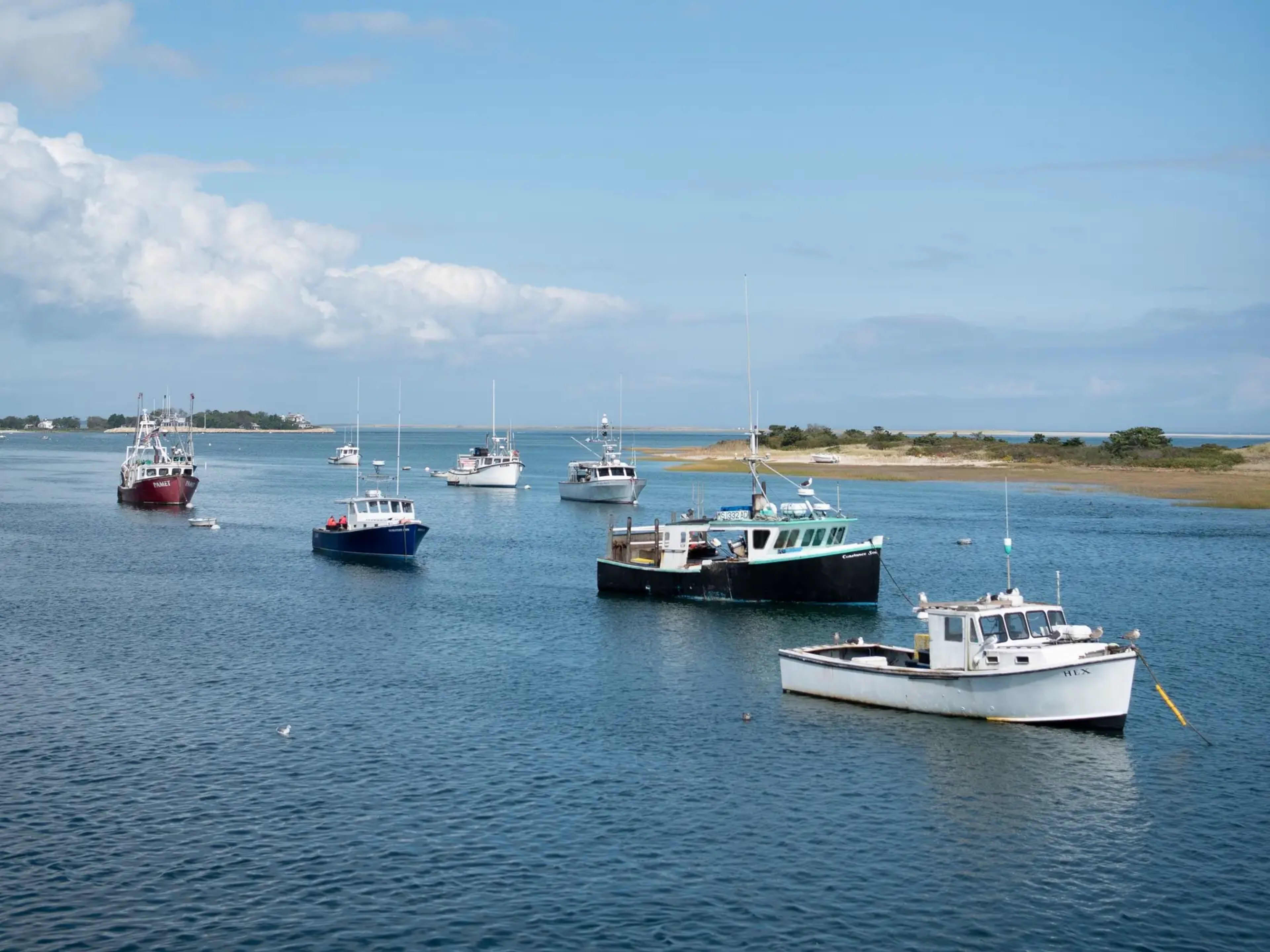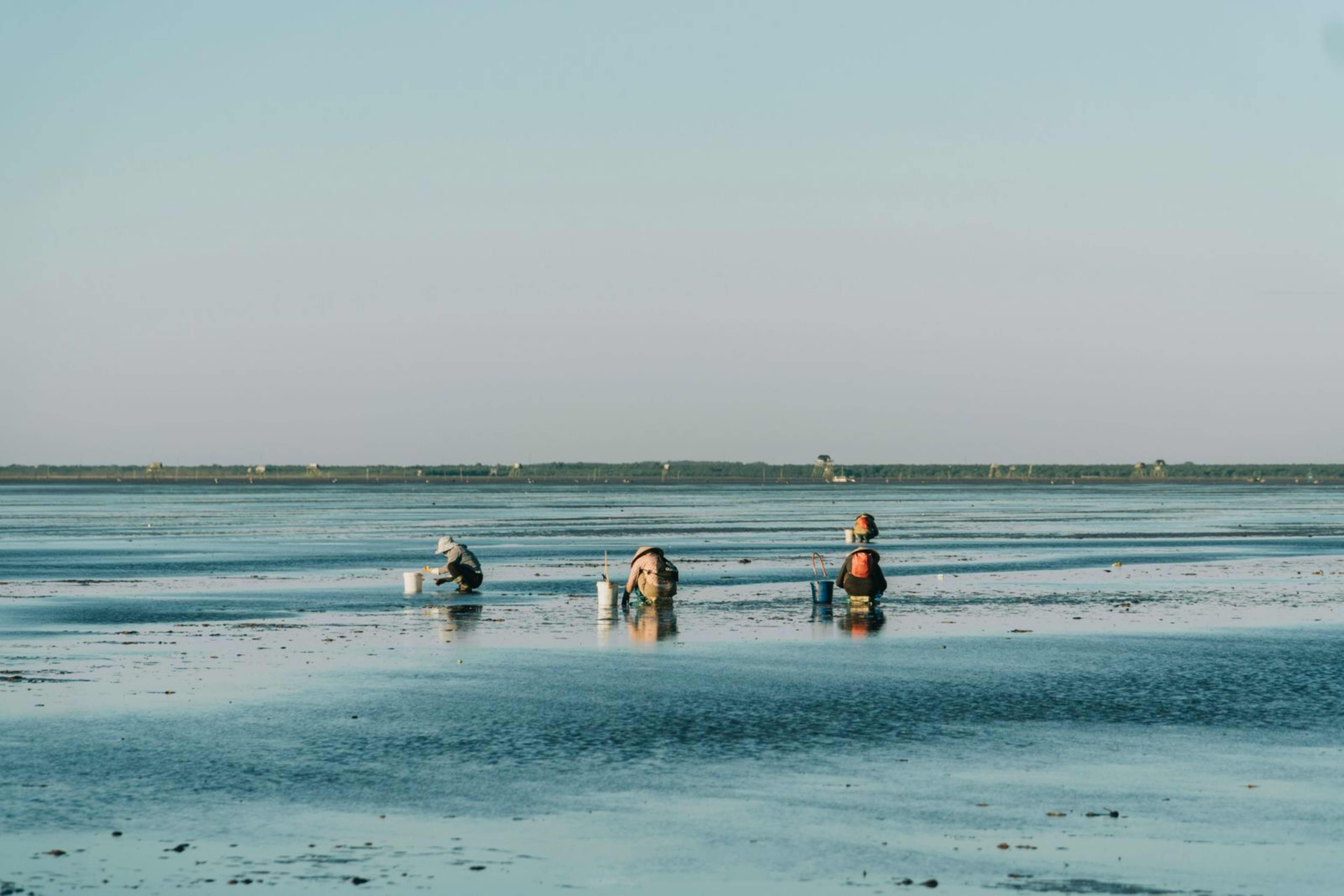
There is no more local Cape Cod activity than clamming. On a minus tide in July, the Barnstable Harbor flats or the Wellfleet Harbor edges are dotted with locals in waders or shorts, armed with rakes, filling mesh bags with soft-shell clams for that evening's pot. The technique is simple, the license is usually available to non-residents, and eating a clam you dug yourself from Cape Cod mud is better than any restaurant experience.
Clamming on Cape Cod is accessible to anyone willing to wade onto a tidal flat at low tide, do a little homework on licenses, and verify that the flat is open before going. This guide covers everything: which town to get licensed in, what you are digging for, how to read the flat, what gear you need, and how to turn your haul into dinner.
Getting Your Shellfishing License
Each Cape Cod town issues its own shellfish licenses — there is no single "Cape Cod" or regional license. You must obtain a license from the specific town where you intend to clam. The good news is that most Cape towns allow non-residents to purchase a short-term license, typically valid for one week or the full season.
Non-resident weekly license fees are modest and vary by town — check the specific town's current fee before you go. Some towns sell licenses online through their municipal websites; others require an in-person visit to the harbormaster's office or town hall. Verify before you go — a wasted trip to a town hall that is closed at 4pm on a Saturday is a real possibility.
Where to get your license by town
- Barnstable: Barnstable Harbormaster's Office
- Wellfleet: Wellfleet Shellfish Warden
- Orleans: Orleans Natural Resources Department
- Chatham: Chatham Shellfish Constable
- Eastham: Eastham Natural Resources Office
- Yarmouth: Yarmouth Natural Resources Department
Each town's Natural Resources or Shellfish department is also the authoritative source for which specific flats are currently open for recreational harvest — they can tell you on any given day whether the area you plan to dig is safe and legal. It is worth calling the morning before you go.
What You're Digging: The Three Main Cape Cod Clams
Soft-shell clams (Mya arenaria — steamers): This is the quintessential Cape Cod clam. Soft-shells live buried 4–8 inches down in mud or sandy mud in the middle and lower intertidal zone. The giveaway at the surface is a small, oval or keyhole-shaped siphon hole — the breathing and feeding tube the clam extends upward. Once you train your eye to see them, you will find them everywhere on a good flat. Rake down 6–8 inches and pull the tines back toward you through the loosened sediment. The clam tumbles out of the disturbed mud. Soft-shells have thin, fragile shells — handle carefully and do not pile them deep in a bucket.
Quahogs (Venus mercenaria — hard-shell clams): Quahogs go by size: littlenecks are the smallest and best eaten raw on the half shell; cherrystones are medium and good raw or cooked; chowder clams are the largest and are best chopped into chowder. Quahogs live in sandier bottoms in shallow bay areas, typically in the top 2–4 inches of substrate. Raking quahogs feels different from digging steamers — you are working shallower and in firmer sand, and the shells are solid and substantial when the tines hit them. Bay-side town flats throughout the Mid-Cape — Barnstable, Yarmouth, Dennis — are productive quahog territory.
Razor clams (Ensis directus): Long, narrow, and fast. Razor clams are found in sandy intertidal flats, and the traditional technique for catching them is one of the more satisfying small dramas in recreational shellfishing. Find the keyhole or figure-8 hole at the surface, pour a small quantity of coarse salt into it, and wait: the salt creates an osmotic signal that encourages the clam to extend its muscular foot toward the surface, at which point you grab it — and hold on, because they can pull themselves back down faster than most people expect. Razor clams are not as commonly targeted as steamers or quahogs, but they are worth the attempt.
Where the Flats Are Open — and How to Check Before You Go
Water quality monitoring can close shellfish flats without warning. Heavy rainfall causes bacterial runoff from roads, lawns, and septic systems that temporarily makes shellfish unsafe to harvest. Paralytic shellfish poisoning from harmful algal blooms is a separate, less frequent concern. Either way, the closure system exists to protect you.
Flat closures and openings are managed cooperatively between the Massachusetts Division of Marine Fisheries (DMF) and each town's shellfish department. Current closure status can be checked through the Massachusetts Division of Marine Fisheries shellfish sanitation pages on mass.gov and through each town's shellfish page. Many regular clammers simply call the town shellfish warden the morning they plan to go. That call takes two minutes and removes all ambiguity.
This step is not optional. Harvesting from a closed flat is illegal and a genuine health risk.
Generally reliable open areas when water quality permits
- Barnstable Harbor inner flats: one of the most accessible and productive steamer flats on the Cape; broad mud flat with good soft-shell populations; accessible from multiple points around the harbor
- Wellfleet Harbor margins: productive for both steamers and quahogs; note that Wellfleet Harbor also has extensive commercial aquaculture lease areas, and harvesting oysters from those leased beds is prohibited — verify which areas are open for recreational harvest with the Wellfleet Shellfish Warden before going
- Orleans tidal flats: Town Cove and the flats accessible from town landings offer good access to both hard- and soft-shell clams; contact Orleans Natural Resources for current open areas
- Eastham: the Bay-side flats accessible from town ramps have been historically productive; check with Eastham Natural Resources for current access points
- Chatham: Stage Harbor and surrounding flats have both soft-shell and quahog populations; access points vary by season; verify with the Chatham Shellfish Constable
Equipment, Timing, and the Low-Tide Window
The essential kit for clamming on Cape Cod is minimal: a shellfish rake with a long handle and tined head (available at Cape Cod hardware stores and marine supply shops for a modest one-time cost); a wire-mesh bag or bushel basket for your haul; and footwear you do not mind getting thoroughly muddy. In July and August, old sneakers or rubber-soled water shoes work fine. In shoulder season, waders or neoprene boots make the experience significantly more comfortable.
Timing matters more than almost any other variable. Plan to arrive at the flat one hour before the predicted low tide and stay until one hour after — this two-hour window gives you maximum flat exposure and the shallowest water for wading. Minus tides (below 0.0 feet on the tide table) expose the most territory and reveal the best steamer ground, which sits in the lower intertidal zone. Check tide tables for the specific town you are visiting, not a generic "Cape Cod" tide — there can be 30–45 minutes of variation between Upper Cape and Outer Cape tide times.
Bag limits vary by town and species. The shellfish department will tell you the current limit when you purchase your license. Do not exceed your limit and do not take undersized clams: soft-shells must be at least 2 inches in longest diameter under Massachusetts regulation, and quahog minimums apply as well.
Cooking What You Catch: The Classic Steamer Method
The reward for a productive morning on the flat is one of the simplest, best meals Cape Cod offers.
Rinse your clams thoroughly in cold water and scrub off any mud. Traditional prep calls for soaking steamers in fresh water — some cooks add cornmeal, though many prefer a simple soak in clean salt water to help the clams purge sand over 20–30 minutes. After soaking, rinse again.
To cook: put 1–2 inches of water, or a mix of water and dry white wine, into a heavy pot with a tight-fitting lid. Bring to a boil, add the clams, cover, and steam until the shells open — about 5 to 8 minutes. Discard any clams that do not open. Serve immediately with the cooking broth in a small bowl on the side and drawn butter for dipping. The technique: pull the clam from the shell by the dark outer siphon skin, dip it briefly in the broth to rinse off any remaining grit, then dip in butter. The siphon skin peels away; the tender meat inside is the sweet, unmistakably Cape Cod bite that no restaurant preparation quite replicates.
The Short Version
| License required | Yes — from the specific town where you dig |
| Non-resident license | Available in most towns; weekly or seasonal |
| Approximate cost | Modest weekly fee; varies by town |
| Best tide | Low tide; arrive 1 hour before; minus tides are ideal |
| Best season | May through October; summer is peak |
| Main species | Steamers (soft-shell), quahogs (hard-shell), razor clams |
| Before you go | Verify flat is open with town shellfish department |
| Essential gear | Shellfish rake, mesh bag, water shoes or waders |
Clamming connects you to a Cape Cod that existed long before the motels on Route 28 or the traffic backup at the Sagamore Bridge — a place where the best meal you can eat costs almost nothing and tastes exactly like the place it came from.
Find shellfish-friendly restaurants, local gear shops, and Cape Cod town resource contacts at capecodcertified.com/directory.
Gear That Earns Its Spot
Cape Cod Certified picks — essentials worth packing for this trip:
- Sueños del Sol Linen Napkins (Set of 4): Hand-embroidered linen napkins with a bold sun-and-moon motif in coastal blue and yellow. They bring an effortless, elevated warmth to summer dinner parties and lazy Cape mornings alike.
- McCrea's Cape Cod Sea Salt Caramels (5.5 oz) — $28: Boston-made, individually wrapped caramels finished with flaky Cape Cod sea salt for that sweet-salty coastal bite. The grab-and-gift treat people rebuy every visit and every holiday.
- Amanecer Wave Yellow Tablecloth: A sunshine-yellow cotton tablecloth with a softly embroidered wave along the border, inspired by sunrise over the water. It turns any deck or dining table into a warm, gathered place to linger.
Before You Go: The Certified Shortlist
Get the best of Cape Cod — free.
Guides, hidden spots, and seasonal tips from people who actually live here.
Frequently asked questions
Do I need a license to go clamming on Cape Cod?
Yes — each town issues its own shellfish license, and you must get one for the specific town where you plan to dig. Most towns offer a non-resident option valid for a week or the full season; check with the town's harbormaster or natural resources office for current fees and how to purchase.
How do I find out if a shellfish flat is open before I go?
Call the town's shellfish warden or natural resources department the morning you plan to go — they can confirm whether the flat is open for recreational harvest that day. Heavy rainfall can close flats without warning due to bacterial runoff, so this check is not optional; harvesting from a closed flat is illegal and a genuine health risk.
What's the best tide for clamming?
Plan around low tide, arriving before it bottoms out and staying through the recovery to maximize your window of flat exposure and shallowest wading. Minus tides — those that drop below zero on the tide table — expose the most territory and reach the best steamer ground in the lower intertidal zone.
How do you catch razor clams?
Find the keyhole or figure-8 siphon hole at the surface, pour a small amount of coarse salt into it, and wait for the clam to extend its foot upward — then grab it and hold on. Razor clams can pull themselves back underground faster than most people expect, so be ready to maintain your grip.
How do you cook steamers after you dig them?
Soak the clams in clean water to help them purge sand, then steam them in a covered pot with a small amount of liquid until the shells open — discard any that stay closed. Serve immediately with the cooking broth on the side for rinsing and drawn butter for dipping.