If you've never been to Cape Cod before, the single most important thing to understand before you book a single night or pack a bag: Cape Cod is not one place. It's a 70-mile peninsula that hooks east and then north off the Massachusetts mainland, and the two sides of that hook are completely different experiences. The west-facing side looks out over Cape Cod Bay — calm water, warm temperatures, golden sunsets. The east-facing side faces the open Atlantic Ocean — surf, cooler water, spectacular barrier beaches, and dramatic sunrises. Most first-timers arrive confused about why one beach feels so different from another. Now you know.
That single distinction — Bay side versus Atlantic side — will shape every decision you make about where to stay, which beaches to visit, and how to spend your time on a first visit to Cape Cod.
Understanding Cape Cod Geography (This Actually Matters)
Cape Cod divides into four zones, and knowing them makes every travel decision easier:
Upper Cape (Bourne, Sandwich, Falmouth, Mashpee) — The first towns you reach coming off the bridges from the mainland. Closest to Boston, quieter, historic village centers. Sandwich is one of the oldest towns in Massachusetts and earns a stop on any first visit.
Mid Cape (Barnstable/Hyannis, Yarmouth, Dennis, Brewster, Harwich) — The commercial and logistical hub. The most lodging, the most restaurants, the most summer activity. Hyannis is the main hub for ferries to Nantucket and Martha's Vineyard.
Lower Cape (Chatham, Orleans, Eastham, Wellfleet) — Where Cape Cod starts to feel genuinely remote. This is where Cape Cod National Seashore begins, where the Atlantic beaches get spectacular, and where you start to understand why people come back every summer for thirty years.
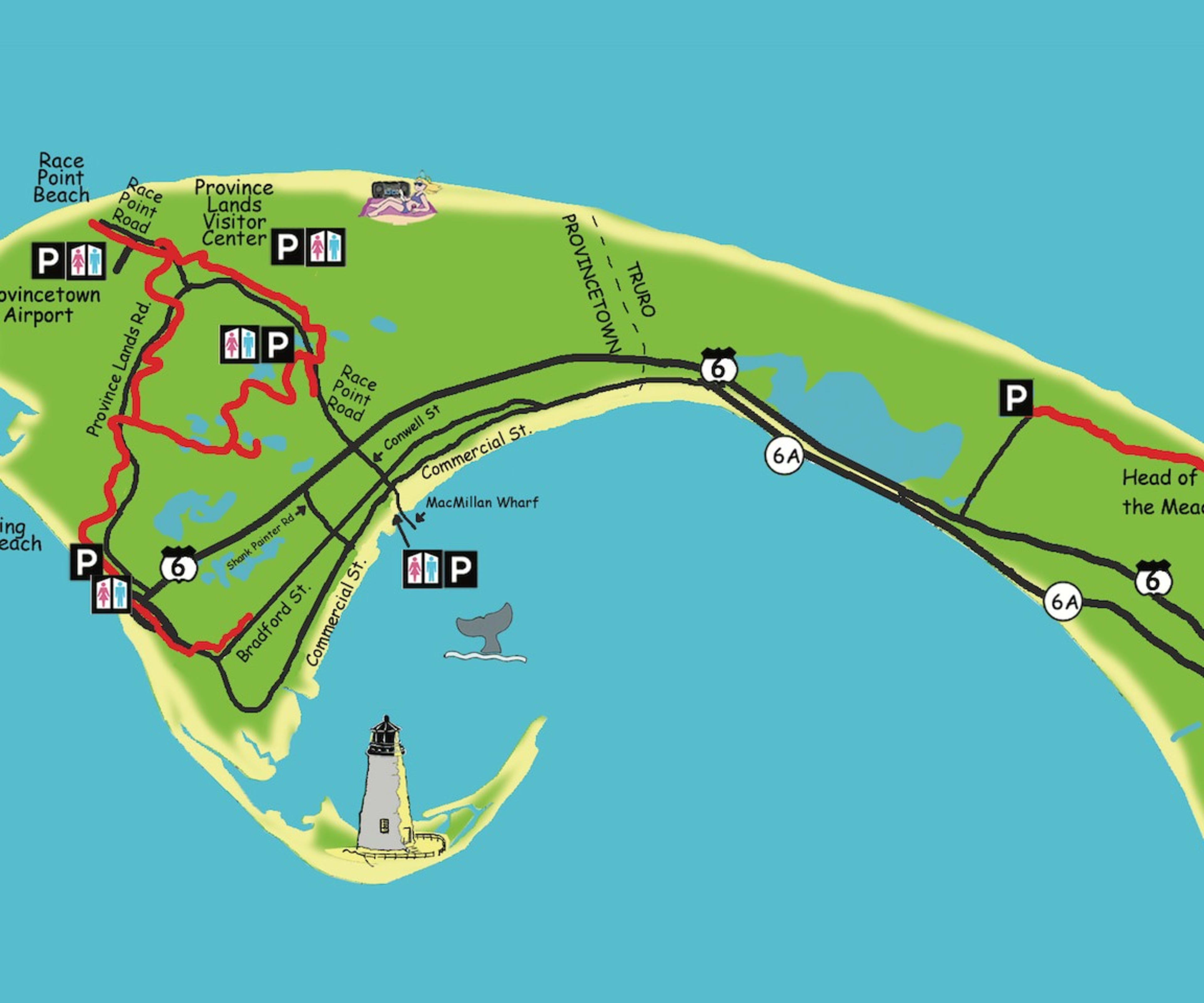
Outer Cape (Truro, Provincetown) — The tip of the hook. Provincetown sits at the very end, surrounded by National Seashore dunes and nothing but ocean for miles in every direction.
A practical note on driving: Route 6 is the highway — fast and featureless. Route 6A is the historic Old King's Highway threading through antique town centers at 35 mph — slow, scenic, and worth every minute when you have the time. Route 28 is the commercial strip along the south shore: motels, mini golf, seafood shacks, and serious summer traffic. Use Route 6 to get somewhere quickly and Route 6A when you have 20 extra minutes and want to see the actual Cape.
The 5 Things Every First-Timer Should Do
These are not suggestions. If this is your first trip to Cape Cod, these are the experiences that define what the place actually is.
1. Walk the Brewster tidal flats at low tide. Go to Paine's Creek Beach or Breakwater Beach in Brewster about an hour before low tide. Cape Cod Bay recedes so far that you can walk nearly a mile out into the bay floor, standing in warm, ankle-deep water with the whole horizon open around you. Nothing in the brochures prepares you for this. Check tide charts before you go — timing is everything.
2. Drive Route 6A from Sandwich to Brewster. This is the Cape Cod that existed before strip malls and Route 28. Old churches, antique dealers, farm stands, salt box houses, and almost no chain anything for 30 miles. Allow 90 minutes, stop when something looks interesting, and eat lunch somewhere along the way. This drive answers the question "what does Cape Cod actually look like?"
3. Eat at a fish shack, not a sit-down restaurant. A white paper bag of fried clams. A lobster roll on a split-top bun with drawn butter. Steamers in a bucket with broth for dipping. Sitting outside at a picnic table with the smell of salt air. This is the meal Cape Cod is built around, and it should cost you a casual-meal price per person, not a sit-down-restaurant tab. Ask a local where they go — not where the line is longest.
4. Go to Provincetown. Even once. Even for half a day. Provincetown sits at the absolute tip of the Cape, surrounded by 40 miles of protected National Seashore, and it is unlike anywhere else in New England. Historically a Portuguese fishing village, then an artists' colony, now one of the most celebrated LGBTQ+ destinations in the world — it holds all of that history at once. Walk Commercial Street, have a coffee, wander out toward the dunes, and understand why people plan their entire summer calendar around this place.
5. Watch a sunset from a Bay-side beach. Rock Harbor in Orleans, Paine's Creek in Brewster, Corporation Beach in Dennis, Corn Hill in Truro — any Bay-side beach at golden hour in July or August. The light turns the water pink and orange and the horizon is enormous. It is the image on every Cape Cod postcard for a reason.
Common First-Timer Mistakes (And How to Avoid Them)
Staying in Hyannis because it has the most hotels. Hyannis is convenient and has the most lodging inventory on the Cape, but it is also the least charming place to base yourself for a first visit. Use it as a transit hub if you're catching the ferry to Nantucket — otherwise, Chatham, Brewster, or Sandwich will give you far more of what people come to Cape Cod for.
Arriving at the beach after 9am on a Saturday in July. Parking lots at popular beaches fill completely by 9am in peak summer. Arrive by 8am or earlier, or plan on driving back and trying again the next morning. Some beaches also require a town-issued parking sticker for non-residents — check the current requirements for your town before you go.
Trying to drive end-to-end in a single day. Sandwich to Provincetown is 70 miles. In July traffic, that can take three hours each way. Pick a region, go deep into it, and save the rest for a future trip. The Cape rewards slow travel and punishes ambition.
Skipping Cape Cod National Seashore. This is the single biggest mistake a first-timer can make. Cape Cod National Seashore protects 40 miles of barrier beach, freshwater kettle ponds, salt marshes, and Atlantic dune landscape from Chatham all the way to Provincetown. Coast Guard Beach in Eastham, Marconi Beach in Wellfleet, Race Point Beach in Provincetown — these are among the most beautiful beaches on the entire East Coast, and federal protection is the only reason they still look this way. Entry fees apply seasonally — $25 per vehicle, or $60 for the annual Cape Cod pass (nps.gov/caco); the federal America the Beautiful pass is also honored. Check current rates before you go. Do not leave the Cape without seeing at least one National Seashore beach.
Where to Stay for a First Visit
Your base camp depends on what matters most to you:
For character and walkability: Chatham. The most polished Cape Cod village — lovely streets, excellent restaurants, and genuinely beautiful at golden hour. Chatham Bars Inn is a landmark property on the Cape. Expensive, but worth it for the right traveler.
For the best Bay-side beach experience: Brewster. Quiet, understated, and those tidal flats are unlike anything else on the Cape. Ocean Edge Resort is the largest full-service property in town; the area also has excellent B&Bs and rental homes.
For the full Cape arc: Split your trip — base in the Mid Cape (Brewster or Chatham) for the first half and spend your last night or two in Provincetown. Ending in Provincetown is the right way to close a first visit to the Cape.
For families with young children: South Yarmouth has the most family-oriented resort infrastructure, including Red Jacket Beach Resort on Nantucket Sound. The Bay-side water is calm, warm, and shallow — right for young kids.
For a quiet, historic home base: Sandwich is the quietest town on the Upper Cape. The Dan'l Webster Inn is a well-known full-service property in the village center. Start here if you want the antique town feel and easy access to Route 6A and the Cape Cod Canal.
How Long Do You Actually Need?
- 2 days: Too short. You'll spend most of it in traffic or deciding where to go.
- 3–4 days: A genuine introduction. Enough to absorb one region and see the highlights.
- 7 days: Comfortable. You can cover the Lower Cape, reach Provincetown, and still have days on the beach without running a schedule.
- 10+ days: This is how people become regulars who come back every summer for the rest of their lives.
Plan for at least four nights on your first visit. Three is workable but leaves you wishing you'd stayed longer.
Quick Facts for First-Timers
- Getting there: Two bridges cross onto the Cape — Sagamore and Bourne. Both see notorious Friday afternoon backups in July and August. Cross before noon on Fridays or after 7pm to avoid the worst of it.
- Cell service: Generally reliable through the Mid Cape; spotty in parts of Truro and Wellfleet. Download offline maps before you head to the Outer Cape.
- Season: Peak season is late June through Labor Day. Shoulder season (May–June, September–October) has lighter crowds, lower prices, and often exceptional weather.
- Sharks: Great White Sharks are documented near Outer Cape beaches from July through November, concentrated around seal colonies. Swim at beaches with lifeguards and follow all posted signage.
- Pets at beaches: Many Cape Cod beaches restrict dogs from June through September. Check town-specific rules before bringing your dog to the beach.
Beaches & trails in this guide
- Marconi Beach, Wellfleet →
- Coast Guard Beach, Eastham →
- Rock Harbor (Bay Beach & Pier), Orleans →
- Corporation Beach, Dennis →
- Race Point Beach, Provincetown →
- Nauset Beach, Orleans →
- Breakwater Beach, Brewster →
Ready to plan your first Cape Cod trip? Browse our full directory of local beaches, experiences, restaurants, and recommended businesses at capecodcertified.com/directory — curated by locals who live here year-round and know the difference between what's worth your time and what isn't.
Your Certified Next Steps
Get the best of Cape Cod — free.
Guides, hidden spots, and seasonal tips from people who actually live here.
Frequently asked questions
What's the difference between Cape Cod Bay beaches and the Atlantic side?
The Bay side faces Cape Cod Bay with calm, warm water and golden sunsets, while the Atlantic side faces the open ocean with surf, cooler water, and dramatic sunrises. That single distinction shapes where you stay, which beaches you visit, and how your whole trip feels.
How long should I stay on my first trip to Cape Cod?
Plan for at least four nights — three is workable but most people wish they'd stayed longer. A week gives you enough time to explore the Lower Cape, reach Provincetown, and still have unhurried days on the beach without running a schedule.
How do I avoid the worst bridge traffic coming onto Cape Cod?
Both the Sagamore and Bourne bridges back up badly on Friday afternoons in July and August. Crossing early in the day or late in the evening avoids the worst of it.
Is Cape Cod National Seashore worth visiting?
Cape Cod National Seashore protects barrier beaches, freshwater kettle ponds, salt marshes, and Atlantic dune landscape stretching from Chatham to Provincetown. Entry fees apply seasonally, so check current rates before you go — and plan to visit at least one National Seashore beach.
Where should I base myself for a first visit to Cape Cod?
Chatham suits visitors who want polished village character and walkability, Brewster is ideal for the Bay-side tidal-flat experience, and Sandwich offers a quiet historic home base. Families with young children often do well in South Yarmouth for its calm, warm Nantucket Sound beaches.