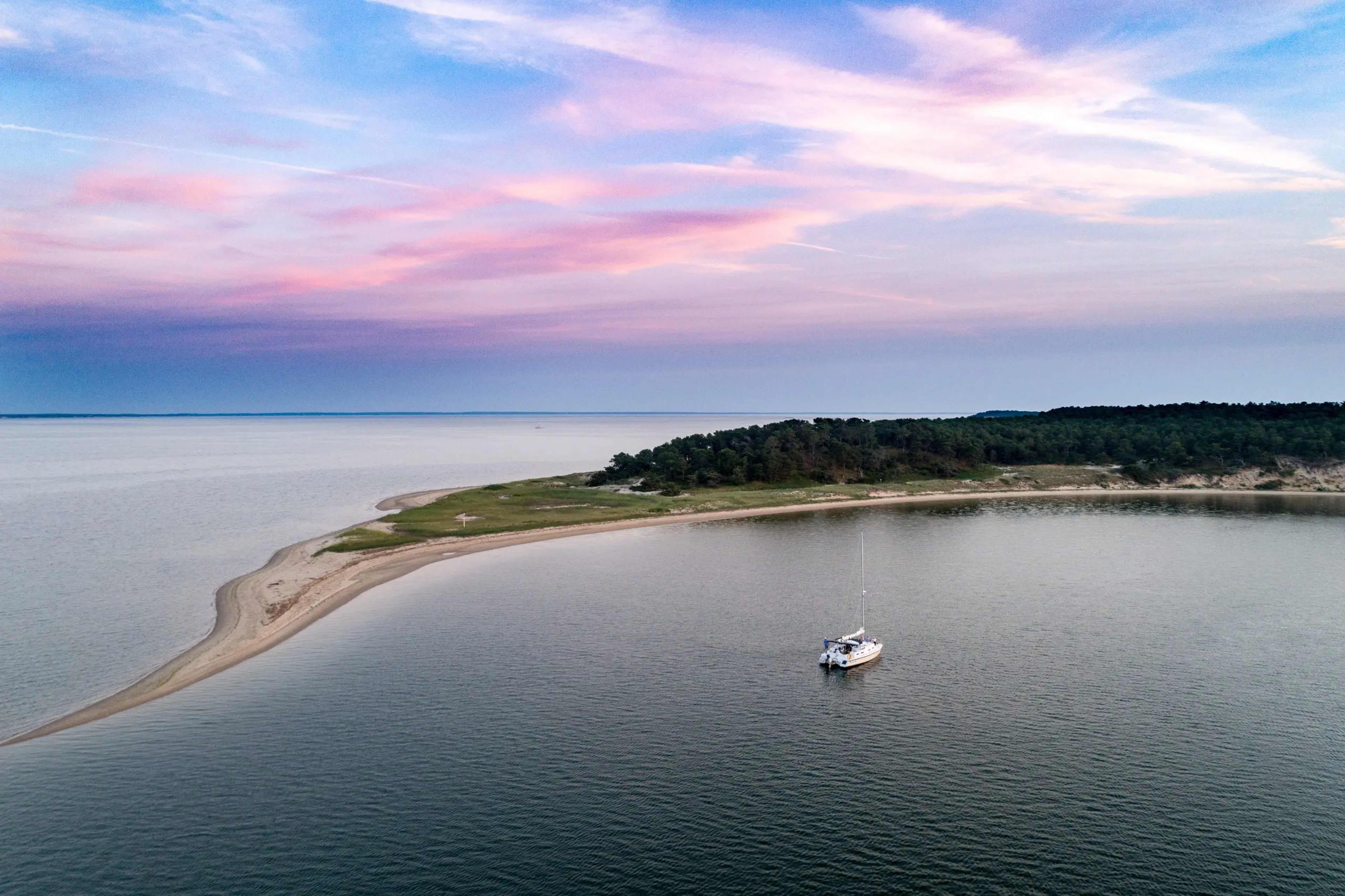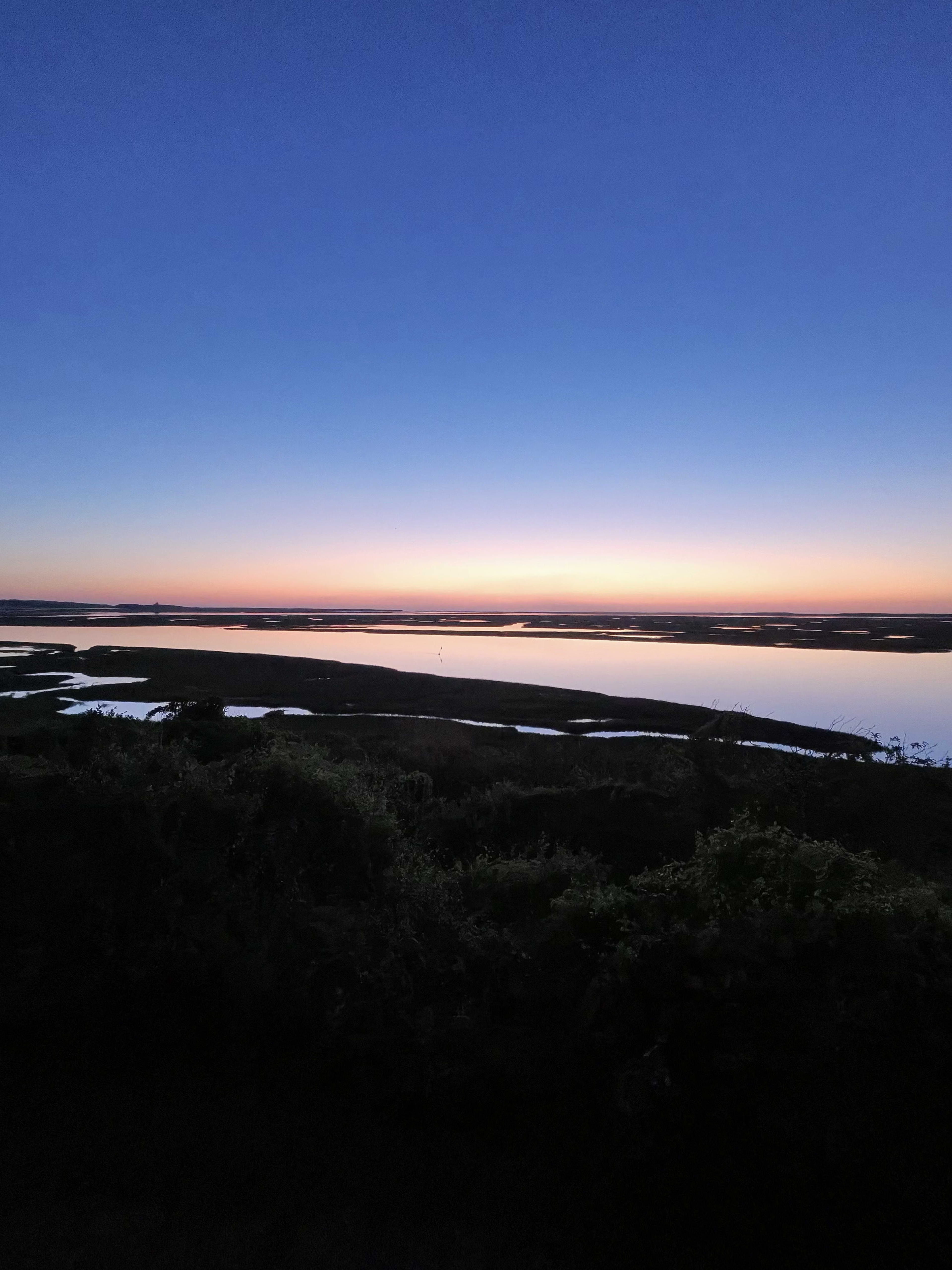
Monomoy National Wildlife Refuge shelters one of the most important shorebird staging areas on the entire Atlantic flyway — and most people driving through Chatham have no idea it exists, let alone how to reach it. These two barrier islands, sitting just south of Chatham's Fish Pier, host over 300 bird species across the year, a year-round gray seal population that swells into the thousands in winter, and a federally designated Wilderness Area that sees a fraction of the visitors that crowd the National Seashore beaches to the north.
Getting there requires a boat. That's the whole point.
What Monomoy Actually Is
Monomoy National Wildlife Refuge is a 7,604-acre complex of two barrier islands — North Monomoy and South Monomoy — plus Morris Island, tidal flats, salt marsh, and open water at the southern elbow of Cape Cod. The US Fish & Wildlife Service has managed the refuge since 1944; Congress designated the islands a Wilderness Area in 1970, making it one of the few Wilderness designations in the entire Northeast.
The islands' geography is not stable. Before a major storm in 1958, Monomoy was a single landmass connected to Chatham by a sandy neck — fishermen and hunters reached it on foot. The Blizzard of 1978 and subsequent storms have continued reshaping both islands, pushing sandbars, moving the inlet, and depositing new habitat. The topography you walk today is not the one your field guide's older maps show. That dynamism is exactly what makes the refuge so productive: freshly exposed tidal flats, shifting wrack lines, and minimal human disturbance create ideal conditions for tens of thousands of shorebirds on their southbound migration in late summer.
How to Get There
Morris Island: Accessible by Land
Morris Island is the one piece of the refuge complex you can reach without a boat. From Chatham center, follow Stage Harbor Road south to Morris Island Road and cross the short causeway. This puts you at the Monomoy National Wildlife Refuge Visitor Center, which carries trail maps, checklist sheets, and seasonal information. The short Morris Island Trail — roughly a quarter mile — loops out to an overlook of South Monomoy, the tidal flats, and (in season) hauled-out seals visible with binoculars. This access point is free and open year-round.
Morris Island is worth a stop even if you're not continuing by boat: on a falling tide, the exposed flats on the south side of the island can hold excellent shorebird numbers from late July through September without leaving the mainland.
North and South Monomoy: Boat Only
Reaching either island requires crossing Nantucket Sound from the Chatham/Stage Harbor area. The crossing to North Monomoy takes roughly 10 to 15 minutes in calm conditions. Several licensed outfitters run seasonal tours from Stage Harbor — guided birding trips, seal watches, and general island excursions. Check ahead for current schedules and pricing, as operations vary by season and demand.
Private boaters with the right local knowledge can land on both islands; no permit is required for day visits. What you do need to know: there are no marked channels near the islands at low tide, the sand flats shift constantly, and the tidal current running through the inlet between North and South Monomoy is serious. If you're chartering a private boat, hire someone who runs these waters regularly.
Stage Harbor and Parking
Stage Harbor on Morris Island Road is the practical hub for refuge access. Street parking is limited; arrive early on summer weekends. There is no parking fee for Morris Island access.
North Monomoy vs. South Monomoy
The two islands have different characters and different typical uses.
North Monomoy
North Monomoy is roughly 2.7 miles long and offers the more accessible wilderness experience. The northern end — closest to the Chatham inlet — tends to attract the most day visitors. Piping plover and least tern nest here in significant numbers, and portions of the island are seasonally closed during nesting (typically late April through late July, sometimes longer depending on nesting progress). Posted signs mark the closed areas; respect them. The federal protection status of piping plovers is not a formality — harassment or nest disturbance carries real penalties.
Shorebird diversity on North Monomoy in the July–September window is exceptional: semipalmated sandpiper, white-rumped sandpiper, dunlin, red knot, ruddy turnstone, sanderling, and American golden-plover are all realistic on a single good-tide visit.
South Monomoy
South Monomoy is the wilder and longer island — about 4.5 miles — and sees fewer visitors simply because the boat trip is longer and the island has no facilities whatsoever. The southeastern end of South Monomoy, where the tidal flats extend broadly into Nantucket Sound, is where the gray seal haul-out concentrates in fall and winter. During peak season (November through March), a few hundred to several thousand gray seals rest on the outer beach; you may also see harbor seals mixed in.
South Monomoy also contains the old Monomoy Lighthouse, built in 1849. The cast-iron structure is not currently open for interior tours, but it stands as a visible landmark from the beach and a reminder that this coastline was a shipping hazard that claimed dozens of vessels before modern navigation.
Best Time to Go
Monomoy rewards visitors across the full calendar, but what you'll see shifts dramatically by season.
Shorebird Migration: Late July Through September
This is the peak season for serious birders and the primary reason the refuge carries the reputation it does. Southbound shorebirds — including species that nested in the Arctic — begin staging here in earnest by mid-July. The highest diversity and numbers typically occur from late July through early September. Incoming tides concentrate birds on upper beaches; falling tides push them onto the flats. Plan your visit around tidal cycles, not the clock: low tide minus two hours through low tide plus one hour is prime.
Nesting Season: May Through July
Spring on the refuge is about nesting activity — piping plovers, least terns, common terns, roseate terns, and American oystercatchers all nest on or near the islands. Access to parts of both islands may be restricted. This is a good time to visit Morris Island for songbird migration (warblers, vireos, and flycatchers move through in May) and to take a guided tour that keeps you out of restricted zones.
Seal Season: October Through April
Gray seals are present year-round but numbers climb dramatically once the weather turns. By November, haul-outs on the outer beach of South Monomoy can hold hundreds of animals. The refuge's seal colony is one of the largest in Massachusetts waters. Licensed seal watch tours operate seasonally from Stage Harbor and offer the closest legitimate look. Attempting to approach seals on your own — walking toward a haul-out — disrupts the colony and is prohibited within the refuge.
Winter
Monomoy in January is cold, exposed, and outstanding for certain species that are difficult to find elsewhere: snowy owls irrupt here in good years, rough-legged hawks hunt the uplands, and the offshore water can hold eiders, scoters, long-tailed ducks, and red-throated loons in numbers.
What to Bring
There are no facilities on either North or South Monomoy. No restrooms, no water, no food vendors, no shade. Treat this like a backcountry visit:
- Water: bring more than you think you need, especially in summer heat
- Sun protection: the islands are flat and exposed; a wide-brim hat and reef-safe sunscreen are not optional in July and August
- Footwear: rubber-soled shoes or waterproof boots; the tidal flat crossings get muddy and the shrubby upland interior is rough on bare feet or sandals
- Binoculars: necessary for birding and for watching seals from a respectful distance
- Tide table: check the tide for Stage Harbor before departure — Chatham-area tides lag behind Boston tide tables by roughly 20–30 minutes
- Trash bag: carry-in, carry-out is not posted — it's just what you do
A spotting scope significantly improves shorebird ID at distance and is worth the weight if you're serious about the birding.
Rules and Restrictions
The Wilderness Area designation shapes what is and isn't allowed on the islands:
- No vehicles of any kind, including ATVs
- No pets at any time on the islands
- No camping — day use only
- No fires
- Seasonal closures: portions of both islands are closed for piping plover and tern nesting, roughly April through late July or August; boundaries are signed on the ground and posted at the visitor center
- Seal buffer: do not approach hauled-out seals; federal Marine Mammal Protection Act rules apply with teeth
- Stay out of posted restricted areas and follow guidance from refuge staff if present
Morris Island has a slightly different access framework as it's not part of the Wilderness designation — dogs on leash are permitted on Morris Island.
The Morris Island Trail and Overlook
If you're visiting Chatham for a day and can't arrange a boat trip, the Morris Island Trail gives you a genuine refuge experience without leaving the mainland. The trail is short — expect 20–30 minutes at a relaxed pace — and ends at an overlook above the tidal flats and the gap between Morris Island and North Monomoy. On a good day in August you can watch shorebird flocks wheel in off the water without a spotting scope, and harbor or gray seals are sometimes visible from the overlook in the colder months.
The visitor center, when staffed, is worth stopping into: the staff know the current status of nesting areas, recent bird sightings, and which outfitters are operating that week.
Pairing Monomoy With a Chatham Day
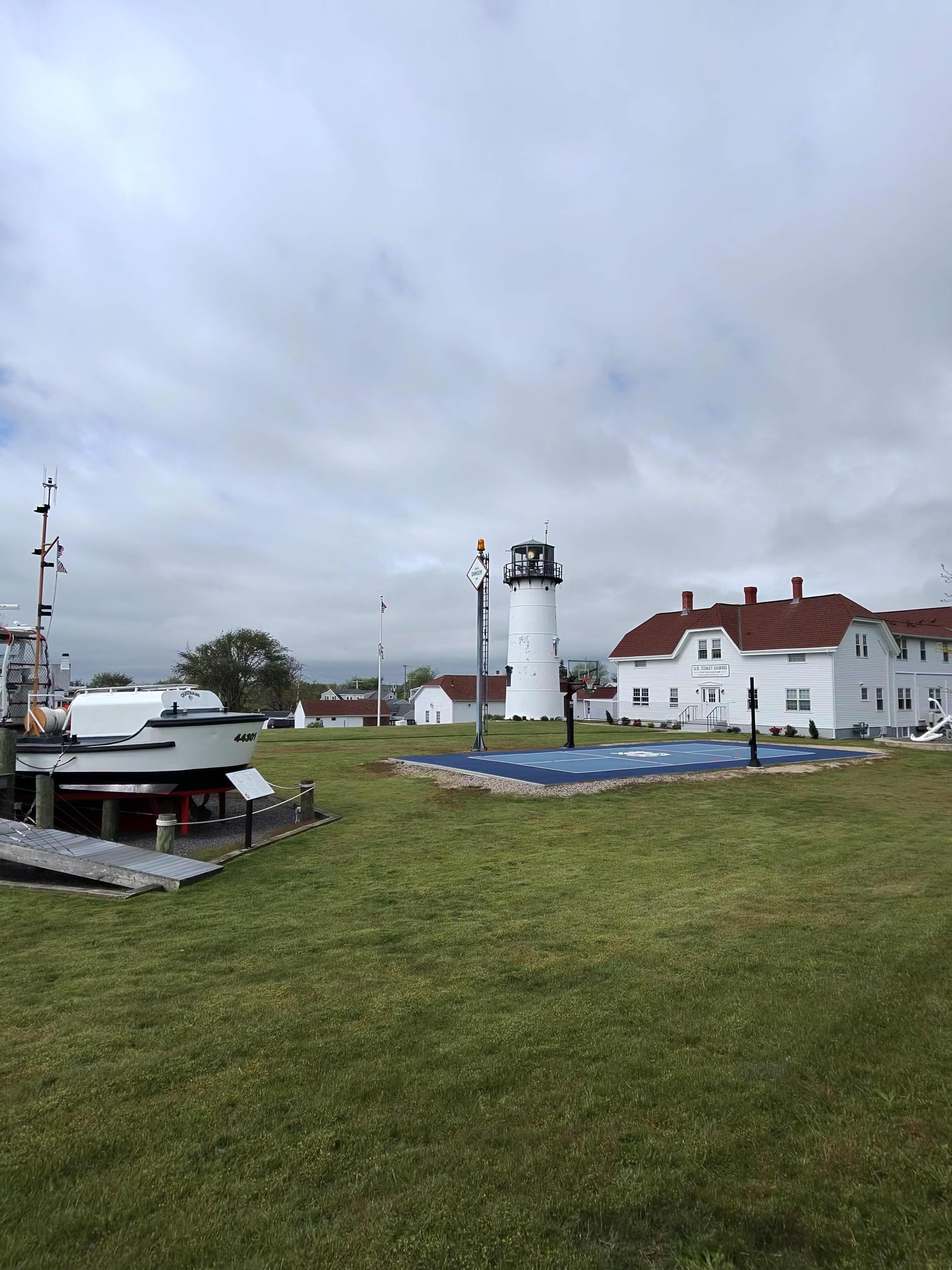
Monomoy trips tend to be morning affairs — tours typically depart early to use the best light and the falling tide. An afternoon in Chatham pairs naturally: the Fish Pier, Chatham Light, and the Chatham town guide cover the rest of the day's logistics. Birders working the fall shorebird window often also walk Nauset Beach — accessible from Orleans — for comparison habitat; see the Orleans and Nauset Beach guide for that route. Wellfleet Bay Wildlife Sanctuary, operated by Mass Audubon on the bay side, makes a complementary stop for birders covering the Outer Cape in a single trip.
Beaches & trails in this guide
Plan Your Visit
The CCC directory lists Chatham-area outfitters, guides, and experiences that cover the refuge access options and the broader wildlife cluster on the Outer Cape. Browse the Chatham directory for tour operators, watercraft rentals, and lodging close to Stage Harbor — particularly useful if you're planning an early-morning bird tide and want to be five minutes from the dock.
What to Bring / What You'll Need
Cape Cod Certified picks — essentials worth packing for this trip:
- MalsiPree Portable Dog Water Bottle — $15: One-handed, leak-proof bottle with a built-in bowl that recycles unused water back into the bottle. Under six ounces and ready for every boardwalk, trail, and dune walk.
- Sun Bum Mineral SPF 30 Sunscreen Lip Balm — $4: Zinc-based broad-spectrum lip protection with vitamin E; reef-safe.
Vetted in Chatham
Cape Cod Certified recommends these verified local spots:
- Cape Cod Coffee — Chatham — 4.4★ (243 Google reviews)
- Goodies — 4.7★ (19 Google reviews)
- The Black Dog General Store Chatham — 4.4★ (105 Google reviews)
- Chatham Paint & Hardware — 4.8★ (33 Google reviews)
Make It a Day, the Certified Way
Get the best of Cape Cod — free.
Guides, hidden spots, and seasonal tips from people who actually live here.
Frequently asked questions
Do you need a boat to visit Monomoy National Wildlife Refuge?
Morris Island, the mainland portion of the refuge, is reachable by car via Stage Harbor Road, where you'll find the visitor center and a short walking trail. North and South Monomoy islands are boat-access only; licensed outfitters run seasonal tours from Stage Harbor, and private boaters should check the refuge's current rules before landing.
When is the best time to see shorebirds at Monomoy?
Late July through early September is the peak window, when southbound shorebirds staging from Arctic nesting grounds concentrate on the tidal flats in high diversity and numbers. Plan your visit around tidal cycles rather than the clock — the falling tide is when activity is best.
Can you see gray seals at Monomoy, and when?
Gray seals are present year-round but numbers climb dramatically from fall into winter, with large haul-outs forming on the outer beach of South Monomoy roughly from November through March. Licensed seal watch tours operate seasonally from Stage Harbor; approaching seals on your own is prohibited under federal law.
Are dogs allowed at Monomoy?
Dogs are not permitted on North or South Monomoy at any time — the Wilderness Area designation prohibits pets on the islands. Dogs on leash are allowed on Morris Island, the mainland section of the refuge accessible by car.
What should I bring to Monomoy?
Both islands have no facilities whatsoever — no restrooms, water, food vendors, or shade — so treat it as a backcountry day trip. Bring ample water, sun protection, rubber-soled or waterproof footwear, binoculars, and a tide table for the Stage Harbor area. Everything you carry in, you carry out.