The Atlantic white shark population off Cape Cod has grown significantly since the 1970s, driven by the recovery of gray seal colonies — the great white's preferred prey on the Outer Cape. As of 2024, the Atlantic White Shark Conservancy had tagged over 300 individual great whites in Cape Cod waters, with consistent summer sightings from late July through October. This is not speculation. It is the reality of swimming on the Atlantic-facing beaches of Chatham, Wellfleet, Truro, and Eastham.
That does not mean you should stay out of the water. It means you should go in knowing what the locals know.
Why the Outer Cape Has So Many Great Whites
Gray seals haul out by the thousands at two primary locations: Monomoy Island off Chatham, and the outer beaches of the National Seashore from Coast Guard Beach in Eastham north through Wellfleet and Truro. Both sites are within easy swimming distance of popular swimming beaches. Great whites follow their food source. The seal population here is estimated at 30,000–60,000 animals. The sharks are not visiting — they are feeding in a place that consistently delivers calories.
The highest-risk zone runs along the Atlantic-facing beaches — from South Beach in Chatham, through Nauset Beach, up through Cahoon Hollow and Newcomb Hollow in Wellfleet, and into the beaches of Truro (Head of the Meadow, Ballston Beach) and Provincetown. Bay-side beaches (Cape Cod Bay) carry substantially lower risk; the seals and the sharks are primarily on the Atlantic side.
Understanding the Beach Flag System
Every Cape Cod beach staffed by lifeguards uses a standardized flag system. Learn it before you arrive at the parking lot.
Flag Colors and Their Meanings
- No flag / green flag — Conditions monitored; no active shark activity in the area
- Yellow flag — Caution; elevated attention recommended (often used for currents or surf conditions as well)
- Red flag with shark icon — Shark sighted in the area; swimming prohibited until cleared
- Black flag (double) — Water closed; no entry
The red shark flag triggers an immediate exit from the water. Lifeguards are trained to clear the beach and will not reopen swimming until a set time has passed without further sightings — typically 60 minutes, though this can vary by town.
Where to Check Before You Drive
Before loading the car:
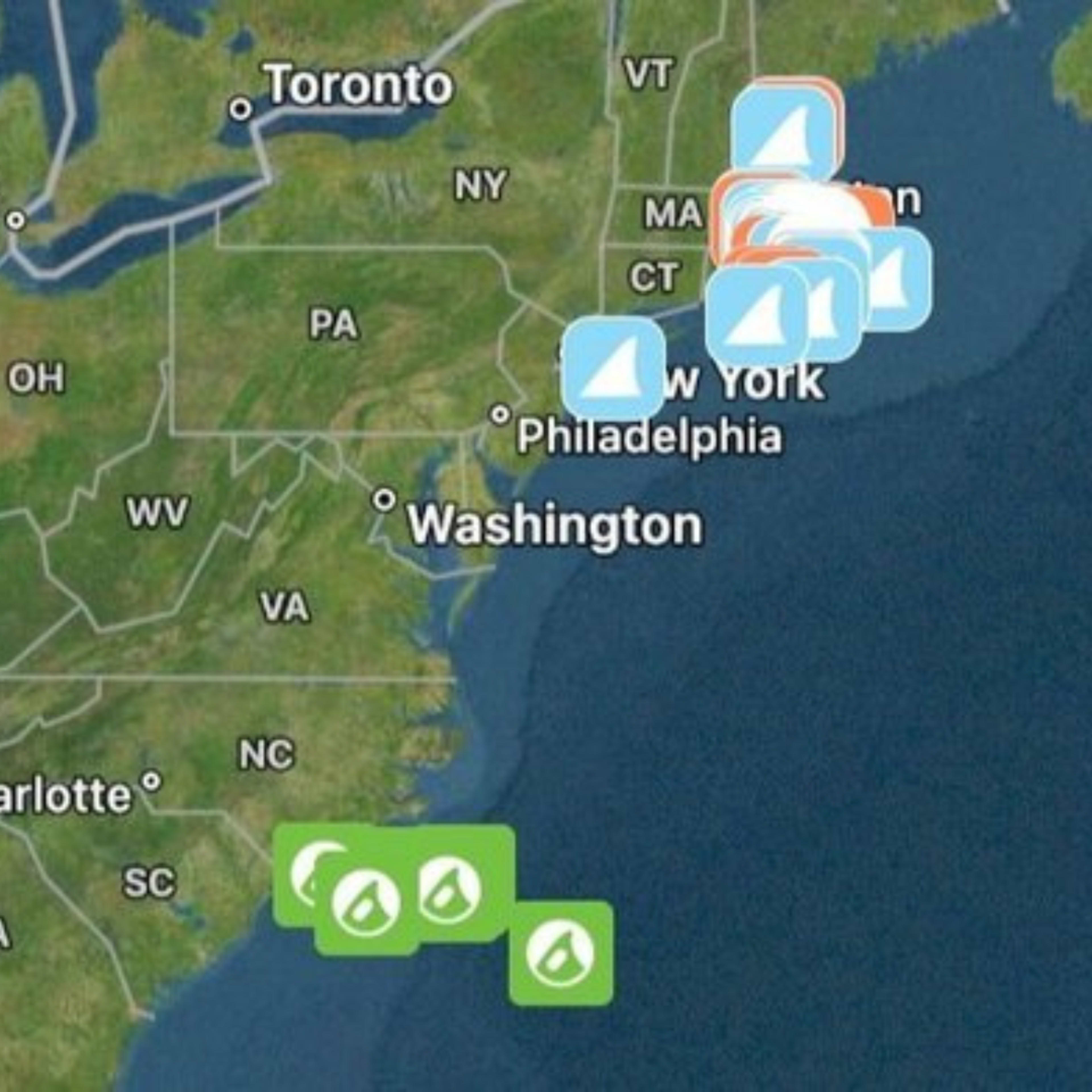
- Sharktivity app (free, iOS/Android) — Built by the Atlantic White Shark Conservancy, this is the single most useful tool. Shows tagged shark locations, reported sightings, and beach closures in real time. Set alerts for the beaches you plan to visit.
- Atlantic White Shark Conservancy website — awsc.org; updated daily during peak season
- Cape Cod National Seashore beach conditions — nps.gov/caco or call the Seashore's main line
Locals check Sharktivity the same way they check surf reports. Make it a habit.
Beach-by-Beach Breakdown
Chatham
South Beach (accessible by boat or a long walk from Ridgevale Beach) sits directly adjacent to the Monomoy seal colony. This is one of the most consistently active shark areas on the East Coast. Lifeguards operate at Ridgevale Beach, Harding's Beach (bay side — lower risk), and Forest Beach, but South Beach itself is remote and unsupervised. If you paddle out there by kayak, you are making a decision without a safety net.
Nauset Beach in Orleans (technically on the Chatham/Orleans line) has had repeated documented shark sightings and incidents. It remains popular and well-staffed, but the dunes here drop off quickly into deep water close to shore — attractive to seals and therefore to sharks. Park at the main lot off Beach Road; fees apply and the lot fills early in summer.
Wellfleet
Newcomb Hollow Beach and Cahoon Hollow Beach are the two names that come up most often in shark news coverage, and for good reason. Both are steep-drop Atlantic beaches, heavily used by surfers (which means people spending extended time in the water in wetsuits — the profile that most closely resembles a seal from below). A fatal attack at Newcomb Hollow in 2018 was the first shark fatality in Massachusetts in 82 years.
These beaches are staffed with lifeguards during peak summer hours, but the parking lots fill by 9 a.m. on busy weekends. Overflow parking is along Route 6 with a shuttle in season. Check Wellfleet town website for current beach hours and fee schedules.
Marconi Beach, also in Wellfleet and managed by the National Seashore, is another active site. The National Seashore charges a vehicle fee ($25 per vehicle, per day, or covered by an America the Beautiful pass — nps.gov/caco).
Truro
Head of the Meadow Beach in Truro sits between two National Seashore parcels and is split between town-managed and Seashore-managed sections. It's quieter than the Wellfleet beaches but sees regular sightings. Ballston Beach, accessible via a short walk through the dunes, is remote and unsupervised — no lifeguards, no flag system. It's beautiful. It is also a place where you are entirely on your own.
Eastham
Coast Guard Beach in Eastham is one of the most famous beaches on the Outer Cape — and one of the most closely monitored for shark activity. It sits at the gateway to the National Seashore's swimming area and has robust lifeguard coverage during season. Parking here requires the seasonal shuttle from the Little Creek parking area on Nauset Road (the lot at the beach itself is restricted). Nauset Light Beach, a short distance north, follows similar staffing patterns.
The seals at these beaches are visible from shore. If you can see seals in the water near where you're swimming, leave the water. This is not alarmism — it is the same advice the lifeguards will give you.
When Is Shark Season on Cape Cod?
Peak great white activity runs from late July through October. The pattern aligns with:
- Water temperature warming into the mid-60s°F and above (seals are active; sharks follow)
- Peak seal pupping season driving higher seal density
- Post-Labor Day, when beach crowds thin but water stays warm — this is when sightings can increase while supervision decreases
Early summer (June through mid-July) sees far fewer documented sightings, though this is not zero risk. Spring and fall shoulders bring cold water and lower overall activity. Winter sightings are rare but have occurred.
If you want to swim on the Outer Cape with the lowest realistic shark risk: go before July 15 or after the water cools significantly in late October.
What Locals Actually Do
People who live and work on the Outer Cape do not avoid the ocean in August. But they do follow a set of informal rules that go beyond the posted signs:
- Check Sharktivity before leaving the house. Not once. Check it in the parking lot too.
- Swim in front of the lifeguard stand. The stand is where you have eyes on the situation and the fastest response if something happens.
- Avoid dawn, dusk, and low-light swims. Great whites are most active as feeders during transitional light periods. This is also when lifeguards are off duty.
- Don't wear high-contrast black-and-white swimwear. Visibility research from the Conservancy suggests this profile may be more stimulating to sharks. Bright solid colors or muted tones are preferable.
- Get out of the water if seals enter the area. No debate, no hesitation.
- Do not swim alone at remote beaches. If something happens at Ballston Beach with no one around, no help is coming quickly.
- Avoid swimming near seal haul-outs or areas where seals are feeding. Visible baitfish, birds diving, and surface disturbance near seals are all signals to exit.
Surfing is a separate category of risk. Surfers spend extended time in the water, are often farther out than swimmers, and are in a position more likely to be investigated. Local surfers at Cahoon Hollow know the risks and largely accept them as part of the activity. That is a personal choice, but it is not the same choice as wading in to your waist on a supervised beach.
Best Time to Swim on Cape Cod (Accounting for Sharks)
| Period | Risk Level | Notes |
|---|---|---|
| Late May – early July | Lower | Fewer sightings, water still cool, fewer seals near beaches |
| Mid-July – mid-August | Moderate to elevated | Peak season, staffed beaches, Sharktivity active |
| Late August – October | Highest | Warm water, high shark density, post-season staffing reductions |
| Bay-side beaches (all summer) | Low | Seals and sharks concentrate on the Atlantic side |
Bay-side options — Skaket Beach in Orleans, Duck Harbor in Wellfleet, Chapin Beach in Dennis — offer warmer, calmer water with dramatically lower shark activity. For families with young children who primarily want to be in the water rather than surf the Atlantic swells, bay-side beaches during peak season are a practical choice.
The Atlantic White Shark Conservancy
The AWSC, based in Chatham, is the organization doing the legitimate science on this population. They run the Sharktivity app, tag individual sharks (named animals like "Pumpkin," "Roosevelt," and hundreds of others), and publish research that informs state and federal beach safety policy.
Their education center in Chatham is worth a stop — particularly with kids. It reframes the great white not as a monster but as an apex predator that belongs in this ecosystem. Check awsc.org for current hours before visiting.
Beaches & trails in this guide
What to Know Before You Go
A shark sighting at a Cape Cod beach does not ruin the trip. It is information. The flag system, the Sharktivity app, and the lifeguard presence at staffed beaches give you real-time data that most coastal destinations in the world do not offer. Locals swim here every summer — they just do it with eyes open.
For more on what to do, see, and experience on the Outer Cape, explore the Cape Cod Certified directory for guided experiences, outdoor outfitters, and local businesses in Chatham, Wellfleet, Truro, and Eastham. If you want a naturalist-guided boat trip to see the seal colonies that bring the sharks close to shore, several operators run tours out of Chatham Harbor — browse the Experiences section to find current offerings verified by our field team.
Pack Smart for This One
Cape Cod Certified picks — essentials worth packing for this trip:
- MalsiPree Portable Dog Water Bottle — $15: One-handed, leak-proof bottle with a built-in bowl that recycles unused water back into the bottle. Under six ounces and ready for every boardwalk, trail, and dune walk.
- Sun Bum Mineral SPF 30 Sunscreen Lip Balm — $4: Zinc-based broad-spectrum lip protection with vitamin E; reef-safe.
Put This Guide to Work
Get the best of Cape Cod — free.
Guides, hidden spots, and seasonal tips from people who actually live here.
Frequently asked questions
When is shark season on Cape Cod?
Peak great white activity runs from late July through October, when water temperatures rise and seal density near beaches is at its highest. Early summer sees far fewer documented sightings, and winter sightings are rare. For the lowest realistic risk on the Outer Cape, aim to swim before mid-July or after the water cools significantly in late fall.
Which Cape Cod beaches have the lowest shark risk?
Bay-side beaches carry substantially lower risk because seals and great whites concentrate on the Atlantic side. Spots like Skaket Beach in Orleans, Duck Harbor in Wellfleet, and Chapin Beach in Dennis offer calmer, warmer water with dramatically lower shark activity — a practical choice for families with young children who primarily want to be in the water.
What does the red shark flag mean at Cape Cod beaches?
A red flag with a shark icon means a shark has been sighted in the area and swimming is prohibited until the beach is cleared. Lifeguards won't reopen the water until a set period without further sightings has passed, and that window can vary by town — follow the lifeguard's direction on-site.
Is there an app to check for shark sightings before going to the beach?
The Sharktivity app, built by the Atlantic White Shark Conservancy, shows tagged shark locations, reported sightings, and beach closures in real time. Locals check it before leaving the house and again in the parking lot. You can set alerts for the specific beaches you plan to visit.
What should I do if seals swim near me in the ocean?
Get out of the water immediately — no debate, no hesitation. Seals attract great whites, and visible seals in the area where you are swimming is a direct signal to exit. This is the same advice the lifeguards on the Outer Cape will give you.