What Makes Stellwagen Bank Different
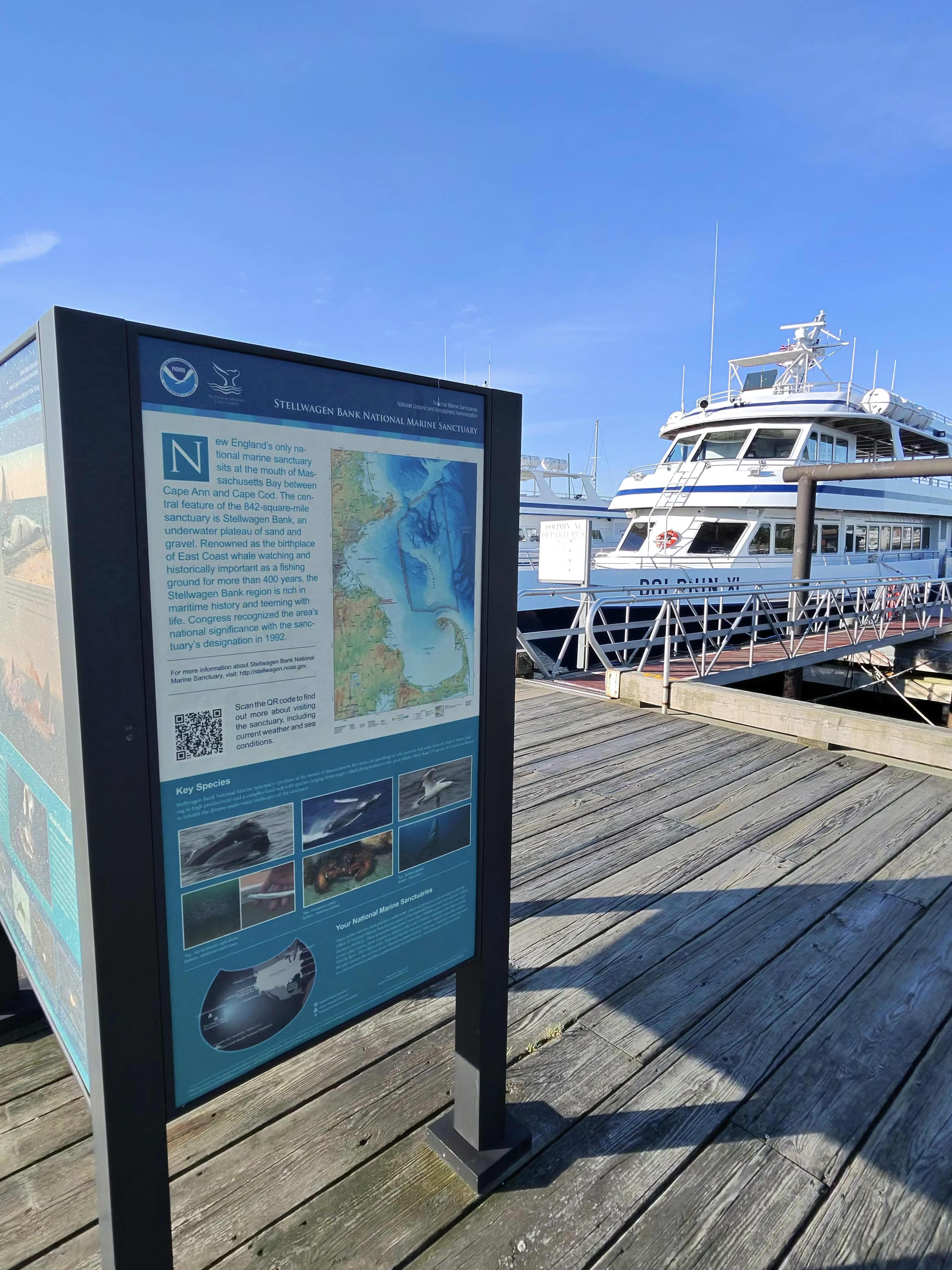
Rising from the seafloor at the mouth of Massachusetts Bay, Stellwagen Bank is a shallow, glacially deposited plateau — roughly 19 miles long and up to a few miles wide — surrounded by much deeper water. That underwater topography is the whole story. When cold, nutrient-dense water is pushed up against the edges of the bank, it fuels enormous blooms of plankton and concentrates schools of sand lance, herring, and mackerel. Those prey schools are what pull whales in from the open Atlantic, and they are why this patch of ocean has some of the most reliable whale watching in the world.
The bank has been federally protected as the Stellwagen Bank National Marine Sanctuary since 1992. It sits only about five miles north of Provincetown — not a long haul out to sea, which is exactly why Provincetown, at the very tip of the Cape, is the closest and most sensible launch point. Boats leave from MacMillan Pier, run north, and are usually into productive water within 45 minutes to an hour. Compared with departures from farther down the coast, you spend far less time steaming and far more time watching.
The season runs roughly mid-April through late October. Humpback activity is strongest from late June into September, with July and August the undisputed peak. Come in the shoulder weeks and you trade a little consistency for smaller crowds and easier booking.
The Whales You Might See
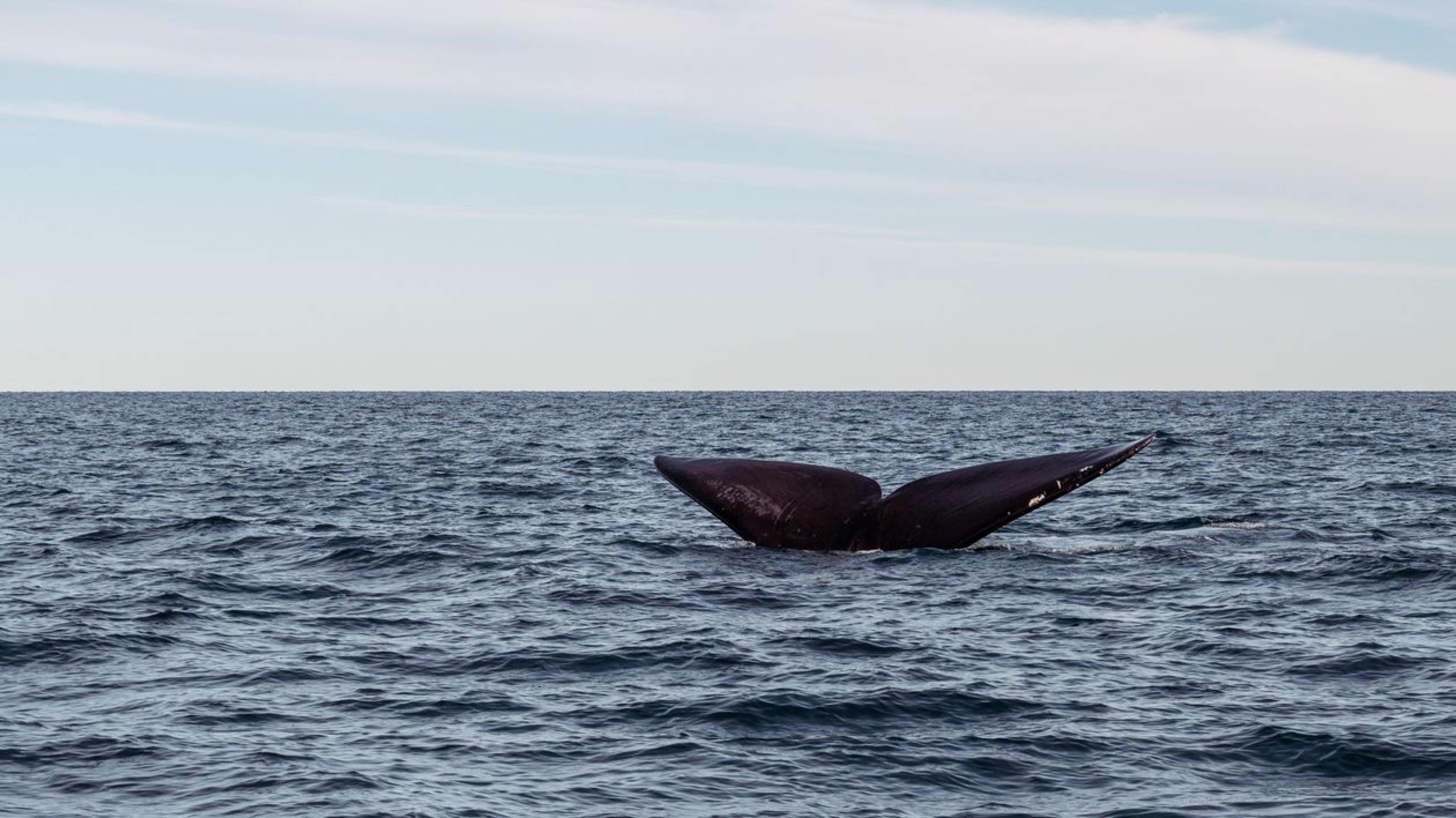
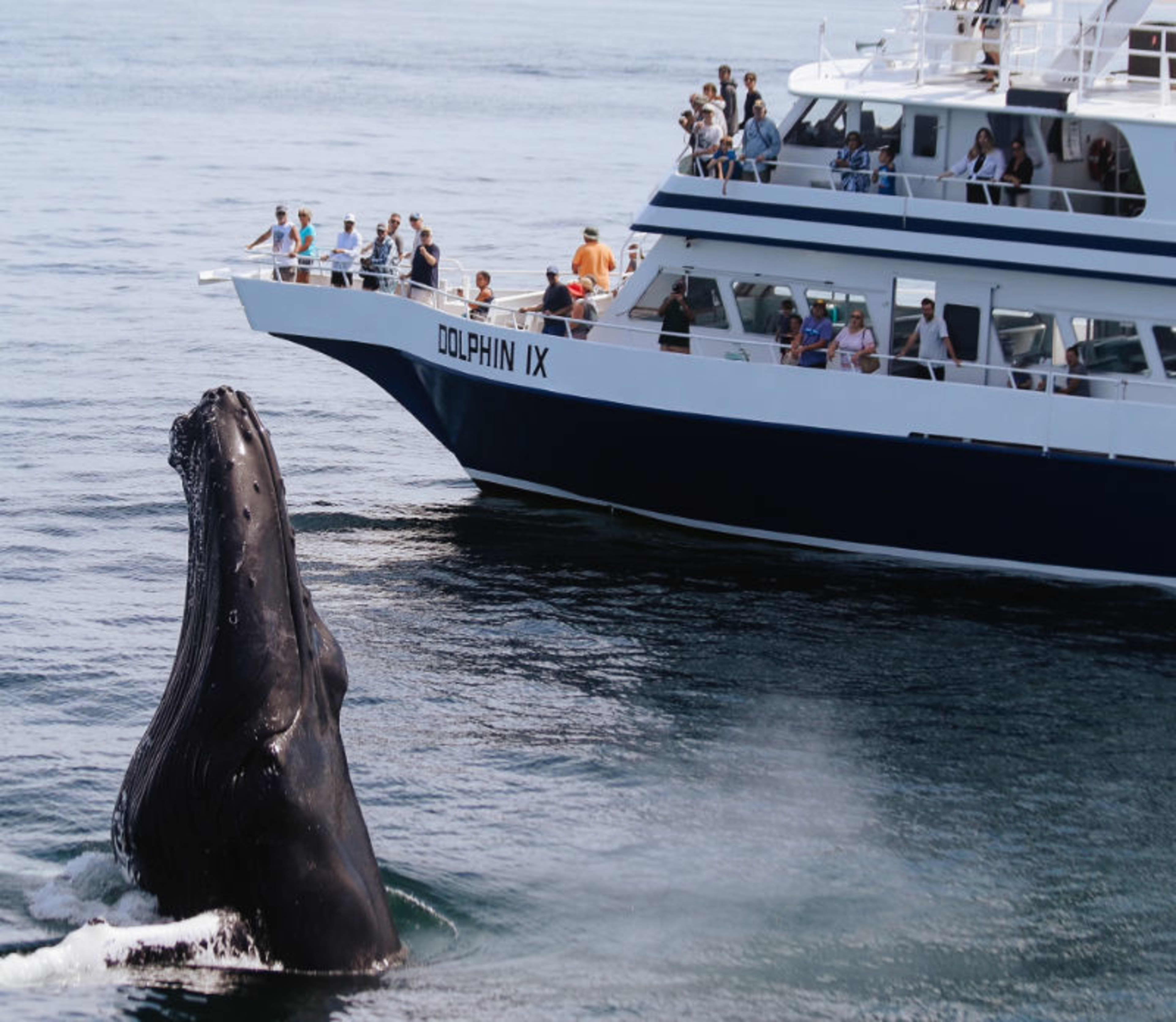
Most trips are built around humpback whales, and for good reason. They are the showmen of Stellwagen — breaching, tail-slapping, and rolling at the surface, often close enough that you can hear the exhale before you see the spout. Many of the humpbacks here are known individuals, catalogued by the unique black-and-white pattern on the underside of their flukes, and a good naturalist can often tell you a whale's name and history.
You may also see fin whales, the second-largest animal on earth after the blue whale. Fins are faster and less acrobatic than humpbacks — you read them by their long, dark backs and towering spouts rather than by breaches. Minke whales, smaller and more solitary, turn up regularly too, along with Atlantic white-sided dolphins in the summer months.
The rarest sighting is the North Atlantic right whale, one of the most endangered large animals on the planet, with only a few hundred individuals left. Right whales pass through the sanctuary mainly in late winter and spring. When they are present, the rules change: federal law prohibits any vessel from approaching within 500 yards (1,500 feet) of a right whale, and boats that find themselves too close must move slowly away. A reputable operator will follow this to the letter, so if a captain gives a right whale a wide berth, that is the trip working exactly as it should — not a missed opportunity.
No operator can promise a specific species or a breach on cue. What the naturalists can promise is that they know where the food is, and the whales tend to follow the food.
Choosing a Trip
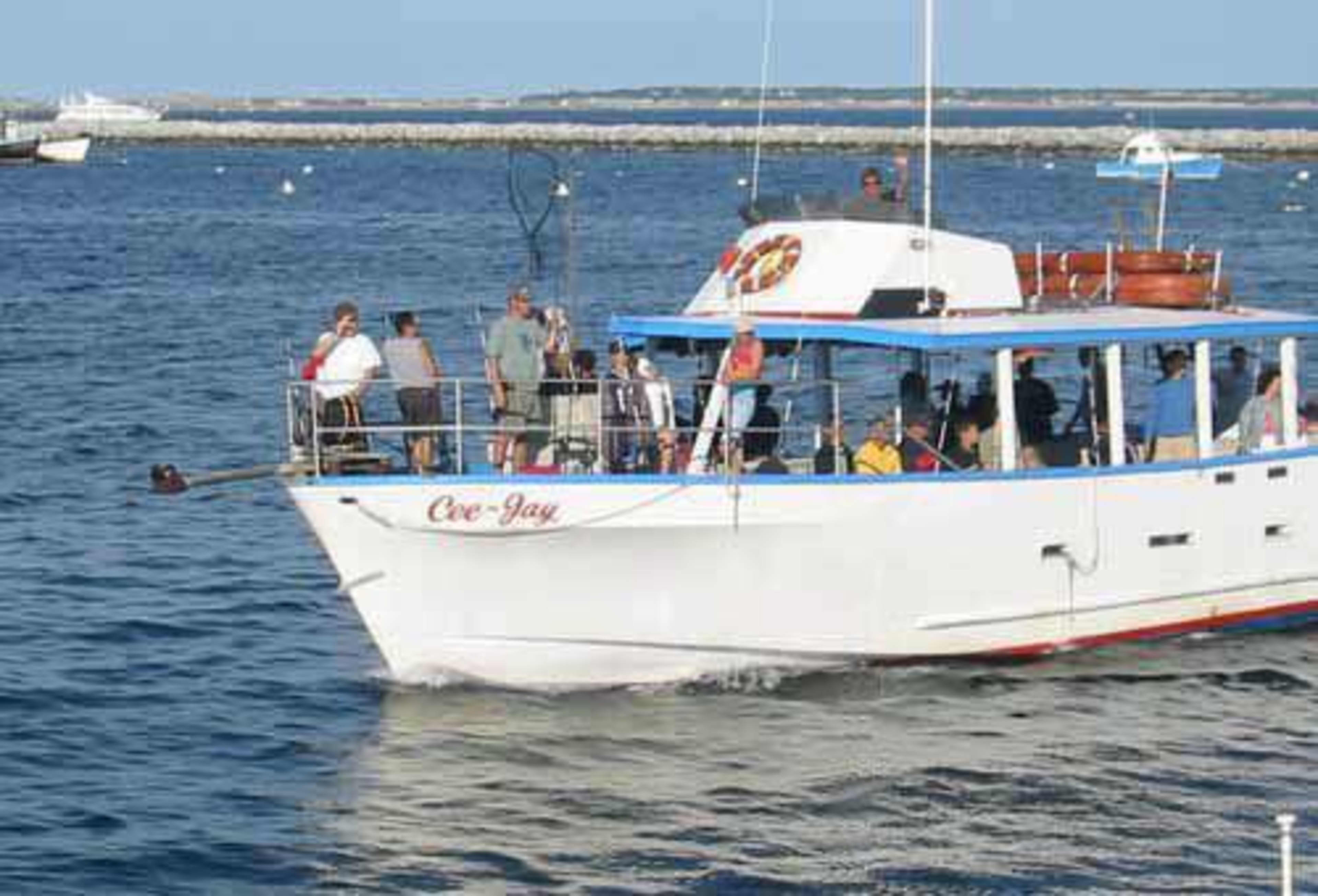
Provincetown supports several established whale watch operators, and most run similar formats: large, stable catamarans or excursion boats, a licensed captain, and an onboard naturalist narrating the sightings. The Dolphin Fleet is the best known and bills itself as the original Provincetown whale watch, working closely with the Center for Coastal Studies, whose researchers help identify individual animals. Other longtime companies run out of the same waterfront. Any of them will get you to Stellwagen; the differences come down to schedule, boat size, and vibe.
A few things worth knowing before you book:
- Trips run about three to four hours. That includes the run out, the time on the whales, and the run back. Plan your day around it rather than squeezing it between other reservations.
- Book ahead in July and August. Summer sailings fill, especially on weekends and around the midday departures. Shoulder-season trips are far more flexible.
- Check the guarantee. Many operators offer a "see a whale or come back free" policy. It reflects how consistent the bank is, but confirm the current terms when you book rather than assuming.
- Confirm current departure times and prices directly with the operator. Schedules shift with the season and the weather, and midweek sailings are lighter than weekends.
If anyone in your group is prone to seasickness, this is an open-ocean trip on real swell, not a harbor cruise. Take a remedy before you board, not after you feel it.
What to Bring and Wear
The single most common mistake first-timers make is dressing for the beach. It is consistently 10 to 20 degrees cooler and windier out on the water than it is in town, even on a hot July afternoon. Bring a warm layer and a windbreaker regardless of what the parking-lot thermometer says. A hat that won't blow off, real sunscreen, and sunglasses round out the essentials — glare off the water is relentless.
For seeing the whales, bring binoculars if you have them, though much of the action happens close enough that you won't need them. For photography, a zoom lens helps, but honestly the best keepers usually come from being ready with your phone when a whale surfaces beside the boat. Whales don't pose, so shoot in bursts and accept that most frames will be water. Keep one hand free for the rail.
A note on light, since it shapes your photos: on Cape Cod the sun rises over the Atlantic to the east and sets over the bay to the west. A morning trip puts the low eastern sun at your back on the outbound run; a late-afternoon or sunset sailing gives you warm western light and, on the ride home, the classic view of the sun going down over Cape Cod Bay. Neither is "better" — but knowing where the light is coming from helps you position yourself before the whale shows up.
Making a Day of Provincetown
A whale watch pairs naturally with a full day at the tip of the Cape, because you're already parking in one of the most walkable, characterful towns in New England. Provincetown's Commercial Street is a dense run of galleries, bookshops, raw bars, and lobster shacks, most of it a short stroll from MacMillan Pier where the boats leave. Build in time on either side of your sailing.
If you have the morning or evening free, the surrounding Province Lands — the dunes, bike paths, and beaches of the Cape Cod National Seashore — are some of the wildest landscape on the East Coast, and the climb up the Pilgrim Monument gives you a view that ties the whole hand-shaped peninsula together. A trip out to Stellwagen and a walk through town make for one of the best single days the Cape offers.
Whale watching is the rare Cape experience that lives up to its billing. You go out expecting a nice boat ride and you come back having watched a 40-ton animal decide, for reasons entirely its own, to throw itself out of the water a hundred feet away. Book it early, dress warmer than you think you need to, and let the naturalists do the finding.
Put This Guide to Work
Get the best of Cape Cod — free.
Guides, hidden spots, and seasonal tips from people who actually live here.
Frequently asked questions
What is the best time to visit Cape Cod for whale watching?
Late June through August is peak season with the fullest calendar and longest beach hours, but late May and September offer nearly identical conditions with far smaller crowds and easier reservations.
Do I need to book ahead for whale watching on Cape Cod?
Yes — summer weekends book out weeks or months in advance. If your trip is July or August, secure lodging and any ticketed experiences as early as possible. Shoulder season (May, September, October) is much more flexible.
Where exactly is Cape Cod, Massachusetts?
Cape Cod is a peninsula in southeastern Massachusetts, roughly 70 miles southeast of Boston. It's accessible by car via Routes 6 and 28, or by high-speed ferry from Boston or Plymouth.
Is parking free on Cape Cod?
Not at the popular spots. Town beach lots charge a daily parking fee in summer that varies by town (confirm with the town), and National Seashore lots charge $25 per vehicle per day or accept the $60 Seashore annual pass (nps.gov/caco). Many town centers and village areas have free street parking.