The best Cape Cod photography spots have drawn serious photographers for over a century — from the Provincetown art colony that formed around 1900 to the couples and travel shooters who now fill parking lots before dawn. The reason is physics as much as scenery: surrounded by water on three sides, Cape Cod sits inside a maritime microclimate that softens light in a way genuinely different from anywhere inland. No point on the Cape is more than six miles from tidal water, and that moisture loads the atmosphere, scatters harsh light, and extends the golden-hour window at both ends of the day. Whether you're shooting on an iPhone or a full-frame mirrorless, the Cape rewards the photographer who plans around the tides and shows up early.
The Light on Cape Cod (Why It's Different)
Painters discovered Cape Cod's light quality before photographers did. Charles Hawthorne and Edward Hopper both worked in Provincetown in the early 20th century, drawn by a quality of light they described as softer, more diffused, more dimensional than what they found inland. The physics behind this: water reflects and scatters sunlight rather than absorbing it, which fills in shadows that would otherwise go completely dark. The result is a longer usable shooting window than you find inland, and a quality of light at golden hour that makes almost any subject look compelling.
Two rules govern Cape Cod photography:
Atlantic side (east-facing) is best at sunrise. The ocean runs the full length of the Outer Cape's eastern edge. Early morning light crosses open water and lands at a low angle that throws long shadows across sand and picks up every ripple and wave line. Race Point, Nauset Beach, and Fort Hill all face east. Arrive 30 minutes before sunrise to catch the full sequence — the red horizon, the first hard light breaking the water line, and the rapid climb of the sun over open ocean.
Bay side (west-facing) is best at sunset. Cape Cod Bay lies to the west. From Rock Harbor in Orleans to Brewster's tidal flats to Wellfleet Harbor, the Bay side gives you a western horizon clear to the Plymouth shore. Shallow Bay water goes mirror-flat on calm evenings and reflects warm sky colors at a scale that makes wide-angle compositions almost too easy.
Top Sunrise Locations: Atlantic and East-Facing Cape Cod Photography Spots
Race Point, Provincetown. The Province Lands tip faces roughly north and northwest across open Atlantic — which is exactly why Race Point is one of the rare Cape beaches where you can watch the sun set over the ocean as well as catch first light at sunrise. Race Point Beach has no obstructions — just sand, surf, and the Race Point Lighthouse anchoring the right side of your frame. The Province Lands dunes behind the beach also catch beautiful sidelight, which makes it a location that rewards both ends of the day. Park at the Race Point lot off Race Point Road and walk the boardwalk — plan 45 minutes before sunrise to be positioned. In winter, the dunes are completely empty and the light on the sand is extraordinary.
Nauset Beach, Orleans. The classic Atlantic-side Cape Cod composition: a long, gently arcing barrier beach with a single access point, no development in the frame, and an open horizon. The beach runs for miles south, giving you a foreground of receding shoreline at low tide. Arrive early in summer — the lot fills fast in July and August. In September and October, the lower sun angle and warmer golden-hour tone make Nauset at sunrise among the best Cape Cod photography spots in any season.
Fort Hill, Eastham. This is the hidden gem. Fort Hill is part of the Cape Cod National Seashore and sits on a slight rise above Nauset Marsh, with views east across the marsh toward the barrier beach and the open Atlantic. The scene includes red cedar trees in and around the marsh, osprey nests on wooden poles, and a pastoral Cape Cod landscape that has changed almost nothing in decades. At sunrise, the marsh catches light in layers — golden grasses, dark water channels, the cedar tree line. There is no crowd. Parking is free and accessible and the lot is almost never full. This is the location locals know and do not talk about. Give yourself 30 minutes before sunrise and bring a long lens for the osprey.
Top Sunset Locations: Bay-Side Cape Cod Photography Spots
Rock Harbor, Orleans. Rock Harbor is the most reliably spectacular Bay-side sunset destination on the Lower Cape. The small working harbor sits on the Orleans shore of Cape Cod Bay, and the combination of fishing boats, weathered dock pilings, and shallow water that goes mirror-flat on calm evenings creates compositions that work from wide landscape down to intimate harbor detail. The western horizon is clear across the Bay. Arrive an hour before sunset to scout the dock and stay through the full dusk — the afterglow on Rock Harbor often outlasts the sun itself by 20 minutes. For couples and engagement photography, this location has no peer on the Lower Cape.
Wellfleet Harbor at Sunset. Wellfleet is a working Outer Cape harbor with oyster shanties, commercial fishing boats, and the town pier creating layers of foreground interest. The harbor opens to Cape Cod Bay, and in calm weather the water reflects warm sky colors across the whole scene. Weeknight evenings in September and October are least crowded and most atmospheric.
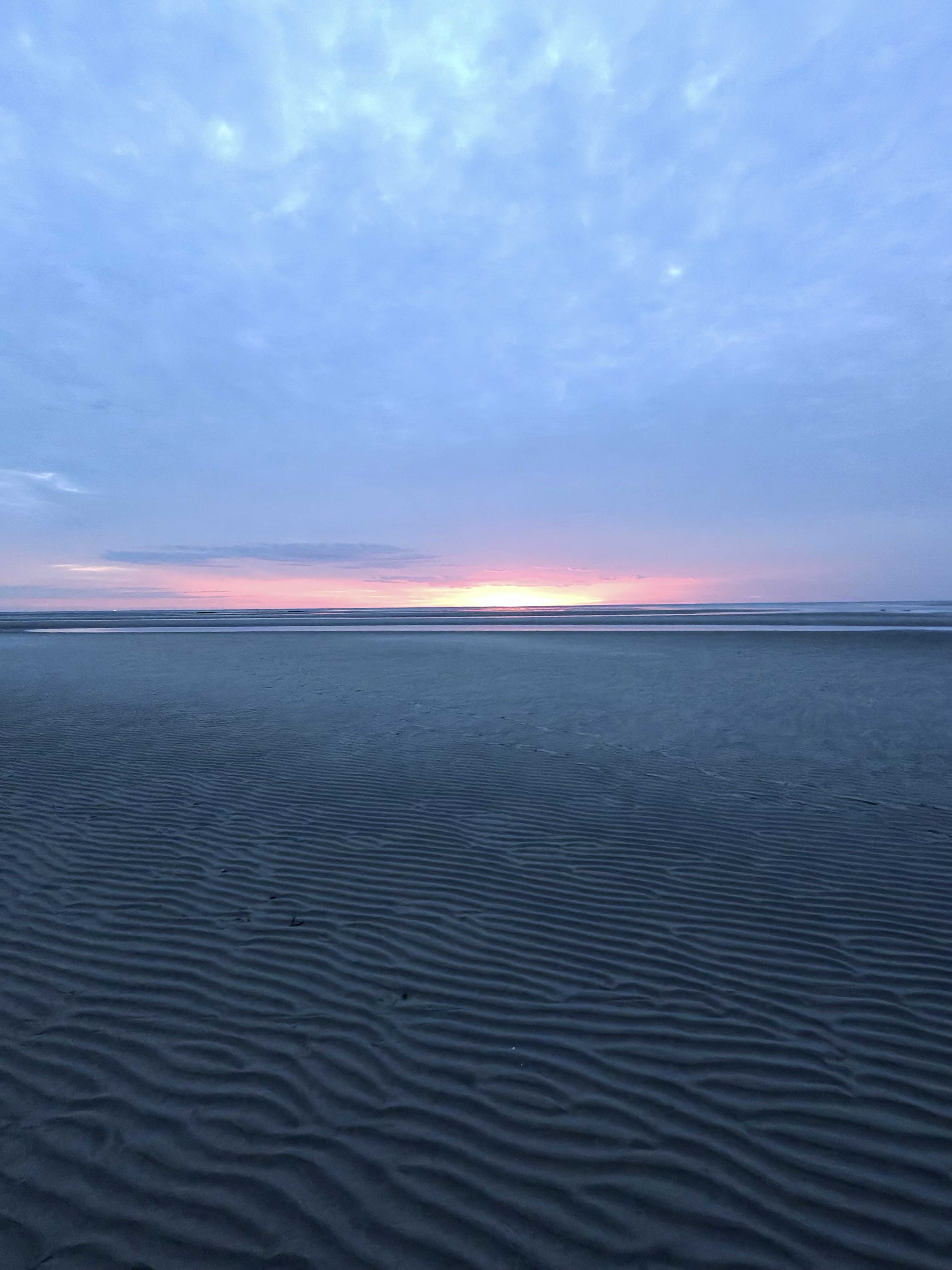
Brewster Flats at Midtide. Brewster's tidal flats on the Bay side are extraordinary when the tide is on the move. Dead low tide puts the water too far out for reflections; the best photography happens in the 90 minutes around midtide as the water returns and shallow pools form across the exposed sand. Hermit crabs, moon snails, and periwinkles provide foreground detail; the open sky provides the background. You need a tide chart — NOAA's tides app or a local tide chart app will show you when to arrive. Access the flats from Paines Creek Beach, Breakwater Beach, or Ellis Landing in Brewster.
Planning Your Shoot: Tides, Seasons, and Golden Hours
Tides determine everything on the Bay side. The Brewster flats and the clam flats of the Outer Cape transform completely between high and low water. Arriving at the wrong tide means shooting dry sand instead of reflective pools. Use a NOAA-based tide chart and plan to be at Bay-side tidal locations 90 minutes before low tide to catch the full sequence of the flat emerging.
Fall is the best season overall. September through mid-October offers lower sun angle, warmer golden-hour tone, the Route 6A canopy, fewer crowds, and seals beginning to appear near Chatham. The early morning light in September at Fort Hill or Nauset Beach has a warmth and length that summer's more overhead sun cannot match.
Winter advantages. From January through March, gray seals and harbor seals haul out on the Chatham bars and on Monomoy Island beaches visible from the Chatham Lighthouse overlook. A telephoto aimed at a seal colony in winter morning light is a compelling and completely crowd-free subject. Storms produce dramatic cloud formations over the Atlantic beaches. Check forecasts carefully — 30-knot winds are common and make tripod work difficult.
Summer logistics. Arrive before 6am at any Atlantic-side sunrise location in July and August if you want the beach to yourself. Race Point and Nauset parking lots are in use by 7:30am on peak summer days.
Quick Reference: Cape Cod Photography Spots
| Location | Best Time | Peak Season | Side |
|---|---|---|---|
| Race Point, Provincetown | Sunrise / Sunset sidelight | Year-round | Atlantic |
| Nauset Beach, Orleans | Sunrise | Sept–Oct best | Atlantic |
| Fort Hill, Eastham | Sunrise | Year-round | Atlantic / marsh |
| Rock Harbor, Orleans | Sunset | Year-round | Bay |
| Wellfleet Harbor | Sunset | Shoulder season | Bay |
| Brewster Flats | Midtide (use tide chart) | Spring–Fall | Bay |
| Sandwich Boardwalk | Foggy morning | Year-round | Bay |
| Chatham Fish Pier | ~8am–noon | Year-round | Atlantic |
| Highland Light, Truro | Late afternoon | Year-round | Atlantic |
| Route 6A, Dennis–Brewster | Early morning | Sept–Oct only | N/A |
| Cahoon Hollow Bluff, Wellfleet | Late afternoon | Year-round | Atlantic |
Beaches & trails in this guide
- Cahoon Hollow Beach, Wellfleet →
- Paines Creek Beach, Brewster →
- Rock Harbor (Bay Beach & Pier), Orleans →
- Race Point Beach, Provincetown →
- Nauset Beach, Orleans →
- Breakwater Beach, Brewster →
Planning a photography trip to Cape Cod — or looking for lodging near the best locations? Browse the Cape Cod Certified directory for local guides, verified listings near Provincetown, Eastham, Orleans, and the Outer Cape, and the kind of specific, on-the-ground knowledge that makes the difference between a good shot and a great one.
Put This Guide to Work
Get the best of Cape Cod — free.
Guides, hidden spots, and seasonal tips from people who actually live here.
Frequently asked questions
Why does Cape Cod have such good light for photography?
Cape Cod is surrounded by water, which creates a maritime climate where moisture in the air softens harsh light. Water also reflects sunlight, filling in shadows and lengthening the golden hour at both ends of the day.
Where are the best sunset spots on Cape Cod?
Bay-side, west-facing locations offer the best sunsets — Rock Harbor in Orleans, Wellfleet Harbor, and Brewster's tidal flats all face Cape Cod Bay with clear western horizons. On calm evenings, shallow Bay water goes mirror-flat and reflects warm sky colors at a scale that makes wide-angle compositions almost effortless.
What time of year is best for photography on Cape Cod?
Fall, from September through mid-October, is the strongest season overall, with lower sun angles, warmer golden-hour tones, the Route 6A autumn canopy in Dennis and Brewster, and fewer crowds. Early morning light at Fort Hill and Nauset Beach is especially warm.
Where can I photograph seals on Cape Cod?
Seals haul out on the sandbars around Chatham and Monomoy, and in winter the beaches are nearly empty. A telephoto lens and morning light work best; keep your distance from the animals.
How do I time a shoot at Brewster's tidal flats?
The best photography at Brewster Flats happens around midtide as the water returns and shallow reflective pools form across the exposed sand — dead low tide puts the water too far out for good reflections. Use a NOAA-based tide chart app and plan to arrive before the water starts coming back in.