Cape Cod has some of the best whale watching in the world. That's not marketing — it's geography. Stellwagen Bank, a shallow underwater plateau 25 miles off the tip of Provincetown, is one of the most productive feeding grounds on the East Coast. Humpback whales, finback whales, minke whales, and Atlantic white-sided dolphins congregate here in numbers that routinely surprise first-time visitors.
The boats that depart from MacMillan Pier in Provincetown run the shortest trip to Stellwagen Bank of any departure point in New England. You can be watching whales within an hour of leaving the dock. Here's everything you need to know.
Why Stellwagen Bank
Stellwagen Bank National Marine Sanctuary covers 842 square miles of ocean between Cape Cod and Cape Ann. The Bank is a raised seafloor feature that forces cold, nutrient-rich water from depth up toward the surface — this upwelling fuels a food chain that produces massive concentrations of sand lance, herring, and other forage fish that whales depend on.
The result: consistent, predictable whale aggregations from April through October, with June through September being the peak window. The whales return to Stellwagen every year, and the research teams on board the boats have been studying these same individual animals for decades. Some of the humpbacks have names and known histories going back 40+ years.
What You'll Actually See
Humpback Whales
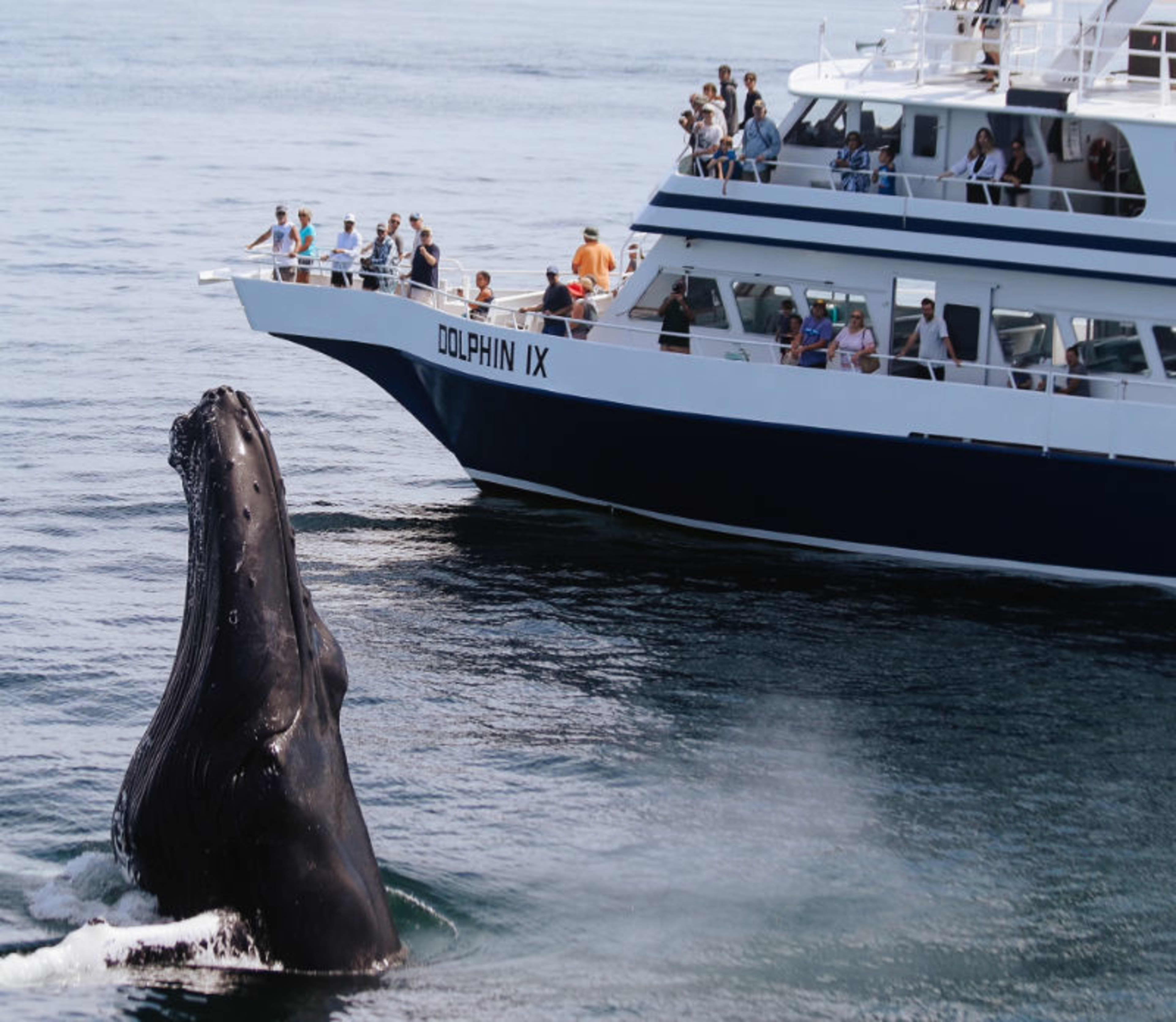
The star of Stellwagen Bank. Humpbacks are the most acrobatic and reliably interesting whales in this region — they breach, lunge-feed, bubble-net feed cooperatively, flipper-slap, and surface close to boats. Adults reach 40–45 feet and 25–40 tons. In peak summer, it's common to see multiple animals from the boat at the same time.
The Dolphin Fleet has been photo-ID cataloguing individual humpbacks since 1975 in collaboration with the Center for Coastal Studies (Provincetown). The naturalists on board can often identify specific whales by their tail flukes and tell you their life story.
Finback Whales
The second-largest animal on Earth. Finbacks are regular Stellwagen visitors but tend to be faster and less showy than humpbacks — they don't typically breach, but their size is staggering. Up to 70 feet.
Minke Whales
Smaller (around 30 feet) and more skittish. Minkes surface quickly and don't stay near boats as reliably as humpbacks, but they're common on most trips.
Atlantic White-Sided Dolphins
Pods of dolphins frequently join whale watch boats at the bow. They're quick, acrobatic, and a highlight when they show up — especially for kids. Common in summer and fall.
North Atlantic Right Whales
Critically endangered (see NOAA Fisheries for the current population estimate). Rare on whale watch trips but occasionally spotted. The boats follow strict approach protocols around right whales.
Which Boat to Book
Dolphin Fleet Whale Watch (Provincetown)
The dominant and most established operator, running from MacMillan Pier in Provincetown. They've been operating since 1975 and run in formal research partnership with the Center for Coastal Studies. Every trip has a trained naturalist on board who knows the individual animals. Multiple daily departures in peak season.
Price: Check current prices at whalewatch.com; they change each year. Children's rates lower.
Sighting guarantee: Dolphin Fleet offers a rain check policy if whales are not sighted — verify current terms on their website.
Booking: Advance online booking strongly recommended in July and August. Walk-up seats are sometimes available but risky on peak summer weekends.
Portuguese Princess (Provincetown)
A second operator out of Provincetown offering whale watch trips on a smaller vessel. Good alternative when Dolphin Fleet is sold out.
Price: Check current prices, and that trips are running, with the operator before you book.
Hyannis Whale Watcher
Departures from the Barnstable Harbor / Hyannis area. Longer transit time to Stellwagen Bank than Provincetown boats. Verify current operating status and departure port — there have been changes in recent years between Barnstable Harbor and Hyannis Harbor.
Best for: Visitors staying in the mid-Cape who don't want to drive to Provincetown.
When to Go
Best Months
June through September is peak whale watching season on Stellwagen Bank. Whale concentrations are highest, weather is most reliable, and departure frequency is maximum. July and August have the most departures per day (often 3–4 from Dolphin Fleet alone) but also the most crowded boats.
April and May offer the first spring arrivals — fewer whales but also significantly cheaper and less crowded. Some years early season produces exceptional sightings; others are hit or miss.
October can be excellent — the whales are still feeding heavily before southern migration, crowds drop sharply after Labor Day, and fall weather on the water is often spectacular. This is the insider pick for experienced whale watchers.
What to Avoid
Weekend departures in mid-July through mid-August are the most crowded. If you can go on a Tuesday or Wednesday, the experience is meaningfully quieter.
What to Bring
This is where first-timers consistently underpack.
Layers are mandatory, even in summer. The temperature 25 miles offshore can be 15–25°F colder than shore — the Gulf of Maine keeps things cold. July temperatures on deck can feel more like late October on a breezy day. A windproof layer on top is not optional.
Seasickness prevention. Stellwagen Bank trips run 3–4 hours round-trip. The Bank itself can have lumpy seas even when Provincetown looks calm. If you're prone to motion sickness or uncertain:
- Take Dramamine or Bonine before boarding (these work best taken 1 hour in advance)
- Wear Sea-Bands (acupressure wristbands)
- Stay on deck rather than below
- Fix your eyes on the horizon if feeling queasy
- Skip heavy meals before the trip
Binoculars. Whales can surface at varying distances from the boat. Binoculars dramatically improve the experience. Small, compact binoculars work fine.
Camera with zoom. Phone cameras are fine for close-up encounters. For breaching shots at distance, a DSLR or mirrorless with a zoom lens produces much better results.
Sunscreen. Open ocean with no shade and full sun in summer — the reflected glare off water intensifies UV exposure.
Water and snacks. Most boats have a snack bar but selections are limited and prices are boat-captive. Bring your own.
The Provincetown Day Pairing
The most popular itinerary: drive to Provincetown, whale watch in the morning, spend the afternoon exploring Commercial Street, dinner, and drive home.
This works particularly well because:
- Morning whale watch departures typically run 8–10am, leaving the afternoon free
- Provincetown has enough to fill an afternoon (art galleries, shops, beaches at Race Point or Herring Cove, excellent restaurants)
- Parking is the challenge — see the Cape Cod town parking guide for P-town strategy
Practical Tips
Book ahead. Dolphin Fleet in peak summer can sell out, especially on weekends. Book 2–3 days ahead minimum in July; a week ahead on holiday weekends.
Arrive 30 minutes before departure. Boarding starts before listed departure time. If you're driving from elsewhere on the Cape, build in extra time for P-town summer traffic.
MacMillan Pier parking: The lot at MacMillan Pier is limited and fills early. There are other town lots in Provincetown — expect to walk 10–15 minutes from satellite lots in peak season. Verify current parking fees and availability.
It's a shared experience. Peak-season whale watches carry 100–200+ passengers. If you want an intimate experience, consider shoulder season (May, late September, October) when boats are less full.
Pack Smart for This One
Cape Cod Certified picks — essentials worth packing for this trip:
- MalsiPree Portable Dog Water Bottle — $15: One-handed, leak-proof bottle with a built-in bowl that recycles unused water back into the bottle. Under six ounces and ready for every boardwalk, trail, and dune walk.
- Sun Bum Mineral SPF 30 Sunscreen Lip Balm — $4: Zinc-based broad-spectrum lip protection with vitamin E; reef-safe.
Before You Go: The Certified Shortlist
Get the best of Cape Cod — free.
Guides, hidden spots, and seasonal tips from people who actually live here.
Frequently asked questions
What's the best time of year to go whale watching off Cape Cod?
June through September is peak season, when whale concentrations are highest and departures run most frequently. October is the insider pick — whales are still feeding before their southern migration, crowds thin after Labor Day, and fall weather is often spectacular. April and May are quieter but more variable in what you'll see.
What kinds of whales will I see on a Stellwagen Bank trip?
Humpbacks are the stars — the most acrobatic species, routinely breaching, flipper-slapping, and surfacing close to boats. Finbacks and minkes are also regular Stellwagen visitors, and pods of Atlantic white-sided dolphins frequently join the boat at the bow.
What should I bring on a whale watch trip?
Layers are essential — temperatures far offshore can feel dramatically colder than onshore, even in summer. Also pack seasickness prevention, sunscreen, binoculars, and your own water and snacks, since the boat's snack bar is limited. A camera with zoom produces better results than a phone for shots at distance.
How do I avoid getting seasick on a whale watch?
Taking motion sickness medication like Dramamine or Bonine well before boarding and wearing acupressure wristbands are the most common precautions. On board, stay on deck rather than below, fix your eyes on the horizon, and avoid heavy meals before the trip.
How far ahead should I book a whale watch in Provincetown?
Advance booking is strongly recommended in peak season, especially on summer weekends when boats can sell out. Book several days ahead at minimum in July and further out around holiday weekends. Walk-up seats are sometimes available but risky on peak summer days.