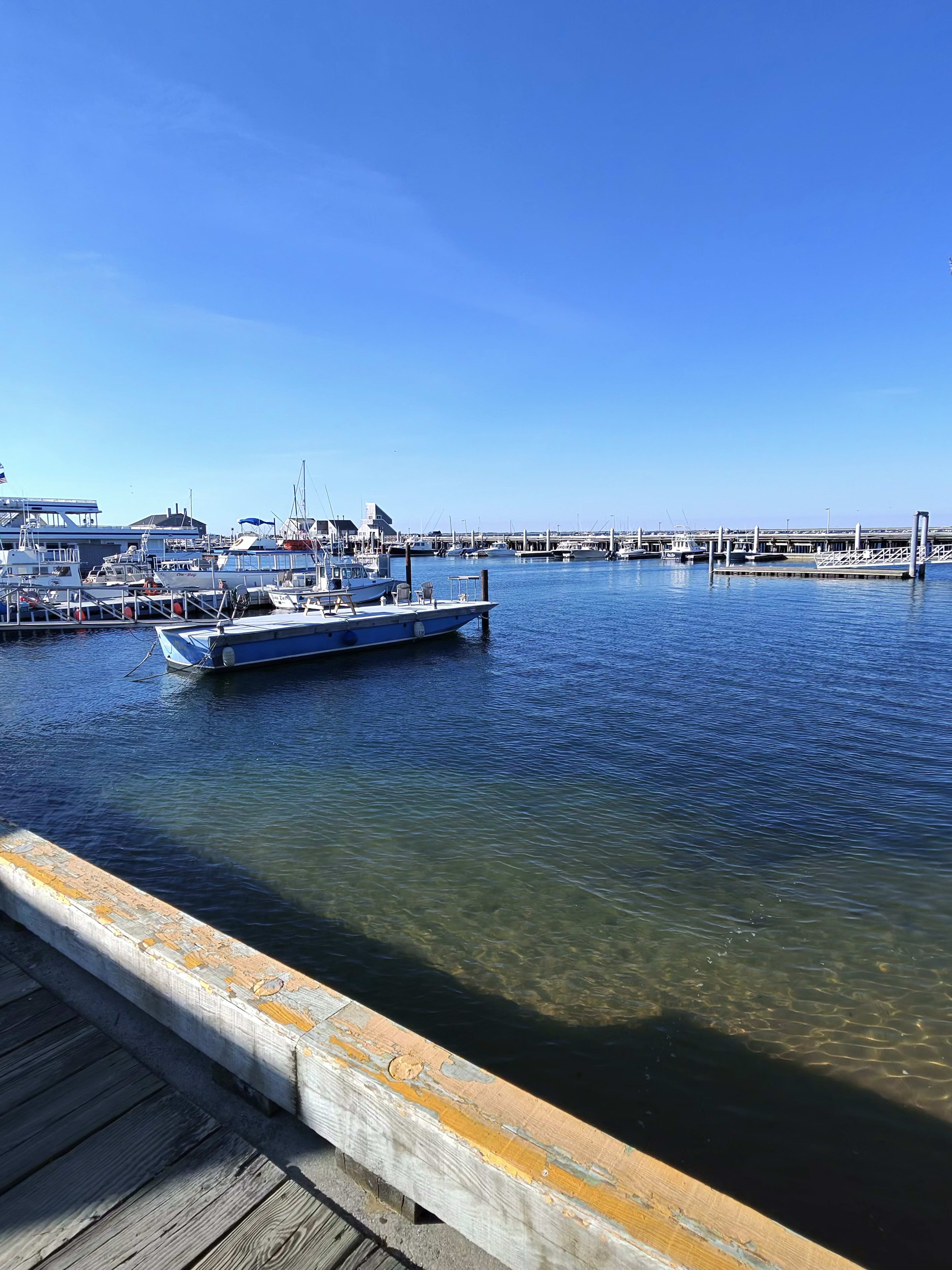
Every whale watch worth taking on Cape Cod leaves from MacMillan Pier in Provincetown, and the honest answer to "which tour should I book?" is simpler than the brochure racks suggest: book a naturalist-led trip to Stellwagen Bank, pick your month and your departure time deliberately, and prepare for open ocean. This guide is the decision-making version — when to go, which departure to choose, how far ahead to book, and how to set up a first whale watch so it goes right. If you want the deep natural history of Stellwagen Bank and the whales themselves, read our companion piece, Cape Cod Whale Watching: Everything You Need to Know Before You Go.
The Short Verdict
Go with Dolphin Fleet Whale Watch out of Provincetown. Their boats carry naturalists from the Center for Coastal Studies, the Provincetown research organization that has tracked the Stellwagen humpback population for decades — which means the person on the microphone can often identify the individual whale you're watching by name. That is a categorically different experience from a loudspeaker script, and it's the main reason a Provincetown departure beats driving off-Cape for a cheaper ticket.
Trips are typically 3 to 4 hours (whalewatch.com/faq), with the exact length at the captain's discretion depending on how far the whales are and the weather. Plan the whole outing — parking, boarding, trip, walking off your sea legs — as a half-day commitment.
When to Go: The Month-by-Month Call
The whales are at the feeding grounds from April until the end of October (whalewatch.com/faq). Within that window, the right month depends on what you're optimizing for:
- July through September — the peak. Highest whale activity, fullest boats, and the trips most likely to sell out. If you're visiting in these months, this is when advance booking stops being optional.
- June and October — the value window. Sightings are still reliable, boats are noticeably less crowded, and you have more flexibility to wait for a calm-weather day, which matters more than most first-timers realize.
- April and May — the wildcard. Early-season trips can be cold and choppy, but spring is also when North Atlantic right whales — one of the most endangered large animals on Earth — are still documented in the region's waters before most move north for the summer. A spring sighting is uncommon and unforgettable; boats keep a strict federally required distance when it happens.
Morning or afternoon? Morning departures usually get calmer seas, before the afternoon wind builds. Afternoon trips are sometimes said to catch more feeding activity, but that's anecdote, not established science. If anyone in your group is even slightly prone to seasickness, take the morning boat — sea state matters more than any supposed activity pattern.
Booking: How Far Ahead, and What It Includes
Book online in advance for any July or August trip — peak-season departures sell out regularly, and same-day tickets are a gamble. If you missed the window, check with the operator the morning of your intended trip; cancellations do open up seats. Dolphin Fleet's posted policy allows a full refund if you cancel at least 24 hours before departure (whalewatch.com/faq), which makes booking early a low-risk move even with an uncertain forecast.
Day-of logistics: arrive about an hour before your departure time (whalewatch.com/faq) — Provincetown parking in summer is its own project, and the closest lot to the boat is at MacMillan Wharf. Tickets are picked up at the office in Lopes Square (307 Commercial Street) or at the booth on MacMillan Pier. You can bring food aboard; alcohol is not allowed.
The First-Timer Setup Checklist
The single biggest gap between a great whale watch and a miserable one is preparation, not luck.
- Handle seasickness before you board, not after. Stellwagen Bank is open ocean — swells of 3 to 4 feet are routine. Take over-the-counter meclizine (Bonine) at least an hour before boarding, or ask your doctor well in advance about a prescription scopolamine patch applied the night before. Ginger chews are a reasonable supplement. This is general guidance only — confirm medication choices with your physician.
- Dress for a different climate than the pier. The Bank is windy and markedly colder than downtown Provincetown, even in August. Bring real layers, not a token windbreaker.
- Pack sunscreen, sunglasses, and binoculars. The glare off open water doubles your sun exposure, and binoculars turn distant surfacings into real sightings.
- Eat a moderate, low-fat snack a couple of hours before boarding. A heavy meal invites nausea; an empty stomach does too.
- Claim an outside spot amidships. The center of the boat at the lowest deck moves least. If you start feeling queasy, stay in fresh air and fix your eyes on the horizon — do not retreat to the below-deck cabin.
What a Good Trip Looks Like
The headliners are humpback whales — acrobatic, up to roughly 50 feet, and the species most likely to give you the moments people buy tickets for: fluking before a deep dive, spy-hopping, the occasional full breach. The rarest prize is bubble-net feeding, where a coordinated group herds fish to the surface inside a cylinder of bubbles and then erupts through it mouths-open. It doesn't happen on every trip; when it does, it's the best accessible wildlife spectacle in the Northeast.
You may also see finback whales — the second-largest animal on Earth — surfacing with startling scale, quick shy minke whales, and sometimes large groups of Atlantic white-sided dolphins riding near the boat. Seabird watchers should scan for shearwaters and gannets on the transit out.
Most operators offer a no-whale-sighting return-trip guarantee — confirm the current terms when you book. In practice, trips virtually always find at least one species.
How This Fits a Provincetown Day
A morning whale watch pairs naturally with a Provincetown afternoon: you're back at MacMillan Pier by early-to-mid afternoon with time for Commercial Street, a late lunch, and the galleries. An afternoon trip works better as the finale of a beach morning. Either way, don't schedule anything tight on the other side of the trip — return times flex with the whales and the weather, at the captain's discretion.


